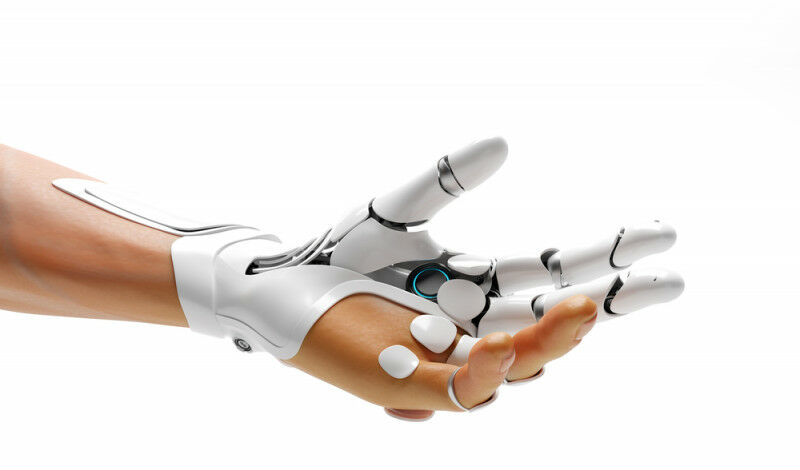
(© Image: Depositphotos) - Bionic reconstruction, in which functionless limbs are replaced by mechatronic limbs, can restore mobility and quality of life to accident patients. However, the high-resolution transmission of information from the brain to the machine remains a demanding challenge. An interdisciplinary research team led by Vlad Tereshenko and Oskar Aszmann from MedUni Vienna's Department of Plastic, Reconstructive and Aesthetic Surgery has now made further significant progress as part of a study. In their study, recently published in the journal "Science Advances", the scientists showed that skeletal muscles can play an important role as a high-resolution interface for neuronal information from the spinal cord. These new findings can significantly improve the control of bionic prostheses. "The most remarkable discovery of our study is that a skeletal muscle can be reinnervated by a number of axons, i.e. nerve processes, that is more than 15 times higher than its original physiological innervation after a high-capacity nerve rerouting," study leader Oskar Aszmann goes into detail. Physiological innervation refers to the supply of skeletal muscles with nerve fibres to control muscle movements.
TO READ THIS ARTICLE, CREATE YOUR ACCOUNT
And extend your reading, free of charge and with no commitment.
Your Benefits
- Access to all content
- Receive newsmails for news and jobs
- Post ads