International research team analyses the genetic basis of ant evolution
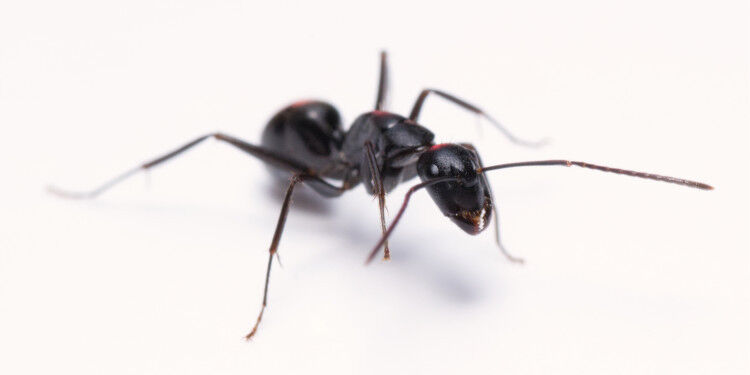
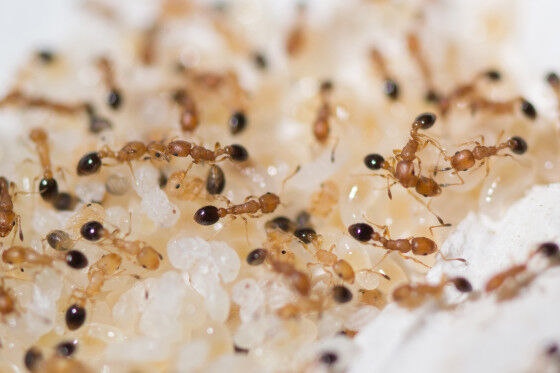
Much of the structure of the ant genome can only be explained in relation to the emergence and subsequent changes in the queen and worker castes, which jointly realize a ’superorganismal’ form of colonial organization. After the ants emerged more than 150 million years ago, natural selection continued to diversify their genomes. This led to a series of evolutionary innovations, such as massive increases in colony size and increasing differences between queens and workers.
At the genetic level, this means that after the original ant genome had stabilised evolutionarily in the early Cretaceous period, ant genes were recombined to an unusually high degree. This rearrangement was particularly extensive in the most species-rich ant subfamilies today. At the same time, smaller groups of linked genes remained excluded from such rearrangements for more than 100 million years, especially those that mediate the reproductive division of labour between queens and workers. This illustrates how fundamental and crucial a well-functioning caste differentiation was and is in ants, the team concludes.
The results of this interdisciplinary research, which have now been published in the journal Cell, are based on almost ten years of collaboration between more than 50 international scientists from more than 25 countries. Researchers from Germany (Dr. Lukas Schrader/University of Münster), Denmark ( Jacobus Boomsma/University of Copenhagen) and China ( Guojie Zhang/Zhejiang University, Hangzhou, China) coordinated the study.
The researchers used numerous biological methods such as genome sequencing, gene expression analysis, analysis of phenotypic (’visible’) traits, functional analysis of individual genes, pharmacological manipulation and morphological investigations.
Original publication:
Joel Vizueta et al. (2025): Adaptive radiation and social evolution of the ants. Cell 188, in press; DOI: 10.1016/j.cell.2025.05.030