


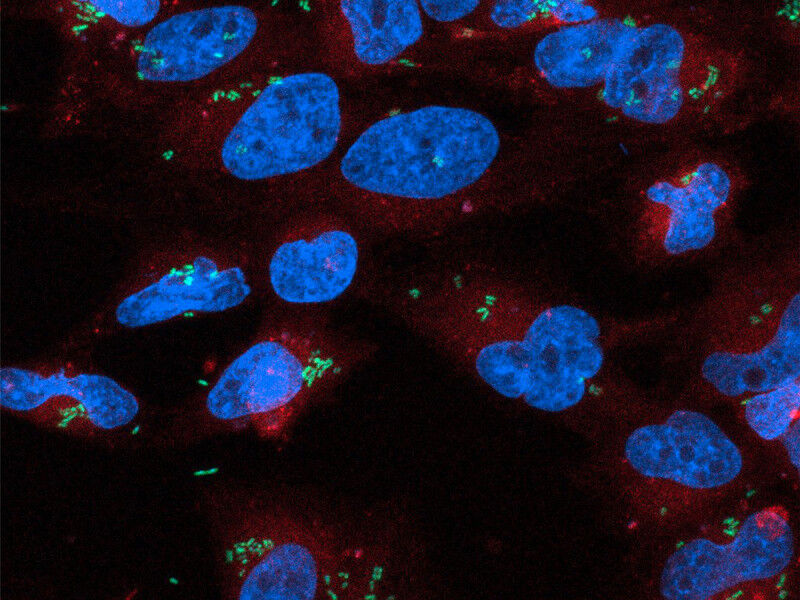
Scientists at the University of Lausanne have identified a novel mechanism by which the immune system identifies endotoxin, a key molecule present in the membrane of certain bacteria. Published in the scientific journal Immunity, this discovery opens up promising prospects for the management of severe infections and the prevention of septic shock.
The innate immune system is the body’s first line of defense. It relies on the ability to rapidly recognize molecular signatures specific to microbes - absent from our own cells - in order to trigger an immediate inflammatory and antimicrobial response. This mechanism is essential to contain pathogen invasion before infection spreads.
Endotoxin, a major trigger of severe forms of infection
Among these microbial signals, lipopolysaccharide (LPS) occupies a central position. This glycolipid, the main constituent of the outer membrane of Gram-negative bacteria, has been known for over a century for its ability to trigger intense inflammatory reactions. Long identified as a key factor in sepsis, LPS - then described as an "endotoxin" - remains at the heart of many serious infectious complications.
Although researchers have already identified certain proteins capable of detecting LPS inside human cells, how this recognition actually takes place remains poorly understood.
When the shape of the bacterial membrane becomes a warning signal
"The problem lies in the very structure of LPS," explains Petr Broz, professor in the Department of Immunobiology at UNIL. "The part of the molecule responsible for immune activation is buried in the bacterial membrane, making it difficult to access. "
To solve this enigma, the Lausanne team, in collaboration with researchers from the University of Berne and the Czech Republic, focused on the geometry of the bacterial membrane. Their work shows that this geometry plays a decisive role in the detection of LPS.
Bacteria inside cells are first targeted by an immune system enzyme called GBP1. This assembles on the surface of the bacteria and exerts mechanical pressure on their membrane, deforming it. This stress creates zones of outward curvature, in which the LPS molecules move slightly away from each other.
"In these curved regions, the lipid components of the LPS become more exposed," explains Jakub Began, first author of the study. This exposure then allows another enzyme, caspase-4, to bind to the LPS and activate an intense inflammatory response, leading to the destruction of infected cells in a process known as pyroptosis.
Major clinical implications
Beyond the fundamental understanding of innate immunity mechanisms, these findings are of considerable clinical interest. Excessive activation of caspase-4 is associated with the uncontrolled inflammation seen in septic shock, a potentially fatal complication.
The researchers identified a specific hydrophobic pocket of caspase-4 involved in LPS binding. This structure could be a therapeutic target of choice. "Molecules capable of blocking this interaction could limit the deleterious inflammation in patients with severe infections", stresses Petr Broz.
By revealing the key role of bacterial membrane mechanics in immune detection, this study sheds light on a previously largely ignored dimension of host-pathogen interactions. It paves the way for new targeted strategies to prevent and treat endotoxin-related inflammatory diseases.

