Chemotherapy doesn’t just destroy cancer cells. It also transforms the body. Research conducted at the University of Lausanne shows that by altering the intestinal microbiota, chemotherapy triggers a lasting reprogramming of the immune system, making the body less favorable to metastatic dissemination.
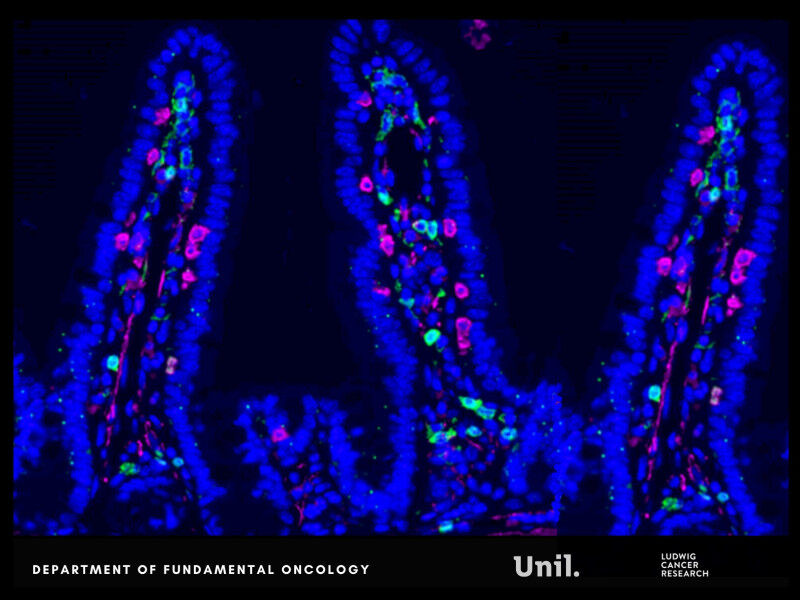
Chemotherapy frequently damages the intestinal mucosa, a well-known side-effect. But this damage does not remain local. The research team, led by Tatiana Petrova, full professor at the Faculty of Biology and Medicine (FBM) of the University of Lausanne de Lausanne (Unil), shows that it modifies the nutritional environment of the microbiota, forcing certain bacteria to adapt their metabolism.
The result: increased production of indole-3-propionic acid (IPA) , a metabolite derived from tryptophan. Far from remaining confined to the intestine, IPA acts as a systemic messenger. It circulates to the bone marrow, where it reprograms the production of immune cells.
Under the effect of IPA, the immune balance shifts: high levels of IPA reprogram myelopoiesis, reducing the production of immunosuppressive monocytes that facilitate immune evasion and metastatic growth. This reconfiguration enhances T-cell activity and reorganizes immune interactions at metastatic sites, particularly in the liver.
These observations are echoed in patients. Clinical data obtained in collaboration with Dr. Thibaud Koessler (HUG) show that, in colorectal cancer patients, higher levels of IPA after chemotherapy are associated with fewer circulating monocytes and better survival.
Taken together, these results highlight a hitherto underestimated gut-bone marrow-liver functional axis, through which chemotherapy can exert long-lasting systemic effects. They thus open up new prospects for exploiting microbiota-derived metabolites as adjuvant strategies to limit metastasis formation.
This research was supported by several funding bodies, including the Swiss National Science Foundation and the Swiss Cancer League, as well as a Tandem grant from the ISREC Foundation, which supports close collaborations between basic and clinical research. Led at the University of Lausanne by Tatiana Petrova, in collaboration with Thibaud Koessler (HUG), the project is based on a strong hypothesis: chemotherapy can induce a form of "biological memory", mediated by metabolites of the intestinal microbiome, capable of durably curbing metastatic growth.
Publication
Bersier, L., Lorenzo-Martin, L.F., Chiang, YH. et al. Chemotherapy-driven intestinal dysbiosis and indole-3-propionic acid rewire myelopoiesis to promote a metastasis-refractory state. Nat Commun (2025). https://doi.org/10.1038/s41467-025-67169-7