


Chemistry - Mar 19
Leipzig University and Center for the Transformation of Chemistry conclude collaboration agreement
Leipzig University and Center for the Transformation of Chemistry conclude collaboration agreement


Chemistry - Feb 2
New material for use in the chemical industry capable of transforming CO2 into high value-added compounds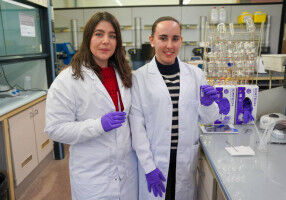
New material for use in the chemical industry capable of transforming CO2 into high value-added compounds
Chemistry - Feb 2
Material for modulating metal-organic frameworks for use in the chemical industry capable of transforming CO2 into high value-added compounds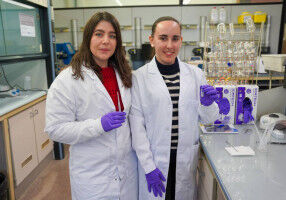
Material for modulating metal-organic frameworks for use in the chemical industry capable of transforming CO2 into high value-added compounds
Chemistry - Jan 15
University of Glasgow spin-out hails milestone breakthrough in hydrogen energy process
University of Glasgow spin-out hails milestone breakthrough in hydrogen energy process
Life Sciences - Dec 17
Manchester Institute of Biotechnology welcomes three new professors, driving innovation in chemical and biological sciences
Manchester Institute of Biotechnology welcomes three new professors, driving innovation in chemical and biological sciences

Health - Nov 21
New Collaborative Research Centres: A Resounding Success for the University and the University Hospital
New Collaborative Research Centres: A Resounding Success for the University and the University Hospital
Chemistry - Nov 6
The scientific community and industry are seeking ways to accelerate the application of perovskite solar cells
The scientific community and industry are seeking ways to accelerate the application of perovskite solar cells
news
Chemistry
Results 3381 - 3400 of 3959.
Life Sciences - Chemistry - 08.02.2013
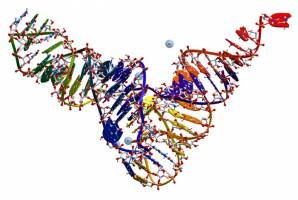
Integrated biological and computational methods provide insight into why genes are activated. The combined, data-driven approach that includes validation allows researchers to systematically determine when models are too simple, too complex or just right-the "Goldilocks" approach. Many questions arise when two identical twins raised in the same home—fed the same, nurtured the same way—follow disparate paths.
Health - Chemistry - 07.02.2013
Nottingham in €196 million European drug discovery drive
Pioneering chemists from The University of Nottingham are taking part in the biggest-ever European research programme to speed up the discovery of new drugs.
Chemistry - Physics - 07.02.2013
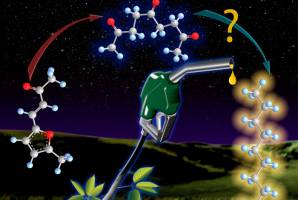
Scientists made a major step forward recently towards transforming biomass-derived molecules into fuels. Efficient conversion of non-food biomass into fuels and chemical feedstocks could reduce society's dependence on foreign oil and ensure the long-term availability of renewable materials for consumer products.
Physics - Chemistry - 05.02.2013
New findings on the structure of graphite oxides in alcohols
Press Release from Umeå University The structure of graphite oxide surprisingly expands when cooled in methanol or ethanol. Also, graphite oxide selectively absorbs methanol from water-methanol mixtures. Two new studies by physicists at Umeå University in Sweden, published in ACS Nano and J. Phys.
Life Sciences - Chemistry - 31.01.2013
Mapping the living cell
New technique pinpoints protein locations, helping scientists figure out their functions. To get a clear picture of what's happening inside a cell, scientists need to know the locations of thousands of proteins and other molecules. MIT chemists have now developed a technique that can tag all of the proteins in a particular region of a cell, allowing them to more accurately map those proteins.
Astronomy & Space - Chemistry - 31.01.2013
Urey Hall Chemists Reveal History of Two Mysterious Space Rocks
Two unusual space rocks that survived their fiery falls through Earth's atmosphere have ended up in the Urey Hall chemistry laboratory of Mark Thiemens, whose group identified one as a new class of Martian meteorite that likely originated from the Red Planet's crust. "This meteorite is extremely interesting because it suggests that what we knew about the composition of Mars and how it came to be needs a major adjustment," said Thiemens, dean of the Division of Physical Sciences and a professor of chemistry and biochemistry.
Astronomy & Space - Chemistry - 30.01.2013
Stars can be late parents
Using the unique capabilities of ESA's Herschel space observatory, astronomers have accurately 'weighed' a star's disc, finding it still has enough mass to spawn 50 Jupiter-sized planets, several million years after most other stars have already given birth. Proto-planetary discs contain all the raw ingredients for building planets.
Life Sciences - Chemistry - 30.01.2013
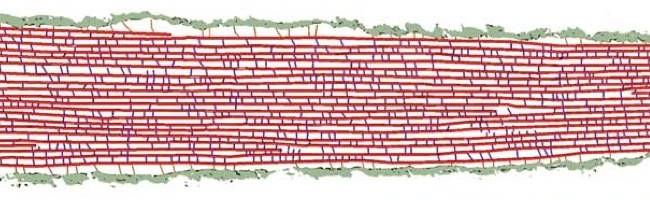
To learn how something works in biology, it pays to start really small. Take this research for example: A team that includes Berkeley Lab scientists has identified and mapped the locations of many of the proteins that compose a hair bundle, which is an organelle that sprouts from hair cells in the inner ear.
Physics - Chemistry - 29.01.2013

Wear is a fact of life. As surfaces rub against one another, they break down and lose their original shape. With less material to start with and functionality that often depends critically on shape and surface structure, wear affects nanoscale objects more strongly than it does their macroscale counterparts.
Chemistry - 28.01.2013

CHAMPAIGN, Ill. Sight would dramatically alter a blind man's understanding of an elephant, according to the old story. Now, a look directly at a cell surface is changing our understanding of cell membrane organization. Using a completely new approach to imaging cell membranes, a study by researchers from the University of Illinois, Lawrence Livermore National Laboratory and the National Institutes of Health revealed some surprising relationships among molecules within cell membranes.
Chemistry - Physics - 28.01.2013
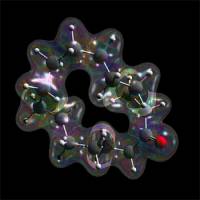
Molecular vibrations, rather than molecular shape, give substances their distinct smell according to a new study by UCL scientists. In a study designed to find out how smell is written into a molecule's structure, scientists tested whether changing how a molecule vibrates on a nano-scale changes its smell.
Chemistry - Physics - 24.01.2013
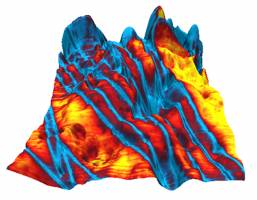
Posted under: Engineering , News Releases , Research , Science , Technology , Uncategorized At the heart of computing are tiny crystals that transmit and store digital information's ones and zeroes. Today these are hard and brittle materials. But cheap, flexible, nontoxic organic molecules may play a role in the future of hardware.
Life Sciences - Chemistry - 22.01.2013
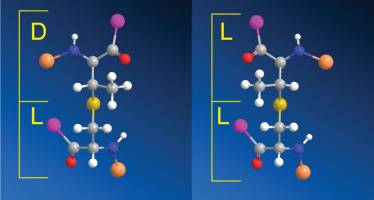
CHAMPAIGN, lll. While working out the structure of a cell-killing protein produced by some strains of the bacterium Enterococcus faecalis , researchers stumbled on a bit of unusual biochemistry. They found that a single enzyme helps form distinctly different, three-dimensional ring structures in the protein, one of which had never been observed before.
Physics - Chemistry - 15.01.2013
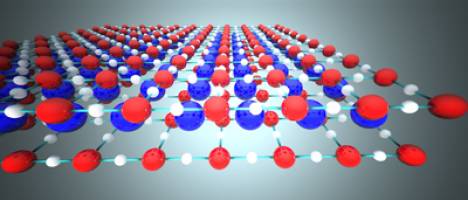
When it comes to high-temperature superconductors, a class of materials called cuprates is king, and it is science's ongoing quest to determine their exact physical subtleties. Cornell physicists and materials scientists have now verified that cuprates respond differently when adding electrons versus removing them, resolving a central issue about the compounds' most fundamental properties.
Chemistry - Physics - 15.01.2013
Chemistry resolves toxic concerns about carbon nanotubes
Safety fears about carbon nanotubes, due to their structural similarity to asbestos, have been alleviated following research showing that reducing their length removes their toxic properties. In a new study, published today in the journal Angewandte Chemie, evidence is provided that the asbestos-like reactivity and pathogenicity reported for long, pristine nanotubes can be completely alleviated if their surface is modified and their effective length is reduced as a result of chemical treatment.
Chemistry - 14.01.2013
Gas that triggers ozone destruction
Scientists at the Universities of Leeds and York have discovered that the majority of ozone-depleting iodine oxide observed over the remote ocean comes from a previously unknown marine source. The research team found that the principal source of iodine oxide can be explained by emissions of hypoiodous acid (HOI) – a gas not yet considered as being released from the ocean – along with a contribution from molecular iodine (I2).
Health - Chemistry - 14.01.2013
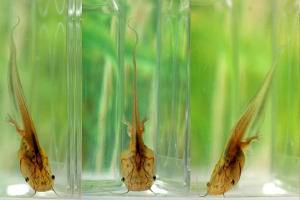
It is generally appreciated that frogs and salamanders have remarkable regenerative capacities, in contrast to mammals, including humans. For example, if a tadpole loses its tail a new one will regenerate within a week. For several years Enrique Amaya and his team at The Healing Foundation Centre in the Faculty of Life Sciences have been trying to better understand the regeneration process, in the hope of eventually using this information to find new therapies that will improve the ability of humans to heal and regenerate better.
Physics - Chemistry - 14.01.2013
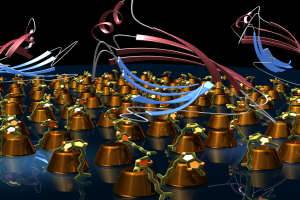
Writing , the scientists, working with colleagues from Aix-Marseille University , have created a device which potentially can see one molecule though a simple optical system and can analyse its components within minutes. This uses plasmonics - the study of vibrations of electrons in different materials.
Physics - Chemistry - 10.01.2013
A Clock Einstein Would Have Loved
A very special clock that can measure time on the basis of the mass of a single atomic or even subatomic particle holds promise not only for ultraprecise measurements of mass and time, but also for such exotic applications as testing Einstein's general theory of relativity, or the effects of gravity on antimatter.
Health - Chemistry - 07.01.2013
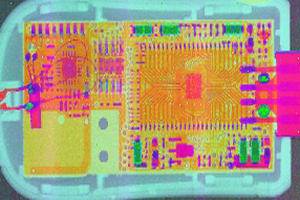
Its ability to identify the composition of the scanned object could radically improve security screening at airports, medical imaging, aircraft maintenance, industrial inspection and geophysical exploration. The X-Ray system developed by Robert Cernik and colleagues from The School of Materials can identify chemicals and compounds such as cocaine, semtex, precious metals or radioactive materials even when they're contained inside a relatively large object like a suitcase.


Chemistry - Mar 19
Leipzig University and Center for the Transformation of Chemistry conclude collaboration agreement
Leipzig University and Center for the Transformation of Chemistry conclude collaboration agreement
Chemistry - Feb 2
New material for use in the chemical industry capable of transforming CO2 into high value-added compounds
New material for use in the chemical industry capable of transforming CO2 into high value-added compounds
Chemistry - Feb 2
Material for modulating metal-organic frameworks for use in the chemical industry capable of transforming CO2 into high value-added compounds
Material for modulating metal-organic frameworks for use in the chemical industry capable of transforming CO2 into high value-added compounds
Chemistry - Jan 15
University of Glasgow spin-out hails milestone breakthrough in hydrogen energy process
University of Glasgow spin-out hails milestone breakthrough in hydrogen energy process
Life Sciences - Dec 17
Manchester Institute of Biotechnology welcomes three new professors, driving innovation in chemical and biological sciences
Manchester Institute of Biotechnology welcomes three new professors, driving innovation in chemical and biological sciences
Health - Nov 21
New Collaborative Research Centres: A Resounding Success for the University and the University Hospital
New Collaborative Research Centres: A Resounding Success for the University and the University Hospital
Chemistry - Nov 6
The scientific community and industry are seeking ways to accelerate the application of perovskite solar cells
The scientific community and industry are seeking ways to accelerate the application of perovskite solar cells