


Chemistry - Mar 19
Leipzig University and Center for the Transformation of Chemistry conclude collaboration agreement
Leipzig University and Center for the Transformation of Chemistry conclude collaboration agreement


Chemistry - Feb 2
New material for use in the chemical industry capable of transforming CO2 into high value-added compounds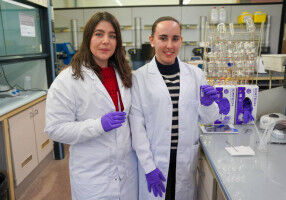
New material for use in the chemical industry capable of transforming CO2 into high value-added compounds
Chemistry - Feb 2
Material for modulating metal-organic frameworks for use in the chemical industry capable of transforming CO2 into high value-added compounds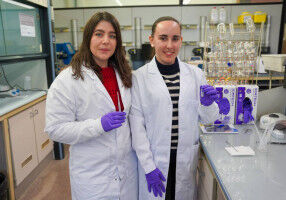
Material for modulating metal-organic frameworks for use in the chemical industry capable of transforming CO2 into high value-added compounds
Chemistry - Jan 15
University of Glasgow spin-out hails milestone breakthrough in hydrogen energy process
University of Glasgow spin-out hails milestone breakthrough in hydrogen energy process
Life Sciences - Dec 17
Manchester Institute of Biotechnology welcomes three new professors, driving innovation in chemical and biological sciences
Manchester Institute of Biotechnology welcomes three new professors, driving innovation in chemical and biological sciences

Health - Nov 21
New Collaborative Research Centres: A Resounding Success for the University and the University Hospital
New Collaborative Research Centres: A Resounding Success for the University and the University Hospital
Chemistry - Nov 6
The scientific community and industry are seeking ways to accelerate the application of perovskite solar cells
The scientific community and industry are seeking ways to accelerate the application of perovskite solar cells
news
Chemistry
Results 3701 - 3720 of 3958.
Health - Chemistry - 21.06.2011
Breakthrough in the search for new treatments for MS
PA 198/11 Scientists at The University of Nottingham have discovered a molecular mechanism which could bring about the development of new treatments for Multiple Sclerosis (MS) — a chronic inflammatory disease of the central nervous system. Dr Bruno Gran, a Clinical Associate Professor in the Division of Clinical Neurology in the School of Clinical Sciences, working in collaboration with Professor Paul Moynagh from the National University of Ireland, Maynooth, has discovered a synthetic chemical compound which inhibits the pro-inflammatory signals produced by the immune system in MS.
Health - Chemistry - 21.06.2011
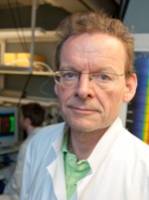
[NEWS 21 June 2011] A new signal pathway that renders the insulin-releasing beta cell more sensitive to high levels of blood glucose has been discovered by researchers at Karolinska Institutet. A second new study reveals a possible way to delay the disease by inhibiting a lipoprotein. A new joint study published and conducted by researchers at Karolinska Institutet's Department of Molecular Medicine and Surgery and their American colleagues provides new insights into how beta cells react to raised concentrations of blood sugar, which occur, for example, after a meal.
Life Sciences - Chemistry - 15.06.2011

Adjusting the intake of high protein foods like meat, eggs and milk products could determine whether you become a rugby player or marathon runner and may help you lose weight, according to new research published this month in the Journal of Biological Chemistry . Dr Stefan Broer, head of the molecular nutrition group in the ANU College of Medicine, Biology and Environment at The Australian National University, said the study by a group of ANU and Sydney researchers could potentially lead to the development of new weight-loss drugs.
Physics - Chemistry - 14.06.2011
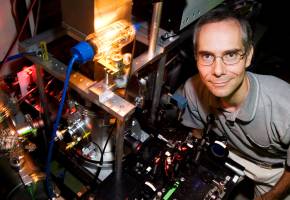
CHAMPAIGN, Ill. Using high-resolution imaging technology, University of Illinois researchers have answered a question that had confounded semiconductor researchers: Is amorphous silicon a glass? The answer? Yes - until hydrogen is added. Led by chemistry professor Martin Gruebele, the group published its results in the journal Physical Review Letters.
Physics - Chemistry - 14.06.2011
Nanotubes pose health risk, study shows
Tiny fibres used to strengthen items such as bike frames and hockey sticks could pose risks to workers who make them. Certain types of carbon nanotubes - cylindrical molecules about one-thousandth of the width of a human hair - could cause cancer in the lining of the lung, University research shows.
Chemistry - Electroengineering - 13.06.2011
How to choose a catalyst
CAMBRIDGE, Mass. MIT researchers have found a new way to predict which materials will perform best as catalysts for oxygen reduction, a core process in metal air batteries and fuel cells, opening up the possibility of faster and more effective development of new high-efficiency, low-cost energy-storage technologies.
Health - Chemistry - 12.06.2011
Nanoparticles may help inhibit Alzheimer’s disease and other neurodegenerative disorders
ANN ARBOR, Mich.—Nanoparticles of the right dimensions and shape may be the key in combating the plaque that destroys neurons and leads to symptoms associated with Alzheimer's disease, a new report shows. University of Michigan chemical engineering professor Nicholas Kotov says the nanotechnology means can attract and capture the longer fibrils that are known to form plaque related to neurodegenerative disorders.
Physics - Chemistry - 09.06.2011
Brightest exploding stars spotted
Science | Space Cath Harris | 09 Jun 11 Scientists have identified a new type of supernova or exploding star which is ten times brighter than any other type of stellar explosion. Astrophysicist Dr Mark Sullivan of Oxford University's Department of Physics is among researchers reporting the discovery in this week's Nature.
Life Sciences - Chemistry - 08.06.2011

by Simon Levey 8 June 2011 Scientists across the country are today being invited to join two new multidisciplinary networks to carry out research and share knowledge in chemical biology, led by the Institute of Chemical Biology at Imperial College London. Chemical biology is defined as the use of chemistry and chemical tools to understand and solve biological problems.
Physics - Chemistry - 08.06.2011

PASADENA, Calif.—They're bright and blue—and a bit strange. They're a new type of stellar explosion that was recently discovered by a team of astronomers led by the California Institute of Technology (Caltech). Among the most luminous in the cosmos, these new kinds of supernovae could help researchers better understand star formation, distant galaxies, and what the early universe might have been like.
Physics - Chemistry - 08.06.2011
Liverpool scientists trap antimatter at ALPHA experiment
Physicists at the Universities of Liverpool and Swansea have succeeded in trapping atoms of antimatter for more than 16 minutes, long enough to begin to study their properties in detail. Antimatter was trapped using an experiment called ALPHA, part of a broad programme at CERN's (link to: http://public.web.cern.ch/public/) antiproton decelerator investigating the mysteries of one of nature's most elusive substances.
Life Sciences - Chemistry - 08.06.2011
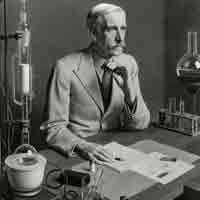
A plaque commemorating the life and work of the eminent biochemist Sir Frederick Gowland Hopkins (1861 to 1947) will be unveiled at his former Cambridge home on Friday. The plaque will be displayed on the exterior of 71 Grange Road, Cambridge, where Hopkins lived with his family for many years. It has been designed and made by the present owner of the house, Mark Bury FRSA, a distinguished engraver, designer and lettercutter.
Health - Chemistry - 06.06.2011
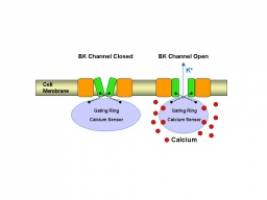
A biological sensor is a critical part of a human cell's control system that is able to trigger a number of cell activities. A type of sensor known as the "gating ring" can open a channel that allows a flow of potassium ions through the cell's wall or membrane — similar to the way a subway turnstile allows people into a station.
Chemistry - Mathematics - 06.06.2011

Findings could aid in the development of better technologies for hydraulic fracturing and other fluid extraction techniques from the earth PASADENA, Calif.—When geologists survey an area of land for the potential that gas or petroleum deposits could exist there, they must take into account the composition of rocks that lie below the surface.
Chemistry - Physics - 02.06.2011
Chemists shed light on sun’s role mixing up molecules
University of Sydney scientists have discovered a startling new mechanism where sunlight can rearrange the atoms of molecules to form new chemical substances. The research, by Professor Scott Kable , Dr Meredith Jordan and collaborators at the School of Chemistry , is published in a recent . It has implications for the extent that pollutants are dispersed across the Earth's surface, and how quickly they are removed.
Chemistry - Life Sciences - 31.05.2011
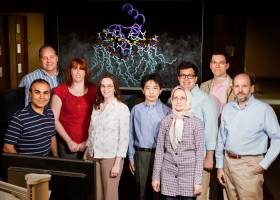
CHAMPAIGN, lll. Blood clotting is a complicated business, particularly for those trying to understand how the body responds to injury. In a new study, researchers report that they are the first to describe in atomic detail a chemical interaction that is vital to blood clotting. This interaction - between a clotting factor and a cell membrane - has baffled scientists for decades.
Physics - Chemistry - 25.05.2011
Quantum sensor tracked in human cells could aid drug discovery
Groundbreaking research has shown a quantum atom has been tracked inside a living human cell and may lead to improvements in the testing and development of new drugs. Professor Lloyd Hollenberg from the University of Melbourne's School of Physics who led the research said it is the first time a single atom encased in nanodiamond has been used as a sensor to explore the nanoscale environment inside a living human cell.
Chemistry - 23.05.2011
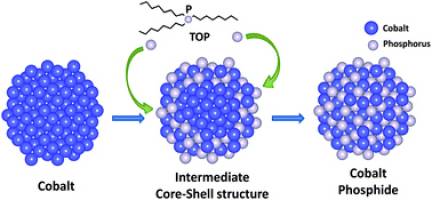
Understanding the intricacies of how nanoparticles undergo chemical transformations could lead to better ways to tailor their composition, which can lead to advanced material properties. Using the Cornell High Energy Synchrotron Source, scientists led by Richard Robinson, assistant professor of materials science and engineering, uncovered exactly what happens when cobalt nanoparticles transform into two phases of cobalt phosphides.
Life Sciences - Chemistry - 20.05.2011
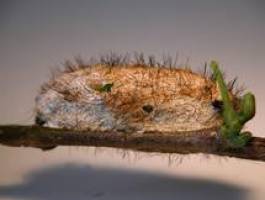
A new way of treating wild silkmoth cocoons could see new silk industries springing up wherever wild silk is found in Africa and South America, as well as silk's Asian heartland. A team led by Oxford University scientists found that the surfaces of wild cocoons are coated with a layer of the mineral calcium oxalate, which makes them difficult to unravel.When the researchers removed this layer using an acidic solution they discovered that it was possible to reel cocoons into long strands of silk comparable to those derived from the domesticated Mulberry silk moth ( Bombyx mori ).
Law - Chemistry - 19.05.2011
How sensors can detect the crime-solving clues at our fingertips
A new approach to fingerprinting using sensor technology developed at the University of Sussex could soon be helping forensics teams date and identify prints left at a crime scene - by capturing their electrical imprint. Currently, traditional methods of fingerprinting don't allow forensics experts to differentiate between prints at a crime scene left before and after the crime has been committed, or to differentiate important or interesting prints from background "clutter" (ie very old fingerprints).


Chemistry - Mar 19
Leipzig University and Center for the Transformation of Chemistry conclude collaboration agreement
Leipzig University and Center for the Transformation of Chemistry conclude collaboration agreement
Chemistry - Feb 2
New material for use in the chemical industry capable of transforming CO2 into high value-added compounds
New material for use in the chemical industry capable of transforming CO2 into high value-added compounds
Chemistry - Feb 2
Material for modulating metal-organic frameworks for use in the chemical industry capable of transforming CO2 into high value-added compounds
Material for modulating metal-organic frameworks for use in the chemical industry capable of transforming CO2 into high value-added compounds
Chemistry - Jan 15
University of Glasgow spin-out hails milestone breakthrough in hydrogen energy process
University of Glasgow spin-out hails milestone breakthrough in hydrogen energy process
Life Sciences - Dec 17
Manchester Institute of Biotechnology welcomes three new professors, driving innovation in chemical and biological sciences
Manchester Institute of Biotechnology welcomes three new professors, driving innovation in chemical and biological sciences
Health - Nov 21
New Collaborative Research Centres: A Resounding Success for the University and the University Hospital
New Collaborative Research Centres: A Resounding Success for the University and the University Hospital
Chemistry - Nov 6
The scientific community and industry are seeking ways to accelerate the application of perovskite solar cells
The scientific community and industry are seeking ways to accelerate the application of perovskite solar cells