




Environment - Mar 26
Changing vegetation in thawing permafrost increases emissions of greenhouse gases
Changing vegetation in thawing permafrost increases emissions of greenhouse gases
Environment - Mar 26
University of Manchester hits major sustainability milestone, with Main Campus becoming 100% 'Zero Landfill'
University of Manchester hits major sustainability milestone, with Main Campus becoming 100% 'Zero Landfill'
Social Sciences - Mar 26
"It would be naive to believe that a social media ban will solve all problems"
"It would be naive to believe that a social media ban will solve all problems"


Health - Mar 26
Earlier detection, better outcomes: Irish researchers target rising bowel cancer rates with new blood test
Earlier detection, better outcomes: Irish researchers target rising bowel cancer rates with new blood test

Environment - Mar 26
UK must improve energy efficiency to end 50 years of policy failure and prevent future energy crises, study argues
UK must improve energy efficiency to end 50 years of policy failure and prevent future energy crises, study argues
Mathematics - Mar 26
From Materials to Medical Imaging, Fonseca's Work Shapes the Future of Innovation
From Materials to Medical Imaging, Fonseca's Work Shapes the Future of Innovation




news
Chemistry
Results 1341 - 1360 of 3958.
Chemistry - Environment - 24.02.2021

Recerca Air pollution from fuel combustion is one of the greatest environmental problems, especially in urban environments. In densely populated cities, the presence of nitrogen oxides, very small carbon particles, and carbon monoxide (CO) in the air seriously harms the human health and increases mortality.
Physics - Chemistry - 24.02.2021

Symmetry is an important underlying structure of nature, present not only in mathematics and art, but also in living organisms and galaxies. Scientists originally thought protons, the positively charged particle at the center of every atom, displayed symmetry. But a research team that includes University of Michigan physicists has found the proton displays asymmetry in its makeup.
Chemistry - Physics - 23.02.2021

Researchers including Göttingen University discover biologically-relevant organic molecules in fluid inclusions It is generally accepted that the earliest life forms used small organic molecules as building materials and energy sources. However, the existence of such components in early habitats on Earth had not been proven to date.
Physics - Chemistry - 23.02.2021
Twin atoms: A source for entangled particles
Quantum experiments that could previously only be performed with photons are now also possible with atoms: Beams of entangled atoms have been produced at TU Wien (Vienna). Heads or tails? If we toss two coins into the air, the result of one coin toss has nothing to do with the result of the other. Coins are independent objects.
Chemistry - Physics - 22.02.2021

A paper just published in the scientific journal Inorganic Chemistry features two chemistry bachelor students as co-authors. Under the supervision of PhD researcher Felix de Zwart of the Van 't Hoff Institute for Molecular Sciences (HIMS), Bente Reus and Anna Laporte performed online studies to determine chemical details of molecules with relevance to De Zwart's research.
Chemistry - Materials Science - 19.02.2021
New research could boost a solar-powered fuel made by splitting water
Pritzker School of Molecular Engineering research could help make hydrogen useful, sustainable fuel Hydrogen is an incredibly powerful fuel, and the ingredients are everywhere-in plain old water. Researchers would love to be able to use it widely as a clean and sustainable energy source. One catch, however, is that a considerable amount of energy is required to split water and make hydrogen.
Life Sciences - Chemistry - 18.02.2021

During development, scores of molecular signals prod cells to take on specialized identities and functions. In response to some of these signals, the cellular machinery awakens specific genes called 'immediate early genes' within minutes. The Rijli group has now identified a unique molecular signature that keeps immediate early genes quiet yet poised for rapid activation.
Chemistry - 18.02.2021

For the first time, biologically-relevant organic molecules have been detected in Archaean fluid inclusions, which most likely served as nutrients for early life on Earth. A research team including the geobiologist Dr. Helge Mißbach from the University of Cologne has detected organic molecules and gases trapped in 3.5 billion-year-old rocks.
Physics - Chemistry - 18.02.2021
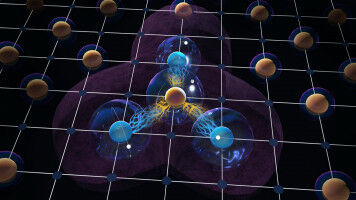
Rydberg atoms are among the most promising candidates in the race of realizing a working quantum computer. In the new collaborative project ,,QRydDemo", researchers led by the University of Stuttgart aim to realize a Rydberg quantum computer demonstrator together with an industrial partner by 2025. In order to reach this goal, they group Rydberg atoms in a two-dimensional optical trap structure and perform quantum logical operations by controlled entanglement and shifting of the atom traps.
Chemistry - Life Sciences - 08.02.2021

A team of engineers and scientists has developed a method of 'multiplying' organoids: miniature collections of cells which mimic the behaviour of various organs and are promising tools for the study of human biology and disease. We need to find the right conditions to help the cells in mini-organs self-organise Yan Yan Shery Huang The researchers, from the University of Cambridge, used their method to culture and grow a 'mini-airway', the first time that a tube-shaped organoid has been developed without the need for any external support.
Health - Chemistry - 04.02.2021

Injecting patients with a gel that would dissolve over several months could replace the need to administer daily or weekly shots. But to make this possible, researchers first had to create a Jello-like substance that could defy one of the fundamental laws of nature. Gels are formed by mixing polymers into fluids to create gooey substances useful for everything from holding hair in place to enabling contact lenses to float over the eye.
Life Sciences - Chemistry - 04.02.2021
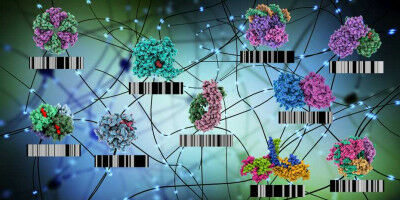
Researchers have drastically improved existing proteomics techniques so they can capture all functional alterations in proteins. Their work paves the way for using these signatures as diagnostic tools. In biological cells, proteins are everywhere: these building blocks of life perform countless important functions.
Chemistry - Environment - 02.02.2021

Scientists are using an analysis of gases in the atmosphere of Venus to develop a new generation of lower-cost and more effective catalytic converters. Based on what they learned, a research team at the University has manufactured a synthetic compound which they believe will reduce toxic emissions of carbon monoxide (CO) and nitrogen oxides (NOx) from diesel engine exhaust.
Materials Science - Chemistry - 29.01.2021

Research on manufacturing battery cells is gaining momentum - and there is a strong need, considering the future demand for energy storage: For the year 2030, global production of rechargeable batteries will double from today's 750 gigawatt hours (GWh) per year to 1,500 GWh. A recently published review article in the magazine "Nature Energy" on cell production of various battery types suggests that the currently established lithium-ion batteries (LIB) dominate the market of rechargeable high-energy batteries in the coming years.
Chemistry - Environment - 29.01.2021

Researchers at ETH Zurich and the University of Mainz developed a new method to replace molecular chlorine and bromine in chemical synthesis with less toxic molecules. The technology helps to make chemical processes safer and more sustainable and to remediate contaminated soils. Chlorine and bromine in their molecular form (as Cl2 and Br2 molecules) are notoriously toxic and corrosive chemicals.
Chemistry - Environment - 29.01.2021
Synthesizing valuable chemicals from contaminated soil
Researchers of Mainz University use electrolysis to produce dichloro and dibromo compounds in a safer and more environmentally friendly manner / Results published in Science 29 January 2021 Scientists at Johannes Gutenberg University Mainz (JGU) and ETH Zurich have developed a process to produce commodity chemicals in a much less hazardous way than was previously possible.
Chemistry - Life Sciences - 28.01.2021

Evidence is emerging that vitamin D - and possibly vitamins K and A - might help combat COVID-19. A new study from the University of Bristol published in the journal of the German Chemical Society Angewandte Chemie has shown how they - and other antiviral drugs - might work. The research indicates that these dietary supplements and compounds could bind to the viral spike protein and so might reduce SARS-CoV-2 infectivity.
Chemistry - 28.01.2021

Research groups led by the polymer chemist Prof. Sabine Ludwigs and the mechanic Prof. Holger Steeb at the University of Stuttgart have developed active double-layer structures from intelligent polymers based on the structures of a flowering plant, which lean of their own accord in response to humidity and then regain their original shape.
Physics - Chemistry - 27.01.2021
Size of helium nucleus measured more precisely than ever before
In experiments at the Paul Scherrer Institute PSI, an international research collaboration with ETH Zurich involvement has measured the radius of the atomic nucleus of helium five times more precisely than ever before. With the aid of the new value, fundamental physical theories can be tested. After hydrogen, helium is the second most abundant element in the universe.
Chemistry - Physics - 22.01.2021
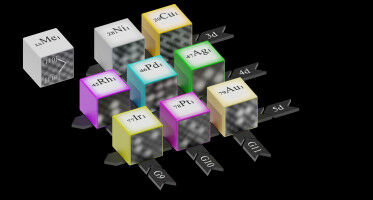
For years, the metal nanoparticles used in catalysts have been getting smaller and smaller. Now, a research team at TU Wien in Vienna, Austria have shown that everything is suddenly different when you arrive at the smallest possible size: a single atom. Metals such as gold or platinum are often used as catalysts.


Environment - Mar 26
Changing vegetation in thawing permafrost increases emissions of greenhouse gases
Changing vegetation in thawing permafrost increases emissions of greenhouse gases
Environment - Mar 26
University of Manchester hits major sustainability milestone, with Main Campus becoming 100% 'Zero Landfill'
University of Manchester hits major sustainability milestone, with Main Campus becoming 100% 'Zero Landfill'
Social Sciences - Mar 26
"It would be naive to believe that a social media ban will solve all problems"
"It would be naive to believe that a social media ban will solve all problems"
Health - Mar 26
Earlier detection, better outcomes: Irish researchers target rising bowel cancer rates with new blood test
Earlier detection, better outcomes: Irish researchers target rising bowel cancer rates with new blood test
Environment - Mar 26
UK must improve energy efficiency to end 50 years of policy failure and prevent future energy crises, study argues
UK must improve energy efficiency to end 50 years of policy failure and prevent future energy crises, study argues
Mathematics - Mar 26
From Materials to Medical Imaging, Fonseca's Work Shapes the Future of Innovation
From Materials to Medical Imaging, Fonseca's Work Shapes the Future of Innovation