

Health - Mar 30
Minister Rianne Letschert visits Twente: education and science as drivers of the hospital of the future
Minister Rianne Letschert visits Twente: education and science as drivers of the hospital of the future


Social Sciences - Mar 30
New Research Project on African American Thought and the German Colonial Imagination
New Research Project on African American Thought and the German Colonial Imagination
Politics - Mar 30
Researcher Carolina Moreno calls for official science communication to counter disinformation in critical periods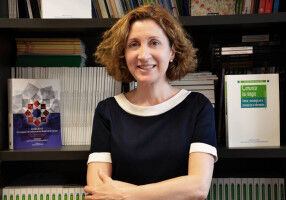
Researcher Carolina Moreno calls for official science communication to counter disinformation in critical periods

Health - Mar 30
Simple screening blood test could help identify undiagnosed heart failure in people living with diabetes
Simple screening blood test could help identify undiagnosed heart failure in people living with diabetes


Economics - Mar 30
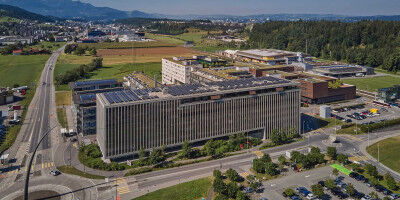
University of Glasgow and Lloyds Banking Group announce groundbreaking agentic AI research programme
University of Glasgow and Lloyds Banking Group announce groundbreaking agentic AI research programme
Astronomy & Space - Mar 30
ANU lends its expertise in laser communications to support NASA's Artemis II crewed moon mission
ANU lends its expertise in laser communications to support NASA's Artemis II crewed moon mission


Life Sciences - Mar 27
Understanding the Brain - TU Ilmenau's EU EMBRACE Project Nominated for European Excellence Award
Understanding the Brain - TU Ilmenau's EU EMBRACE Project Nominated for European Excellence Award
Social Sciences - Mar 27
A manual addresses, for the first time in Spain, child and adolescent sexual exploitation
A manual addresses, for the first time in Spain, child and adolescent sexual exploitation

news
Chemistry
Results 2541 - 2560 of 3959.
Physics - Chemistry - 23.12.2016

Using ultrafast imaging of moving energy in photosynthesis, scientists have determined the speed of crucial processes for the first time. This should help scientists understand how nature has perfected the process of photosynthesis, and how this might be copied to produce fuels by artificial photosynthesis.
Chemistry - Life Sciences - 21.12.2016

Cells are the site of a multitude of chemical reactions, the precision of which is envied by scientists.
Chemistry - Physics - 21.12.2016

Hybrid organic-inorganic materials, which were developed approximately twenty years ago – notably by Gérard Férey, laureate of the CNRS 2010 Gold Medal, and his team – are known firstly for their extreme porosity. This remarkable property offers a diverse range of applications in the fields of energy, health, and sustainable development.
Health - Chemistry - 21.12.2016

Manuela Baccarini and her team at the Max F. Perutz Laboratories (MFPL) of the University of Vienna and Medical University of Vienna are one step closer to unravelling the mechanisms behind liver cancer. The researchers discovered that RAF1, a protein known as an oncogene in other systems, unexpectedly acts as a tumour suppressor in hepatocellular carcinoma.
Chemistry - Physics - 21.12.2016

Molecules 10,000 times narrower than the width of a human hair could hold the key to making possible wooden skyscrapers and more energy-efficient paper production, according to research published today . The study, led by a father and son team at the Universities of Warwick and Cambridge, solves a long-standing mystery of how key sugars in cells bind to form strong, indigestible materials.
Physics - Chemistry - 19.12.2016
Physicists shine light on antimatter
Scientists from the University of Liverpool as part of CERN's ALPHA collaboration have made the first spectroscopic measurement of an atom of antimatter - a longstanding goal in antimatter physics. Published , this finding represents a significant step towards the development of highly precise tests of whether matter behaves differently from antimatter.
Chemistry - 19.12.2016

A team of international scientists, led by the University of Bristol, has uncovered the earliest direct evidence of humans processing plants for food found anywhere in the world. Researchers at the Organic Geochemistry Unit in the University of Bristol's School of Chemistry , working with colleagues at Sapienza, University of Rome and the Universities of Modena and Milan, studied unglazed pottery dating from more than 10,000 years ago, from two sites in the Libyan Sahara.
Chemistry - Life Sciences - 15.12.2016
Wheat crop yield can be increased by up to 20% using new chemical technology
UK scientists have created a synthetic molecule that, when applied to crops, has been shown to increase the size and starch content of wheat grains in the lab by up to 20%. The new plant application, developed by Rothamsted Research and Oxford University, could help solve the issue of increasing food insecurity across the globe.
Chemistry - 13.12.2016

Research news For years, small rechargeable lithium-ion batteries have reliably supplied billions of portable devices with energy. But manufacturers of high-energy applications such as electric cars and power storage systems seek for new electrode materials and electrolytes. Michael Metzger, researcher at the Technical University of Munich (TUM), has now developed a new battery test cell allowing to investigate anionic and cationic reactions separately.
Physics - Chemistry - 13.12.2016

Materials exposed to a high-radiation environment such as the inside of a nuclear reactor vessel can gradually degrade and weaken. But to determine exactly how much damage these materials suffer generally requires removing a sample and testing it in specialized facilities, a process that can take weeks.
Chemistry - Environment - 08.12.2016
Hydraulic fracturing fluids affect water chemistry from gas wells
Travis Tasker, Penn State doctoral candidate in environmental engineering, collecting deep shale samples at a shale outcrop in Frankstown, Pennsylvania. UNIVERSITY PARK, Pa. Pressure, temperature and fluid composition play an important role in the amount of metals and other chemicals found in wastewaters from hydraulically fractured gas reservoirs, according to Penn State researchers.
Life Sciences - Chemistry - 05.12.2016

Autism spectrum disorder is caused by a variety of factors, both genetic and environmental. But a new study led by UCLA scientists provides further evidence that the brains of people with the disorder tend to have the same "signature" of abnormalities at the molecular level. The scientists analyzed 251 brain tissue samples from nearly 100 deceased people — 48 who had autism and 49 who didn't.
Life Sciences - Chemistry - 05.12.2016

Yale researchers have helped identify a novel, functional 'microprotein' encoded in the human genome, using a technique that has revealed more than 400 new proteins too tiny to be found by other means. One of those microproteins, called NoBody, is a molecular workhorse involved in sweeping out unneeded genetic material inside cells.
Life Sciences - Chemistry - 04.12.2016

Chemists are investigating a substance class for biological and pharmaceutical applications Annette Rompel and her team of the Department of Biophysical Chemistry at the University of Vienna are investigating so-called polyoxometalates. These compounds exhibit a great diversity and offer the scientists a wide range of applications.
Chemistry - Physics - 01.12.2016

Scientists have taken spectroscopic snapshots of nature's most mysterious relay race: the passage of extra protons from one water molecule to another during conductivity. The finding represents a major benchmark in our knowledge of how water conducts a positive electrical charge, which is a fundamental mechanism found in biology and chemistry.
Physics - Chemistry - 01.12.2016

Water conducts electricity, but the process by which this familiar fluid passes along positive charges has puzzled scientists for decades. But in a paper published in the Dec. 2 issue of the journal Science , an international team of researchers has finally caught water in the act - showing how water molecules pass along excess charges and, in the process, conduct electricity.
Life Sciences - Chemistry - 29.11.2016
Penn Chemists Uncover New Information About a Protein Linked to Alzheimer s
Although the protein tau, which is associated with Alzheimer's and other neurodegenerative diseases, has been heavily studied for decades, its role in maintaining cell function is poorly understood. Normally, tau binds to tube-like structures called microtubules that support cells to help stabilize them.
Physics - Chemistry - 29.11.2016

Tiny, glowing crystals designed to detect and capture heavy-metal toxins such as lead and mercury could prove to be a powerful new tool in locating and cleaning up contaminated water sources. Motivated by publicized cases in which high levels of heavy metals were found in drinking water in Flint, Mich., and Newark, N.J., a science team led by researchers at Rutgers University used intense X-rays at Lawrence Berkeley National Laboratory (Berkeley Lab) to probe the structure of the crystals they developed and learn how they bind to heavy metals.
Life Sciences - Chemistry - 24.11.2016

A new study is the first to show that living organisms can be persuaded to make silicon-carbon bonds?something only chemists had done before. Scientists at Caltech "bred" a bacterial protein to have the ability to make the man-made bonds'a finding that has applications in several industries. Molecules with silicon-carbon, or organosilicon, compounds are found in pharmaceuticals as well as in many other products, including agricultural chemicals, paints, semiconductors, and computer and TV screens.
Chemistry - Physics - 24.11.2016
For platinum catalysts, a tiny squeeze gives a big boost in performance, Stanford study finds
Squeezing a platinum catalyst a fraction of a nanometer nearly doubles its catalytic activity, a finding that could lead to better fuel cells and other clean energy technologies. A nanosize squeeze can significantly boost the performance of platinum catalysts that help generate energy in fuel cells, according to a new study by Stanford scientists.


Health - Mar 30
Minister Rianne Letschert visits Twente: education and science as drivers of the hospital of the future
Minister Rianne Letschert visits Twente: education and science as drivers of the hospital of the future
Social Sciences - Mar 30
New Research Project on African American Thought and the German Colonial Imagination
New Research Project on African American Thought and the German Colonial Imagination
Politics - Mar 30
Researcher Carolina Moreno calls for official science communication to counter disinformation in critical periods
Researcher Carolina Moreno calls for official science communication to counter disinformation in critical periods
Health - Mar 30
Simple screening blood test could help identify undiagnosed heart failure in people living with diabetes
Simple screening blood test could help identify undiagnosed heart failure in people living with diabetes
Economics - Mar 30
University of Glasgow and Lloyds Banking Group announce groundbreaking agentic AI research programme
University of Glasgow and Lloyds Banking Group announce groundbreaking agentic AI research programme
Astronomy & Space - Mar 30
ANU lends its expertise in laser communications to support NASA's Artemis II crewed moon mission
ANU lends its expertise in laser communications to support NASA's Artemis II crewed moon mission
Life Sciences - Mar 27
Understanding the Brain - TU Ilmenau's EU EMBRACE Project Nominated for European Excellence Award
Understanding the Brain - TU Ilmenau's EU EMBRACE Project Nominated for European Excellence Award
Social Sciences - Mar 27
A manual addresses, for the first time in Spain, child and adolescent sexual exploitation
A manual addresses, for the first time in Spain, child and adolescent sexual exploitation