



Life Sciences - Today
Understanding the Brain - TU Ilmenau's EU EMBRACE Project Nominated for European Excellence Award
Understanding the Brain - TU Ilmenau's EU EMBRACE Project Nominated for European Excellence Award
Social Sciences - Today
A manual addresses, for the first time in Spain, child and adolescent sexual exploitation
A manual addresses, for the first time in Spain, child and adolescent sexual exploitation


Environment - Mar 26
Changing vegetation in thawing permafrost increases emissions of greenhouse gases
Changing vegetation in thawing permafrost increases emissions of greenhouse gases
Environment - Mar 26
University of Manchester hits major sustainability milestone, with Main Campus becoming 100% 'Zero Landfill'
University of Manchester hits major sustainability milestone, with Main Campus becoming 100% 'Zero Landfill'
Social Sciences - Mar 26
"It would be naive to believe that a social media ban will solve all problems"
"It would be naive to believe that a social media ban will solve all problems"


Health - Mar 26
Earlier detection, better outcomes: Irish researchers target rising bowel cancer rates with new blood test
Earlier detection, better outcomes: Irish researchers target rising bowel cancer rates with new blood test

Environment - Mar 26
UK must improve energy efficiency to end 50 years of policy failure and prevent future energy crises, study argues
UK must improve energy efficiency to end 50 years of policy failure and prevent future energy crises, study argues

Mathematics - Mar 26
From Materials to Medical Imaging, Fonseca's Work Shapes the Future of Innovation
From Materials to Medical Imaging, Fonseca's Work Shapes the Future of Innovation


news
Chemistry
Results 2661 - 2680 of 3958.
Physics - Chemistry - 05.07.2016

Water is liquid at room temperature - astounding for such a small molecule. Insights into the causes are provided by a new simulation method, which has its origins in brain research. Using artificial neural networks, researchers in Bochum and Vienna have examined the atomic interactions of water molecules.
Chemistry - Physics - 05.07.2016
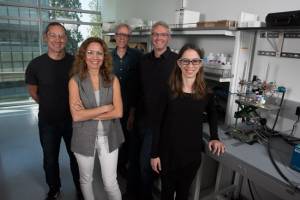
Mimicking nature is not easy, but new insights by researchers at the Department of Energy's Lawrence Berkeley National Laboratory (Berkeley Lab) could help create a viable artificial system of photosynthesis. One of the major challenges for scientists working to create systems that efficiently convert sunlight, water and carbon dioxide into fuel is finding materials that can do the work while also surviving the corrosive conditions that are part of the process.
Physics - Chemistry - 04.07.2016
Discovery Could Dramatically Boost Efficiency of Perovskite Solar Cells
Scientists from the Department of Energy's Lawrence Berkeley National Laboratory (Berkeley Lab) have discovered a possible secret to dramatically boosting the efficiency of perovskite solar cells hidden in the nanoscale peaks and valleys of the crystalline material. Solar cells made from compounds that have the crystal structure of the mineral perovskite have captured scientists' imaginations.
Life Sciences - Chemistry - 30.06.2016

Research news Since the completion of the human genome an important goal has been to elucidate the function of the now known proteins: a new molecular method enables the investigation of the function for thousands of proteins in parallel. Applying this new method, an international team of researchers with leading participation of the Technical University of Munich (TUM) was able to identify hundreds of previously unknown interactions among proteins.
Life Sciences - Chemistry - 30.06.2016
Zebrafish reveal the ups and downs of vision
Researchers from the Centre for Developmental Neurobiology at King's College London have shed light on how we perceive and recognise specific visual stimuli. The first steps in visual processing take place in the retina, which is a thin layer of tissue at the back of the eye containing more than 70 distinct types of nerve cells.
Physics - Chemistry - 29.06.2016
Scientists See Electron Bottleneck in Simulated Battery
An international team of scientists that includes researchers at the Department of Energy's Lawrence Berkeley National Laboratory (Berkeley Lab) has revealed how interactions between electrons and ions can slow down the performance of a material considered key to the next generation of batteries. A scanning electron microscopy image of vanadium pentoxide nanowires.
Physics - Chemistry - 28.06.2016
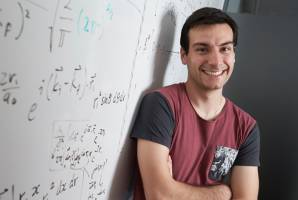
Results will also be used to understand basic questions about nature such as the cooling mechanisms of the early universe and the formation of planets and stars. Understanding of molecular hydrogen has implications from industry to medicine LOS ALAMOS, N.M. June 28, 2016-A team of researchers from Los Alamos National Laboratory and Curtin University in Australia developed a theoretical model to forecast the fundamental chemical reactions involving molecular hydrogen (H2), which after many decades and attempts by scientists had remained largely unpredicted and unsolved.
Chemistry - Physics - 27.06.2016
Newly created ’sandwich rings’ could lead to better computers
Scientists have created an iron-based ring structure that could be used for new applications in electronics and sensing. Ferrocene is a molecule that was discovered in the 1950s. It is made up of two rings of hydrogen and carbon bound either side of an iron atom. This and other 'sandwich compounds' have unique properties that have led to their widespread use as industrial catalysts, pharmaceuticals, and fuel additives.
Astronomy & Space - Chemistry - 27.06.2016
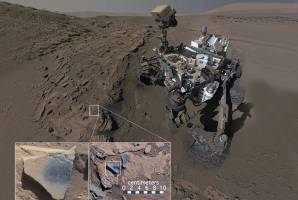
The discovery of manganese oxides in Martian rocks might tell us that the Red Planet was once more Earth-like than previously believed. "One potential way that oxygen could have gotten into the Martian atmosphere is from the breakdown of water when Mars was losing its magnetic field," said Lanza. Curiosity rover's discovery of manganese oxide points to a more Earth-like planet LOS ALAMOS, N.M. June 27, 2016-The discovery of manganese oxides in Martian rocks might tell us that the Red Planet was once more Earth-like than previously believed.
Life Sciences - Chemistry - 27.06.2016
Mutant enzyme study aids in understanding of sirtuin’s functions
The enzyme sirtuin 6, or SIRT6, serves many key biological functions in regulating genome stability, DNA repair, metabolism and longevity, but how its multiple enzyme activities relate to its various functions is poorly understood. A team of Cornell researchers, led by Hening Lin , professor of chemistry and chemical biology, has devised a method for isolating one specific enzyme activity to determine its contribution and lead to better overall understanding of SIRT6.
Chemistry - Environment - 27.06.2016
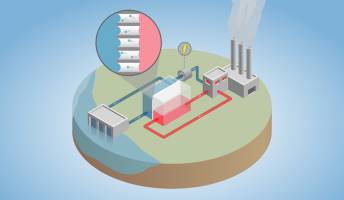
Researchers at Yale have developed a new technology that could make energy from the low-temperature wasted heat produced by industrial sources and power plants, tapping into a widely available - and mostly unused - resource. It is estimated that recoverable waste heat in the U.S. alone could power tens of millions of homes.
Chemistry - 24.06.2016
Energy from Sunlight: Further Steps towards Artificial Photosynthesis
Chemists from the Universities of Basel and Zurich have come one step closer to generating energy from sunlight: for the first time, they were able to reproduce one of the crucial phases of natural photosynthesis with artificial molecules. Their Green plants are able to temporarily store electric charges after the absorption of sunlight by using a so-called molecular charge accumulator.
Chemistry - Physics - 23.06.2016
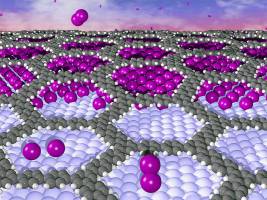
Research news Defined metal surfaces support the formation of two dimensional nanostructures. It is very difficult, however, to transfer these ultimately thin structures to other surfaces. Within an international cooperation project, scientists at the Technical University of Munich (TUM) found an elegant way to decouple the nanostructures from the substrate: Iodine atoms creep between the network of organic molecules and the metal surface.
Physics - Chemistry - 23.06.2016
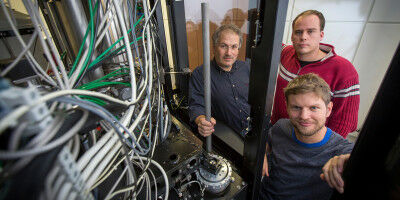
Gaining detailed knowledge about atomic structure and chemical composition is paramount for a deeper understanding of the properties of matter and their potential applications in technology. Electron microscopy thus represents a key tool for the comprehensive characterization of materials at highest spatial resolution in three dimensions.
Chemistry - Environment - 22.06.2016
Artificial photosynthesis a step closer with new process
Scientists discover a process that could enhance our ability to harvest energy from the Sun for electricity and fuels. A process to enhance the performance of solar technologies such as solar cells and photocatalysts, and potentially make their production cheaper, has been discovered by scientists. Solar cells take energy from the Sun and convert it into electricity.
Chemistry - Physics - 22.06.2016
Newly discovered light harvesting properties could lead to cheaper solar panels
Researchers have discovered that some solar cells could be more efficient than previously thought possible, opening new doors for their development. A team led by scientists from Imperial College London have revealed how a particular molecular structure can boost the effectiveness of polymer solar cells.
Physics - Chemistry - 21.06.2016

MAX IV - the most modern synchrotron radiation facility in the world - is now ready to open. Over 2,000 international researchers will use the Swedish-based laboratory each year to conduct groundbreaking experiments in materials and life sciences using the most brilliant X-ray light ever generated. The laboratory enables researchers to study atoms and molecules that are only a few tenths of a nanometre in diameter, which provides completely new knowledge about the world and how it works.
Chemistry - 21.06.2016
Gym results run hot and cold
First, researchers discovered cold water immersion after a workout can ruin your gym gains. Now there's evidence hot water immersion does the same. Hamish McGorm from The University of Queensland School of Human Movement and Nutrition Sciences will try to resolve the quandary on an upcoming research mission to New Zealand.
Physics - Chemistry - 20.06.2016
Penn Chemists Establish Fundamentals of Ferroelectric Materials
Ferromagnetic materials, like compass needles, are useful because their magnetic polarization makes them rotate to align with magnetic fields. Ferroelectric materials behave in a similar way but with electric, rather than magnetic, fields. That external electric fields can reorient the electric polarization of these materials makes them ideal for certain memory applications, such as stored-value cards used in mass-transit systems.
Life Sciences - Chemistry - 20.06.2016
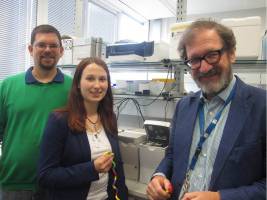
Viruses smuggle their genetic material into our cells. How this actually works is currently being investigated at TU Wien (Vienna) using a new combination of analysis methods. Cold viruses cause us irritation by penetrating into our cells and transporting their RNA into the cytoplasma of the infected cells.


Life Sciences - Today
Understanding the Brain - TU Ilmenau's EU EMBRACE Project Nominated for European Excellence Award
Understanding the Brain - TU Ilmenau's EU EMBRACE Project Nominated for European Excellence Award
Social Sciences - Today
A manual addresses, for the first time in Spain, child and adolescent sexual exploitation
A manual addresses, for the first time in Spain, child and adolescent sexual exploitation
Environment - Mar 26
Changing vegetation in thawing permafrost increases emissions of greenhouse gases
Changing vegetation in thawing permafrost increases emissions of greenhouse gases
Environment - Mar 26
University of Manchester hits major sustainability milestone, with Main Campus becoming 100% 'Zero Landfill'
University of Manchester hits major sustainability milestone, with Main Campus becoming 100% 'Zero Landfill'
Social Sciences - Mar 26
"It would be naive to believe that a social media ban will solve all problems"
"It would be naive to believe that a social media ban will solve all problems"
Health - Mar 26
Earlier detection, better outcomes: Irish researchers target rising bowel cancer rates with new blood test
Earlier detection, better outcomes: Irish researchers target rising bowel cancer rates with new blood test
Environment - Mar 26
UK must improve energy efficiency to end 50 years of policy failure and prevent future energy crises, study argues
UK must improve energy efficiency to end 50 years of policy failure and prevent future energy crises, study argues
Mathematics - Mar 26
From Materials to Medical Imaging, Fonseca's Work Shapes the Future of Innovation
From Materials to Medical Imaging, Fonseca's Work Shapes the Future of Innovation