




Environment - Mar 26
Changing vegetation in thawing permafrost increases emissions of greenhouse gases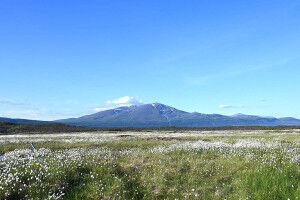
Changing vegetation in thawing permafrost increases emissions of greenhouse gases
Environment - Mar 26
University of Manchester hits major sustainability milestone, with Main Campus becoming 100% 'Zero Landfill'
University of Manchester hits major sustainability milestone, with Main Campus becoming 100% 'Zero Landfill'
Social Sciences - Mar 26
"It would be naive to believe that a social media ban will solve all problems"
"It would be naive to believe that a social media ban will solve all problems"


Health - Mar 26
Earlier detection, better outcomes: Irish researchers target rising bowel cancer rates with new blood test
Earlier detection, better outcomes: Irish researchers target rising bowel cancer rates with new blood test
Environment - Mar 26
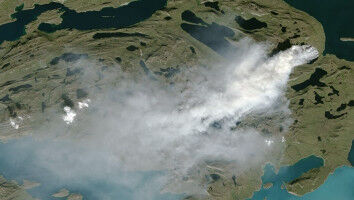
UK must improve energy efficiency to end 50 years of policy failure and prevent future energy crises, study argues
UK must improve energy efficiency to end 50 years of policy failure and prevent future energy crises, study argues
Mathematics - Mar 26
From Materials to Medical Imaging, Fonseca's Work Shapes the Future of Innovation
From Materials to Medical Imaging, Fonseca's Work Shapes the Future of Innovation


news
Chemistry
Results 2721 - 2740 of 3958.
Chemistry - Environment - 02.05.2016
Cleansing Rain? Not So Fast
Scientists have found that rain triggers the release of a mist of particles from wet soils into the air, a finding with consequences for how scientists model our planet's climate and future. (Credit PNNL) This article was adapted from a news release by Pacific Northwest National Laboratory. Rain's reputation for cleansing the air may come with a caveat after new study findings show that they play a role in generating airborne organic particles.
Physics - Chemistry - 02.05.2016
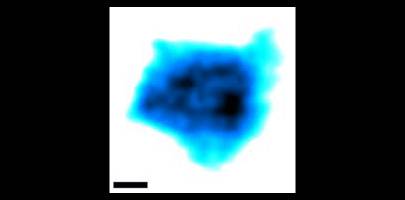
Using an ultra fast-scanning atomic force microscope, a team of researchers from the University of Basel has filmed "living" nuclear pore complexes at work for the first time. Nuclear pores are molecular machines that control the traffic entering or exiting the cell nucleus. In their article published , the researchers explain how the passage of unwanted molecules is prevented by rapidly moving molecular "tentacles" inside the pore.
Astronomy & Space - Chemistry - 26.04.2016
Profile of a methane sea on Titan
Saturn's largest moon is covered in seas and lakes of liquid hydrocarbons - and one sea has now been found to be filled with pure methane, with a seabed covered by a sludge of organic-rich material, and possibly surrounded by wetlands. Of all the moons in the Solar System, Titan is the only one with a thick atmosphere and large liquid reservoirs on its surface - in some ways making it more like a planet such as Earth.
Physics - Chemistry - 18.04.2016
What Screens are Made of: New Twists (and Bends) in LCD Research
Researchers examined the spiral "twist-bend" structure (right) formed by boomerang-shaped liquid crystal molecules (left and center) measuring 3 nanometers in length, using a pioneering X-ray technique at Berkeley Lab's Advanced Light Source. A better understanding of this spiral form, discovered in 2013, could lead to new applications for liquid crystals and improved liquid-crystal display screens.
Chemistry - Physics - 18.04.2016

Researchers show how jolting this material with an electrical field causes it to twitch or pulse in a muscle-like fashion. This polymer can also stretch to 100 times its original length, and even repair itself if punctured. If there's such a thing as an experiment that goes too well, a recent effort in the lab of Stanford chemical engineering Professor Zhenan Bao might fit the bill.
Physics - Chemistry - 15.04.2016
A single-atom magnet breaks new ground for future data storage
15. Scientists at EPFL and ETH Zurich have built a single-atom magnet that is the most stable to-date.
Physics - Chemistry - 14.04.2016
First-ever videos show how heat moves through materials at the nanoscale and speed of sound
Groundbreaking observations could help develop better, more efficient materials for electronics and alternative energy Using a state-of-the-art ultrafast electron microscope, University of Minnesota researchers have recorded the first-ever videos showing how heat moves through materials at the nanoscale traveling at the speed of sound.
Astronomy & Space - Chemistry - 14.04.2016
Heidelberg Researchers Analyse Chemical Composition of Dust from Beyond the Solar System
The Cosmic Dust Analyser on the international Cassini spacecraft has detected the faint but distinct signature of dust coming from outside our Solar System, from the local interstellar cloud: an almost empty bubble of gas and dust we are travelling through with a distinct direction and speed. This graphic summarises the location of Saturn, and the Solar System, with respect to the local interstellar cloud, and our place in the Milky Way galaxy.
Chemistry - Health - 13.04.2016
New asthma biomarkers discovered, could ease detection
HERSHEY, Pa. People with asthma have telltale molecules circulating in their blood, say researchers at Penn State College of Medicine. The discovery could lead to the first diagnostic blood test for asthma, as well as more targeted treatments for the condition. There are currently no definitive diagnostic tests for asthma, a common chronic inflammatory lung disease that affects 25 million Americans.
Physics - Chemistry - 12.04.2016
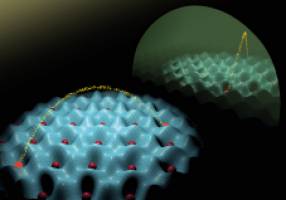
In phase transitions, for instance between water and water vapour, the motional energy competes with the attractive energy between neighbouring molecules.
Physics - Chemistry - 08.04.2016
A single ion impacts a million water molecules
08. EPFL researchers have found that water molecules are 10,000 times more responsive to ions than previously thought. Water is simple and complex at the same time. A single water molecule (H2O) is made up of only 3 atoms. Yet the collective behavior of water molecules is unique and continues to amaze us.
Astronomy & Space - Chemistry - 07.04.2016

Researchers have for the first time shown that ribose, a sugar that is one of the building blocks of genetic material in living organisms, may have formed in cometary ices. To obtain this result, scientists at the Institut de Chimie de Nice (CNRS/Université Nice Sophia Antipolis) carried out a highly detailed analysis of an artificial comet created by their colleagues at the Institut d'Astrophysique Spatiale (CNRS/Université Paris-Sud).
Chemistry - Physics - 06.04.2016
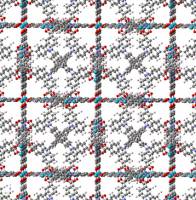
High-tech sponges of the infinitely small, nanoporous materials can capture and release gaseous or liquid chemicals in a controlled way.
Physics - Chemistry - 04.04.2016

University of Bristol scientists researching how drones can be used to speed up landmine clearance will fly a drone over Old Trafford today [Monday 4 April] - UN International Day for Mine Awareness - to demonstrate how large, football pitch-sized areas can be mapped quickly. The research, led by Dr John Day of the Interface Analysis Centre in Bristol's School of Physics , is funded by Find A Better Way , the charity founded by England and Manchester United legend Sir Bobby Charlton.
Physics - Chemistry - 04.04.2016
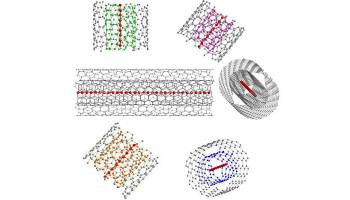
Elemental carbon appears in many different forms, including diamond and graphite. Their unique structural, electrical and optical properties have a broad range of potential applications in composite materials and nanoelectronics. Within the "carbon family", only carbyne, the truly one-dimensional form of carbon, has not yet been synthesized; although studied for the last 50 years, its extreme instability in ambient conditions has rendered the final experimental proof of its existence elusive.
Earth Sciences - Chemistry - 04.04.2016
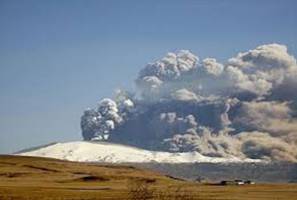
Scientists at the University of Liverpool and the Ludwig Maximilian University of Munich have developed a new method to assess the impact of volcanic ash on jet engines. Little is known scientifically about the effects of volcanic ash on aircraft but the impact it can have on the aviation industry was evidenced when the Eyjafjalla volcano in Iceland erupted in 2010 resulting in prolonged disruption to air travel and significant economic losses exceeding £1 billion.
Chemistry - Life Sciences - 04.04.2016

An artificial mimic of a key light-sensitive molecule has been made by scientists at the University of Bristol. Professor Jonathan Clayden and colleagues in Bristol's School of Chemistry , along with collaborators at the Universities of Manchester and Hull, created an artificial mimic of rhodopsin, a protein that resides in cell membranes in the retina.
Chemistry - Physics - 01.04.2016
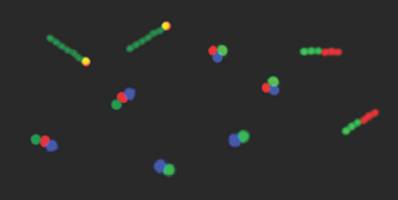
A new method allows scientists at ETH Zurich and IBM to fabricate artificial molecules out of different types of microspheres. The researchers would like to one day use such tiny objects in micro-robots, for photonics and basic biochemical research. Scientists at ETH Zurich and IBM Research Zurich have developed a new technique that enables for the first time the manufacture of complexly structured tiny objects joining together microspheres.
Physics - Chemistry - 28.03.2016
Quantum effects at work in the world’s smelliest superconductor
Researchers have found that quantum effects are the reason that hydrogen sulphide - which has the distinct smell of rotten eggs -behaves as a superconductor at record-breaking temperatures, which may aid in the search for room temperature superconductors. That we are able to make quantitative predictions with such a good agreement with the experiments is exciting and means that computation can be confidently used to accelerate the discovery of high temperature superconductors.
Chemistry - 28.03.2016
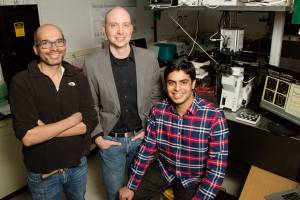
CHAMPAIGN, Ill. — Precise control of an individual particle or molecule is a difficult task. Controlling multiple particles simultaneously is an even more challenging endeavor. Researchers at the University of Illinois have developed a new method that relies on fluid flow to manipulate and assemble multiple particles.


Environment - Mar 26
Changing vegetation in thawing permafrost increases emissions of greenhouse gases
Changing vegetation in thawing permafrost increases emissions of greenhouse gases
Environment - Mar 26
University of Manchester hits major sustainability milestone, with Main Campus becoming 100% 'Zero Landfill'
University of Manchester hits major sustainability milestone, with Main Campus becoming 100% 'Zero Landfill'
Social Sciences - Mar 26
"It would be naive to believe that a social media ban will solve all problems"
"It would be naive to believe that a social media ban will solve all problems"
Health - Mar 26
Earlier detection, better outcomes: Irish researchers target rising bowel cancer rates with new blood test
Earlier detection, better outcomes: Irish researchers target rising bowel cancer rates with new blood test
Environment - Mar 26
UK must improve energy efficiency to end 50 years of policy failure and prevent future energy crises, study argues
UK must improve energy efficiency to end 50 years of policy failure and prevent future energy crises, study argues
Mathematics - Mar 26
From Materials to Medical Imaging, Fonseca's Work Shapes the Future of Innovation
From Materials to Medical Imaging, Fonseca's Work Shapes the Future of Innovation