

Pharmacology - Mar 19
GSK, University of Oxford and Imperial College London launch centre to create computer models of lungs, liver, kidneys and cartilage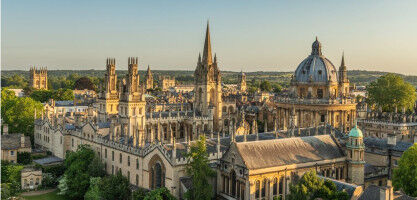
GSK, University of Oxford and Imperial College London launch centre to create computer models of lungs, liver, kidneys and cartilage
Innovation - Mar 19
India's new wave of Hindu Religious Entrepreneurship is reshaping our interpretation of success
India's new wave of Hindu Religious Entrepreneurship is reshaping our interpretation of success

Veterinary - Mar 19
New RVC study challenges common beliefs on desirable behaviours in designer 'Doodle' crossbreeds
New RVC study challenges common beliefs on desirable behaviours in designer 'Doodle' crossbreeds
Agronomy & Food Science - Mar 19
Bird Flu Risk to Danish Cattle - New Tool Can Warn Farmers Before Infection Spreads
Bird Flu Risk to Danish Cattle - New Tool Can Warn Farmers Before Infection Spreads
Chemistry - Mar 19
Leipzig University and Center for the Transformation of Chemistry conclude collaboration agreement
Leipzig University and Center for the Transformation of Chemistry conclude collaboration agreement
Psychology - Mar 19
Analysis: Trying your best in a second language? Here's why native speakers seem so rude
Analysis: Trying your best in a second language? Here's why native speakers seem so rude
Computer Science - Mar 18
SDU is part of global initiative to bring mathematical certainty to modern computing and artificial intelligence
SDU is part of global initiative to bring mathematical certainty to modern computing and artificial intelligence
news
Swiss Federal Institute of Technology Lausanne, EPFL
Results 1161 - 1180 of 1375.
Astronomy & Space - 23.09.2016
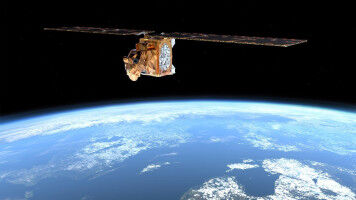
SwissCube: seven years in space and still active
The little Swiss satellite was launched on 23 September 2009 and continues to send back regular reports.
Health - Life Sciences - 05.09.2016
Stretching cells to learn more about them
05. A tool developed at EPFL can stretch and compress cells, mimicking what happens in the body. The aim: to study the role played by these mechanical forces in cases of cancer or lymphatic diseases.
Environment - Physics - 25.08.2016
An effective and low-cost solution for storing solar energy
25. Solar energy can be stored by converting it into hydrogen. But current methods are too expensive and don't last long. Using commercially available solar cells and none of the usual rare metals, researchers at EPFL and CSEM have now designed a device that outperforms in stability, efficiency and cost.
Health - Pharmacology - 17.08.2016
A tiny wire with a memory to diagnose cancer
EPFL researchers have used a nanowire to detect prostate cancer with greater accuracy than ever before. Their device is ten times more sensitive than any other biosensor available. Researchers at EPFL's Integrated Systems Laboratory (LSI/STI) have developed a new type of sensor that can detect tiny quantities of these markers and thus improve diagnostic accuracy.
Music - 08.08.2016

EPFL scientists have invented a new type of 'acoustic prism? that can split a sound into its constituent frequencies. Their acoustic prism has applications in sound detection. Almost 400 years ago, Newton showed that a prism could split white light into the colors of the rainbow, with each colour corresponding to a different wave frequency.
Environment - Astronomy & Space - 03.08.2016
For your next swim: Lake Geneva forecasts now online
A new web service provides real-time information and forecasts of water temperature and surface water currents.
Materials Science - 02.08.2016
Creating 3D objects from inextensible sheet materials
Researchers have developed an algorithm for creating complex objects by cutting holes in sheets of inextensible, but flexible materials such as metal, plastic and leather. It has potential applications in many areas, including microengineering, bioengineering, fashion and architecture. EPFL researchers, in collaboration with Carnegie Mellon University and the University of Hull, have come up with a method for creating everyday objects - like a mask or a shoe - from sheets of inextensible material.
Materials Science - 27.07.2016
Objects that sculpt light
Researchers at EPFL have found a way to make images by controlling the reflections that are produce when light passes through a transparent object. This technology is now being marketed by the startup Rayform. Researchers at EPFL have found a way to make images by controlling the reflections that are produce when light passes through a transparent object.
Health - Microtechnics - 22.07.2016
New remote-controlled microrobots for medical operations
Scientists at EPFL and ETHZ have developed a new method for building microrobots that could be used in the body to deliver drugs and perform other medical operations. For the past few years, scientists around the world have been studying ways to use miniature robots to better treat a variety of diseases.
Microtechnics - Computer Science - 15.07.2016
A drone that gets around obstacles like an insect
Physics student Darius Merk has used an insect-inspired algorithm to develop a drone that can navigate around obstacles.
Life Sciences - Health - 14.07.2016
Four steps for validating stem cells
Scientists at EPFL and in the US have developed a robust method for characterizing human embryonic stem cells and their potential for medical applications.
Materials Science - Physics - 14.07.2016
Electricity generated with water, salt - and a 3 atoms thick membrane
EPFL researchers have developed a system that generates electricity from osmosis with unparalleled efficiency.
Health - Life Sciences - 11.07.2016
Pomegranate finally reveals its powerful anti-aging secret
Pomegranates have proven their anti-aging potential: intestinal bacteria transform a molecule contained in the fruit with spectacular results. Although tests in humans are still underway, scientists have already published the initial promising results from animal studies Medicine. Are pomegranates really the superfood we've been led to believe will counteract the aging process? Up to now, scientific proof has been fairly weak.
Physics - Innovation - 08.07.2016
Graphene could revolutionize the internet of things
EPFL researchers have produced a tunable, graphene-based device that could significantly increase the speed and efficiency of wireless communication systems. Their system works at very high frequencies, delivering unprecedented results. Wireless come in many forms - such as mobile phones using 4G or 5G connectivity, GPS devices, and computers connected via Bluetooth to portable sensors - and operate in different frequency bands.
Computer Science - 07.07.2016
3D animation with the stroke of a pen
Mosketch, a software developed by Moka Studio and EPFL, lets you generate 3D animation without sophisticated training.
Environment - 06.07.2016
A micro winery? that makes wine continuously
An American professor, working in collaboration with EPFL, is developing a miniature device for producing wine non-stop and testing different fermentation processes.
Electroengineering - 05.07.2016
Using servers for home heating
05. Summer Series on Student Projects - For his Bachelor's degree in electrical engineering, Karim Ziadé assessed the feasibility of putting data centers into residential buildings for heating purposes.
Environment - 01.07.2016
A new tool to ensure the safety of injecting CO2 underground
01. Sequestering carbon dioxide underground is likely to play a key role in meeting reduction targets set at the IPCC conference in Paris last year.
Life Sciences - Computer Science - 29.06.2016
A new robot mimics vertebrate motion
29. Based on X-ray videos, EPFL scientists have invented a new robot that mimics the way salamanders walk and swim with unprecedented detail: a tool for understanding the evolution of vertebrate locomotion. EPFL scientists have invented a new robot that mimics the gait of a salamander with unprecedented detail.
Physics - Innovation - 27.06.2016
Nano-watermark sorts fakes from genuines
27. Nanoga, an EPFL-based startup, has developed a technique for engraving a nanoscopic watermark onto glass or ceramic. Products with this watermark, which is invisible to the naked eye and only shows up under ultraviolet light, are impossible to counterfeit. With Nanoga's new way of combatting counterfeits, each product can be made unique without changing its appearance.


Pharmacology - Mar 19
GSK, University of Oxford and Imperial College London launch centre to create computer models of lungs, liver, kidneys and cartilage
GSK, University of Oxford and Imperial College London launch centre to create computer models of lungs, liver, kidneys and cartilage
Innovation - Mar 19
India's new wave of Hindu Religious Entrepreneurship is reshaping our interpretation of success
India's new wave of Hindu Religious Entrepreneurship is reshaping our interpretation of success
Veterinary - Mar 19
New RVC study challenges common beliefs on desirable behaviours in designer 'Doodle' crossbreeds
New RVC study challenges common beliefs on desirable behaviours in designer 'Doodle' crossbreeds
Agronomy & Food Science - Mar 19
Bird Flu Risk to Danish Cattle - New Tool Can Warn Farmers Before Infection Spreads
Bird Flu Risk to Danish Cattle - New Tool Can Warn Farmers Before Infection Spreads
Chemistry - Mar 19
Leipzig University and Center for the Transformation of Chemistry conclude collaboration agreement
Leipzig University and Center for the Transformation of Chemistry conclude collaboration agreement
Psychology - Mar 19
Analysis: Trying your best in a second language? Here's why native speakers seem so rude
Analysis: Trying your best in a second language? Here's why native speakers seem so rude
Computer Science - Mar 18
SDU is part of global initiative to bring mathematical certainty to modern computing and artificial intelligence
SDU is part of global initiative to bring mathematical certainty to modern computing and artificial intelligence