

Pharmacology - Mar 19
GSK, University of Oxford and Imperial College London launch centre to create computer models of lungs, liver, kidneys and cartilage
GSK, University of Oxford and Imperial College London launch centre to create computer models of lungs, liver, kidneys and cartilage
Innovation - Mar 19
India's new wave of Hindu Religious Entrepreneurship is reshaping our interpretation of success
India's new wave of Hindu Religious Entrepreneurship is reshaping our interpretation of success

Veterinary - Mar 19
New RVC study challenges common beliefs on desirable behaviours in designer 'Doodle' crossbreeds
New RVC study challenges common beliefs on desirable behaviours in designer 'Doodle' crossbreeds
Agronomy & Food Science - Mar 19
Bird Flu Risk to Danish Cattle - New Tool Can Warn Farmers Before Infection Spreads
Bird Flu Risk to Danish Cattle - New Tool Can Warn Farmers Before Infection Spreads
Chemistry - Mar 19
Leipzig University and Center for the Transformation of Chemistry conclude collaboration agreement
Leipzig University and Center for the Transformation of Chemistry conclude collaboration agreement
Psychology - Mar 19
Analysis: Trying your best in a second language? Here's why native speakers seem so rude
Analysis: Trying your best in a second language? Here's why native speakers seem so rude
Computer Science - Mar 18
SDU is part of global initiative to bring mathematical certainty to modern computing and artificial intelligence
SDU is part of global initiative to bring mathematical certainty to modern computing and artificial intelligence
news
Swiss Federal Institute of Technology Lausanne, EPFL
Results 61 - 80 of 1375.
Physics - 02.07.2025
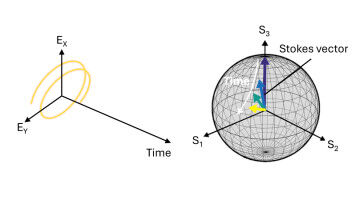
Scientists have developed a new technique that lets researchers watch, with unprecedented sensitivity, how materials emit polarized light over time. Light isn't just bright or dim, colored or plain. Its waves can also twist and turn, in a phenomenon called polarization. Think about the glasses you wear at a 3D movie, which use light polarization to make each eye see a slightly different image, creating the illusion of depth.
Health - Life Sciences - 01.07.2025
An international team led by EPFL has discovered a powerful anti-aging pathway in roundworms, revealing how boosting the cell's lysosomes can help clear waste and promote healthy aging. The findings open new directions for therapies against age-related diseases. Aging is a fact of life. As we get older, our bodies and minds change, and our bodies become susceptible to a number of age-related diseases.
Environment - 27.06.2025

Plane trees in cities have an important cooling effect even in extreme heat, according to a new study conducted by the Swiss Federal Institute for Forest, Snow and Landscape Research (WSL) and EPFL. The next step is to identify which tree species are particularly effective at cooling. When the sun is beating down, urban trees cool the surrounding area by evaporating water through their leaves.
Physics - Microtechnics - 26.06.2025

Engineers have harnessed quantum physics to detect the presence of biomolecules without the need for an external light source, overcoming a significant obstacle to the use of optical biosensors in healthcare and environmental monitoring settings. Optical biosensors use light waves as a probe to detect molecules, and are essential for precise medical diagnostics, personalized medicine, and environmental monitoring.
Computer Science - Life Sciences - 25.06.2025

When it comes to storing images, DNA strands could be a sustainable, stable alternative to hard drives. Researchers at EPFL are developing a new image compression standard designed specifically for this emerging technology. Within a few years, we'll collectively be taking over two trillion pictures each year.
Life Sciences - Health - 24.06.2025

Scientists at EPFL have discovered that recently evolved genes play a key role in how our cells divide, revealing that even the most fundamental processes of life continue to evolve. Every day, our bodies perform around 330 billion cell divisions to keep us alive and functioning. These divisions rely on the cell cycle, which has been in place since the earliest bacteria.
Innovation - 20.06.2025
How AIs understand words
Researchers at EPFL have created a mathematical model that helps explain how breaking language into sequences makes modern AI like chatbots so good at understanding and using words. There is no doubt that AI technology is dominating our world today. Progress seems to be moving in leaps and bounds, especially focused on large language models (LLMs) like chatGPT.
Chemistry - Physics - 12.06.2025
Toward more efficient hydrogen production
Scientists at EPFL have unraveled the details of the first crucial step in the oxygen evolution reaction, a bottleneck for clean hydrogen production, using advanced simulations and machine learning techniques. In our search for cleaner energy sources, hydrogen stands out, as it can store and deliver energy without producing carbon emissions because burning hydrogen only creates water.
Health - Life Sciences - 06.06.2025
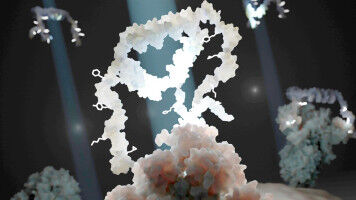
Inspired by the way viruses attach to cells, scientists have developed a method for engineering ultra-selective aptamers. These synthetic molecules bind to specific targets like viral spike proteins, making them useful for biomedical diagnostics and treatments. We have all'heard of antibodies - proteins produced by our bodies to bind to viruses or bacteria, marking them for elimination by the immune system.
Chemistry - Physics - 04.06.2025

A team at EPFL and the University of Arizona has discovered that making molecules bigger and more flexible can actually extend the life of quantum charge flow, a finding that could help shape the future of quantum technologies and chemical control. In the emerging field of attochemistry , scientists use laser pulses to trigger and steer electron motion inside molecules.
Materials Science - 03.06.2025

Researchers at EPFL and its startups are exploring innovative composites that are self-repairing, self-curing and reusable, in an effort to help drive the transition to a low-carbon, circular economy. Composite materials are inconspicuous, lightweight, fatigueand weather-resistant, and easy to mold, , and therefore appropriate for a range of applications: airplane wings, wind turbine blades, bicycle frames, medical prostheses, and more.
Environment - 28.05.2025
Two studies conducted by EPFL's Soil Mechanics Laboratory open up new prospects for exploiting geothermal energy in underground infrastructures. At a time when the energy transition is pushing engineers to redouble their ingenuity, EPFL researchers are demonstrating that the heat lost beneath our feet can become a precious resource.
Physics - Pharmacology - 14.05.2025

Scientists at EPFL and AstraZeneca have developed a method to map the atomic-level structure of amorphous drugs, demonstrated on a GLP-1 receptor agonist candidate for diabetes and obesity treatment. One of the big hurdles in drug development is solubility. Many promising drug molecules just don't dissolve well enough in the body, making them tough to absorb-especially in pill form.
Life Sciences - Computer Science - 12.05.2025

Researchers have discovered key 'units' in large AI models that seem to be important for language, mirroring the brain's language system. When these specific units were turned off, the models got much worse at language tasks. Large Language Models (LLMs) are not just good at understanding and using language, they can also reason or think logically, solve problems and some can even predict the thoughts, beliefs or emotions of people they interact with.
Agronomy & Food Science - Environment - 06.05.2025

A study by EPFL and the Swiss Federal Food Safety and Veterinary Office (FSVO) has found that tire additives enter into and pass through the food chain. Further research is needed to establish the implications for human health. Traces of the additives typically used in tire manufacturing have been detected in all'of the most common types of fruits and vegetables eaten in Switzerland.
Environment - Chemistry - 29.04.2025

A study led by researchers from EPFL and the University of Vienna shows that concentrations of concerning chemicals as high as those by a busy road can be found in the air of bouldering gyms. Those who climb indoors are doing something for their health. But climbing shoes contain chemicals of concern that can enter the lungs of climbers through the abrasion of the soles.
Physics - Electroengineering - 25.04.2025

Iron-rich hematite, commonly found in rocks and soil, turns out to have magnetic properties that make it a promising material for ultrafast next-generation computing. In 2023, researchers succeeded in sending and storing data using charge-free magnetic waves called spin waves, rather than traditional electron flows.
Life Sciences - Computer Science - 24.04.2025

Researchers have developed the first AI model of language in the brain that captures both how neurons are arranged and how they function. Our brain is a very organized place. Neurons - the nerve cells responsible for transmitting electrical and chemical signals throughout the body - are organized on tissue, tending to cluster together in groups according to how they function.
Health - Life Sciences - 18.04.2025

Researchers have developed a flexible auditory brainstem implant (ABI) that closely conforms to the curved surface of the brainstem. The technology has been successfully demonstrated high-resolution "prosthetic hearing" in macaques. Over the last couple of decades, many people have regained hearing functionality with the most successful neurotech device to date: the cochlear implant.
Physics - Innovation - 17.04.2025

Scientists at EPFL have made a breakthrough in designing arrays of resonators, the basic components that power quantum technologies. This innovation could create smaller, more precise quantum devices. Qubits, or quantum bits, are mostly known for their role in quantum computing, but they are also used in analog quantum simulation, which uses one well-controlled quantum system to simulate another, more complex one.


Pharmacology - Mar 19
GSK, University of Oxford and Imperial College London launch centre to create computer models of lungs, liver, kidneys and cartilage
GSK, University of Oxford and Imperial College London launch centre to create computer models of lungs, liver, kidneys and cartilage
Innovation - Mar 19
India's new wave of Hindu Religious Entrepreneurship is reshaping our interpretation of success
India's new wave of Hindu Religious Entrepreneurship is reshaping our interpretation of success
Veterinary - Mar 19
New RVC study challenges common beliefs on desirable behaviours in designer 'Doodle' crossbreeds
New RVC study challenges common beliefs on desirable behaviours in designer 'Doodle' crossbreeds
Agronomy & Food Science - Mar 19
Bird Flu Risk to Danish Cattle - New Tool Can Warn Farmers Before Infection Spreads
Bird Flu Risk to Danish Cattle - New Tool Can Warn Farmers Before Infection Spreads
Chemistry - Mar 19
Leipzig University and Center for the Transformation of Chemistry conclude collaboration agreement
Leipzig University and Center for the Transformation of Chemistry conclude collaboration agreement
Psychology - Mar 19
Analysis: Trying your best in a second language? Here's why native speakers seem so rude
Analysis: Trying your best in a second language? Here's why native speakers seem so rude
Computer Science - Mar 18
SDU is part of global initiative to bring mathematical certainty to modern computing and artificial intelligence
SDU is part of global initiative to bring mathematical certainty to modern computing and artificial intelligence