

Life Sciences - Mar 13
New DNA tools outperform traditional methods for detecting genetic risk in wildlife
New DNA tools outperform traditional methods for detecting genetic risk in wildlife
Health - Mar 13
Oxford and Serum Institute of India sign IP license agreement to advance NipahB vaccine candidate
Oxford and Serum Institute of India sign IP license agreement to advance NipahB vaccine candidate
Life Sciences - Mar 13
How the brain creates meaning: Martin Vinck investigates the key to thoughts, attention and consciousness
How the brain creates meaning: Martin Vinck investigates the key to thoughts, attention and consciousness




Career - Mar 12
Women often need stronger professional networks to climb corporate ladder, Western analysis shows
Women often need stronger professional networks to climb corporate ladder, Western analysis shows
Environment - Mar 12
Turning dairy emissions into opportunities: how climate finance can drive climate-smart dairy
Turning dairy emissions into opportunities: how climate finance can drive climate-smart dairy
Health - Mar 12
Longer pollen seasons set to make allergies a major public health issue in coming decades
Longer pollen seasons set to make allergies a major public health issue in coming decades
Health - Mar 12
Nuffield Department of Primary Care Health Sciences designated as the WHO Collaborating Centre on Primary Health Care
Nuffield Department of Primary Care Health Sciences designated as the WHO Collaborating Centre on Primary Health Care
Innovation - Mar 12
Secure communication for automated vehicles - Thüringer Innovationszentrum Mobilität launches new research group
Secure communication for automated vehicles - Thüringer Innovationszentrum Mobilität launches new research group
Economics - Mar 12
Visions of the Brussels economy. An empirical analysis of convergences and divergences
Visions of the Brussels economy. An empirical analysis of convergences and divergences
History & Archeology - Mar 12
Record-breaking trove of information: Upper Egypt site has now yielded over 43,000 inscribed pot sherds
Record-breaking trove of information: Upper Egypt site has now yielded over 43,000 inscribed pot sherds
news
History & Archeology
Results 41 - 60 of 979.
Agronomy & Food Science - History & Archeology - 20.08.2025

A study from the University of Geneva shows that European hunter-gatherers and Anatolian farmers coexisted and gradually interbred. The transition to agriculture in Europe involved the coexistence of hunter-gatherers and early farmers migrating from Anatolia. To better understand their dynamics of interaction, a team from the University of Geneva , in collaboration with the University of Fribourg and Johannes Gutenberg University, Mainz, combined computer simulations with ancient genetic data.
Environment - History & Archeology - 18.08.2025
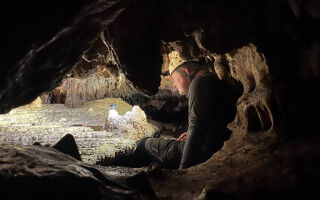
A drought lasting 13 years and several others each lasting more than three years may have contributed to the collapse of the Classic Maya civilisation, finds a new paper led by a UCL researcher that looks at chemical fingerprints from a stalagmite in a Mexican cave. The study, published in Science Advances, analysed oxygen isotopes embedded within annual layers of the stalagmite to determine rainfall levels for individual wet and dry seasons between 871 and 1021 CE.
Health - History & Archeology - 13.08.2025
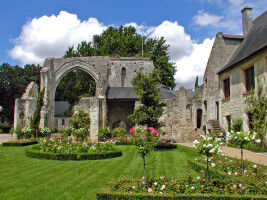
Until October 12, 2025, the Prieuré Saint-Cosme - Demeure de Ronsard presents "Soigner corps et âmes en Touraine", an exhibition organized by the Conseil départemental d'Indre-et-Loire, with the support of Inrap.
History & Archeology - 07.08.2025

Archaeologists discover seven graves and artifacts around La Visitation church, revealing the history of an 18th-century cemetery. Between April 22 and May 17, a team of 15 archaeology students led by Université de Montréal professor and bioanthropologist Isabelle Ribot de Montréal, conducted an excavation campaign beneath the verdant lawns bordering the church of La Visitation-de-la-Bienheureuse-Vierge-Marie, in the Sault-au-Récollet sector.
History & Archeology - 05.08.2025

A first discovery of Paleolithic levels has been made by Inrap on avenue Eiffel in Tours Nord, ahead of a construction project by Bouygues immobilier, covering an area of 6,000 m². The discovery of bifaces associated with other artifacts in stratigraphy is of major importance for understanding early Paleolithic occupations in the region, and provides a nuanced insight into Neanderthal technical traditions on the banks of the Loire.
History & Archeology - 31.07.2025

An international research team led by Gino Caspari from the University of Bern has analyzed tattoos on a Siberian ice mummy that is over 2000 years old. For the study, the team used high-resolution near-infrared photography and collaborated with a contemporary tattoo artist. The results suggest that tattooing was a similar craft in prehistoric Siberian society as it is today.
History & Archeology - 16.07.2025
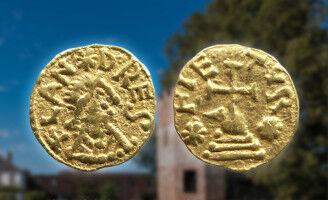
For far too long, the Dark Ages remained unjustly underexposed. Researchers at Ghent University are now changing that. They combined all knowledge about the early Middle Ages in a research review. A gold coin with the inscription "FIETUR FLANDRES" ("made in Flanders"), the first wooden churches, farmyards that form the beginnings of a village, widely varying types of pottery, Merovingian graves: all recent archaeological finds in Flanders that tell us more about the early Middle Ages.
History & Archeology - Materials Science - 16.07.2025

In Cap Corse, the first preventive excavation to be carried out in this part of the island revealed the presence of a pavement structure, currently dated to the 4th-5th c. AD. a.DC. The morphological characteristics of this construction and its position at the mouth of a river and the Tyrrhenian Sea suggest that it may have been a small port facility.
Life Sciences - History & Archeology - 16.07.2025
Interbreeding with Neanderthals may be responsible for modern-day brain condition, SFU study finds
A new Simon Fraser University-led study reveals interbreeding between humans and their ancient cousins, Neanderthals, as the likely origin of a neurological condition estimated to impact up to one per cent of people today. The study, published this week in the journal Evolution, Medicine, and Public Health , was led by Kimberly Plomp, a recent postdoctoral fellow at SFU and Mark Collard, the Canada Research Chair in Human Evolutionary Studies and a professor in the Department of Archaeology.
Environment - History & Archeology - 10.07.2025

A new study has shown that as early as the Stone Age, people in Africa traveled long distances to procure colorful stone, forming the raw material for the manufacture of tools. The study was led by Gregor D. Bader from the Department of Early Prehistory and Quaternary Ecology and the Senckenberg Centre for Human Evolution and Palaeoenvironment at the University of.
Health - History & Archeology - 09.07.2025

Researchers have mapped the spread of infectious diseases in humans across millennia, to reveal how human-animal interactions permanently transformed our health today. We've long suspected that the transition to farming and animal husbandry opened the door to a new era of disease - now DNA shows us that it happened at least 6,500 years ago Eske Willerslev A new study suggests that our ancestors' close cohabitation with domesticated animals and large-scale migrations played a key role in the spread of infectious diseases.
History & Archeology - Life Sciences - 02.07.2025

New insights into the prehistory of two major North Eurasian language families Where do the Uralic languages such as Finnish and Hungarian or Yeniseian come from? Ancient DNA could provide answers: Researchers* with the participation of Ron Pinhasi from the University of Vienna analyzed the genome of 180 individuals from the Volga-Ural region to the Lena Valley in central Siberia in the period from the Mesolithic (approx. 11,000 years ago) to the Bronze Age (approx. 4,000 years ago).
Health - History & Archeology - 30.06.2025
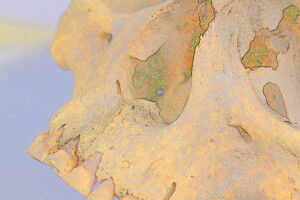
A new study has reconstructed two 4000-year-old genomes from the rare pathogen Mycobacterium lepromatosis To the point Hansen-s Disease (leprosy) is thought to have originated in Eurasia : previous studies on Mycobacterium leprae , the dominant form of leprosy, suggest the disease originated in Eurasia.
History & Archeology - Life Sciences - 27.06.2025

What was life like some 8,000-9,000 years ago for the people on the East Mound at Çatalhöyük, an important Neolithic settlement in central Anatolia? And what role did women hold in their society? An international team led by Turkish, Danish, Swedish and US researchers has investigated the genetic material of a total of 131 individuals who are buried there.
History & Archeology - 26.06.2025
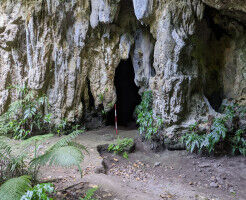
Traces of rice found in Guam date back more than 3,500 years, according to ANU researchers. The discovery of ancient traces of rice in a cave in Guam has changed what we know about the lives of the region's early inhabitants, according to experts from The Australian National University (ANU). The remains of rice husks, which were found on pottery, are the earliest evidence of rice in the Remote Pacific, dating back 3,500 years.
Environment - History & Archeology - 19.06.2025

By expanding an emerging field of study called archaeology of climate change, scientists at UdeM and other universities hope to make human-environment modeling more accurate and complete. How does climate change affect the way humans organize themselves? How has it influenced the course of human evolution? An international team of scientists, including researchers from Université de Montréal, think the key to answering those questions is to pay more attention to the archaeological record.
Earth Sciences - History & Archeology - 17.06.2025

Archaeologists from the Australian Museum, the University of Sydney and The Australian National University (ANU), in collaboration with First Nations community members who hold cultural connections with the Blue Mountains, have unearthed 693 stone artefacts dating from the last ice age to the recent past.
Life Sciences - History & Archeology - 04.06.2025
Papua New Guinea’s Genetic Past Through Ancient DNA Analysis
A new study reveals the significance of regional dispersals and local interactions in coastal Papua New Guinea To the point 2.500 years of human history in Papua New Guinea: The first ancient genomes, dietary isotopes and plant microfossils from Papua New Guinea and the Bismarck Archipelago provide direct genetic evidence that refines our understanding of early dispersals and population interactions in the Pacific.
Health - History & Archeology - 23.05.2025

A new study uses metabolic profiling to uncover ancient knowledge systems behind therapeutic and psychoactive plant use in ancient Arabia. To the point Earliest Traces: A new study shows that Peganum harmala , also known as Syrian rue or harmal, was used as a burning substance in Arabia as early as 2,700 years ago.
Life Sciences - History & Archeology - 05.05.2025
Eske Willerslev and team link Native American community to their ancestors through ancient DNA
Ancient DNA: Researchers help the Native American Picuris Pueblo people uncovering their history using ancient DNA. Their research connects the Picuris Pueblo not only to their ancestors but also to the UNESCO World Heritage site of Chaco Canyon. Using tiny fragments of bones and teeth dated to between 500 and 700 years ago, along with saliva samples from living members of the Picuris Pueblo, Willerslev and his team at the University of Copenhagen have demonstrated a genetic link between the Picuris Pueblo and the Pueblo Bonito site in Chaco Canyon.


Life Sciences - Mar 13
New DNA tools outperform traditional methods for detecting genetic risk in wildlife
New DNA tools outperform traditional methods for detecting genetic risk in wildlife
Health - Mar 13
Oxford and Serum Institute of India sign IP license agreement to advance NipahB vaccine candidate
Oxford and Serum Institute of India sign IP license agreement to advance NipahB vaccine candidate
Life Sciences - Mar 13
How the brain creates meaning: Martin Vinck investigates the key to thoughts, attention and consciousness
How the brain creates meaning: Martin Vinck investigates the key to thoughts, attention and consciousness
Career - Mar 12
Women often need stronger professional networks to climb corporate ladder, Western analysis shows
Women often need stronger professional networks to climb corporate ladder, Western analysis shows
Environment - Mar 12
Turning dairy emissions into opportunities: how climate finance can drive climate-smart dairy
Turning dairy emissions into opportunities: how climate finance can drive climate-smart dairy
Health - Mar 12
Longer pollen seasons set to make allergies a major public health issue in coming decades
Longer pollen seasons set to make allergies a major public health issue in coming decades
Health - Mar 12
Nuffield Department of Primary Care Health Sciences designated as the WHO Collaborating Centre on Primary Health Care
Nuffield Department of Primary Care Health Sciences designated as the WHO Collaborating Centre on Primary Health Care
Innovation - Mar 12
Secure communication for automated vehicles - Thüringer Innovationszentrum Mobilität launches new research group
Secure communication for automated vehicles - Thüringer Innovationszentrum Mobilität launches new research group
Economics - Mar 12
Visions of the Brussels economy. An empirical analysis of convergences and divergences
Visions of the Brussels economy. An empirical analysis of convergences and divergences
History & Archeology - Mar 12
Record-breaking trove of information: Upper Egypt site has now yielded over 43,000 inscribed pot sherds
Record-breaking trove of information: Upper Egypt site has now yielded over 43,000 inscribed pot sherds