



Event - Mar 17
CEA Leti to Showcase Integrated Expertise In Microelectronics Reliability at IRPS 2026
CEA Leti to Showcase Integrated Expertise In Microelectronics Reliability at IRPS 2026

Health - Mar 17
AI was supposed to ease doctors' workload - instead they spend hours correcting errors
AI was supposed to ease doctors' workload - instead they spend hours correcting errors


Pharmacology - Mar 17
International trial finds rapid diagnostic testing alone does not reduce antibiotic prescribing for respiratory infections
International trial finds rapid diagnostic testing alone does not reduce antibiotic prescribing for respiratory infections

Social Sciences - Mar 17
Social background shapes how hard children work, according to a study by UC3M
Social background shapes how hard children work, according to a study by UC3M
Innovation - Mar 17
With Robotics Innovation Center, CMU and Hazelwood Partners Sustain Community Collaborations
With Robotics Innovation Center, CMU and Hazelwood Partners Sustain Community Collaborations




news
History & Archeology
Results 441 - 460 of 979.
History & Archeology - Physics - 09.04.2020
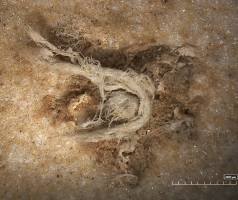
Contrary to popular belief, Neanderthals were no less technologically advanced than Homo sapiens . An international team, including researchers from the CNRS, have discovered the first evidence of cord making, dating back more than 40,000 years 1 , on aflint fragment from the prehistoric site of Abri du Maras in the south of France 2 .
History & Archeology - 09.04.2020
Bristol leads archaeologists on 5,000-year-old egg hunt
Long before Fabergé, ornate ostrich eggs were highly prized by the elites of Mediterranean civilisations during the Bronze and Iron Ages, but to date little has been known about the complex supply chain behind these luxury goods. Examining ostrich eggs from the British Museum's collection, the team, led by Bristol's Dr Tamar Hodos , were able to reveal secrets about their origin and how and where they were made.
History & Archeology - Physics - 08.04.2020
Revolutionary new method for dating pottery sheds new light on prehistoric past
The exciting new method Europe and Africa. Archaeological pottery has been used to date archaeological sites for more than a century, and from the Roman period onwards can offer quite precise dating. But further back in time, for example at the prehistoric sites of the earliest Neolithic farmers, accurate dating becomes more difficult because the kinds of pottery are often less distinctive and there are no coins or historical records to give context.
History & Archeology - Materials Science - 31.03.2020
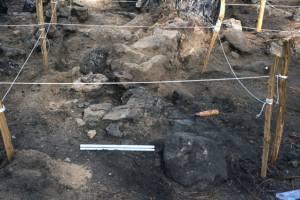
Spanish conquerors depended on indigenous expertise to keep up their munitions supplies, archaeologists have found. When Spanish invaders arrived in the Americas, they were generally able to subjugate the local peoples thanks, in part, to their superior weaponry and technology. But archeological evidence indicates that, in at least one crucial respect, the Spaniards were quite dependent on an older indigenous technology in parts of Mesoamerica (today's Mexico, Guatemala, Belize, and Honduras).
History & Archeology - Politics - 16.03.2020
Five things to ’dig’ about heritage at Durham
Our researchers are the history detectives, unearthing exciting things from our past and helping us learn from our ancestors. We are also the home to important cultural archives available for study. Here's From finding long a lost medieval chapel fit for a king, to discovering documents from our royal past.
History & Archeology - Chemistry - 09.02.2020

Ghent's focus is on Van Eyck and the Ghent Altarpiece in 2020. Lots of people from Ghent University are also involved in this year of celebration. We have been putting a number of them in the spotlight. This week: Peter Vandenabeele. In Ghent, it's all about Van Eyck and the Ghent Altarpiece in 2020.
Economics - History & Archeology - 05.02.2020

Evidence links Dutch-era sugar production and greater economic activity today. The areas of Indonesia where Dutch colonial rulers built a huge sugar-producing industry in the 1800s remain more economically productive today than other parts of the country, according to a study co-authored by an MIT economist.
History & Archeology - 29.01.2020
Iron Age ’warrior’ burial uncovered in West Sussex
A richly-furnished grave belonging to an Iron Age 'warrior' buried 2,000 years ago has been uncovered in West Sussex by UCL archaeologists. Iron weapons had been placed inside the grave, including a sword in a highly-decorated scabbard and a spear. The burial was discovered during an excavation commissioned by Linden Homes, who are developing a site on the outskirts of Walberton, near Chichester, to create 175 new homes.
History & Archeology - Social Sciences - 27.01.2020
Debunks myth of Native American lost civilization
A UC Berkeley archaeologist has dug up ancient human feces, among other demographic clues, to challenge the narrative around the legendary demise of Cahokia, North America's most iconic pre-Columbian metropolis. In its heyday in the 1100s, Cahokia - located in what is now southern Illinois - was the center for Mississippian culture and home to tens of thousands of Native Americans who farmed, fished, traded and built giant ritual mounds.
History & Archeology - 26.01.2020

In Ghent, it's all about Van Eyck and the Ghent Altarpiece in 2020. One of the highlights is undoubtedly the return of the restored painting to St. Bavo's cathedral.
History & Archeology - 15.01.2020
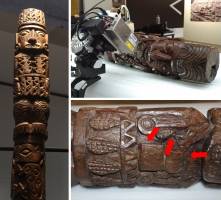
Researchers from the CNRS, Sorbonne Université, université Paris 1 Panthéon-Sorbonne, the Muséum National d'Histoire Naturelle and the Musée du Quai Branly - Jacques Chirac have shown colours formerly painted on the Pachacamac idol, a 15th century Inca God and oracle. Paired with the first carbon 14 dating of the object, these results published in PLOS ONE on 15 January 2020 shed light on colour practices, and how important they were in the Andes at that time.
History & Archeology - Materials Science - 19.12.2019
New archaeological discoveries reveal birch bark tar was used in medieval England
Scientists from the University of Bristol and the British Museum, in collaboration with Oxford Archaeology East and Canterbury Archaeological Trust, have, for the first time, identified the use of birch bark tar in medieval England - the use of which was previously thought to be limited to prehistory.
Life Sciences - History & Archeology - 02.12.2019
1940s blood samples reveal historical spread of malaria
DNA from 75-year old eradicated European malaria parasites uncovers the historical spread of one of the two most common forms of the disease, Plasmodium vivax, from Europe to the Americas during the colonial period, finds a new study co-led by UCL. The research published in Molecular Biology and Evolution reports the genome sequence of a malaria parasite sourced from blood-stained medical microscope slides used in 1944 in Spain, one of the last footholds of malaria in Europe.
Materials Science - History & Archeology - 13.11.2019

In autumn 2017, the archaeological service of the Canton of Berne was amazed when two private individuals delivered a crusted lump of metal. The bronze hand of Prêles, decorated with a ribbon of gold, turned out to be the oldest bronze sculpture of a human body part in Central Europe. But where did the metals of the sensational find come from? Empa researchers were involved in the investigation.
History & Archeology - Life Sciences - 07.11.2019

Scholars have been all over Rome for hundreds of years, but it still holds some secrets - for instance, relatively little is known about where the city's denizens actually came from. Now, an international team led by Researchers from the University of Vienna, Stanford University and Sapienza University of Rome, is filling in the gaps with a genetic history that shows just how much the Eternal City's populace mirrored its sometimes tumultuous history.
Life Sciences - History & Archeology - 05.11.2019
3,000-year-old Egyptian wheat genome sequenced for first time
The genome of an ancient Egyptian wheat has been sequenced for the first time by a UCL-led team, revealing historical patterns of crop movement and domestication. The study was carried out by an international research team, which mapped the genetic code from a sample of wheat harvested over 3,000 years ago, that was excavated in 1924 from the Hememiah North Spur site in Egypt.
History & Archeology - 08.10.2019

The oldest surviving pages of the 13th century's most popular story which feature one of medieval European literature's best-known sex scenes have been identified by an academic from the University of Bristol. Le Roman de la Rose or The Romance of the Rose - famously translated and adapted by Geoffrey Chaucer, author of The Canterbury Tales, a century later - is a medieval French poem styled as an allegorical dream vision.
Computer Science - History & Archeology - 02.10.2019
Deepest layers of Bruegel drawings
On the occasion of the 450th anniversary of Pieter Bruegel the Elder's death, the city of Brussels is organising an exhibition on a few of the master's original drawings as well as a unique series of prints based on these drawings.
History & Archeology - 25.09.2019
First evidence for early baby bottles used to feed animal milk to prehistoric babies
A team of scientists, led by the University of Bristol, has found the first evidence that prehistoric babies were fed animal milk using the equivalent of modern-day baby bottles. Possible infant feeding vessels, made from clay, first appear in Europe in the Neolithic (at around 5,000 BC), becoming more commonplace throughout the Bronze and Iron Ages.
Social Sciences - History & Archeology - 10.09.2019

Prospective Students Students and Doctorate Alumni and Supporters Continuing Education International research team led by Freie Universität publishes results of a two-year study No 263/2019 from Sep 10, 2019 An international team of researchers led by a team from Freie Universität Berlin has excavated a 9,000-year-old grave and its contents in the south of Jordan and interpreted the findings.


Event - Mar 17
CEA Leti to Showcase Integrated Expertise In Microelectronics Reliability at IRPS 2026
CEA Leti to Showcase Integrated Expertise In Microelectronics Reliability at IRPS 2026
Health - Mar 17
AI was supposed to ease doctors' workload - instead they spend hours correcting errors
AI was supposed to ease doctors' workload - instead they spend hours correcting errors
Pharmacology - Mar 17
International trial finds rapid diagnostic testing alone does not reduce antibiotic prescribing for respiratory infections
International trial finds rapid diagnostic testing alone does not reduce antibiotic prescribing for respiratory infections
Social Sciences - Mar 17
Social background shapes how hard children work, according to a study by UC3M
Social background shapes how hard children work, according to a study by UC3M
Innovation - Mar 17
With Robotics Innovation Center, CMU and Hazelwood Partners Sustain Community Collaborations
With Robotics Innovation Center, CMU and Hazelwood Partners Sustain Community Collaborations