



Event - Mar 17
CEA Leti to Showcase Integrated Expertise In Microelectronics Reliability at IRPS 2026
CEA Leti to Showcase Integrated Expertise In Microelectronics Reliability at IRPS 2026

Health - Mar 17
AI was supposed to ease doctors' workload - instead they spend hours correcting errors
AI was supposed to ease doctors' workload - instead they spend hours correcting errors



Pharmacology - Mar 17
International trial finds rapid diagnostic testing alone does not reduce antibiotic prescribing for respiratory infections
International trial finds rapid diagnostic testing alone does not reduce antibiotic prescribing for respiratory infections

Social Sciences - Mar 17
Social background shapes how hard children work, according to a study by UC3M
Social background shapes how hard children work, according to a study by UC3M
Innovation - Mar 17
With Robotics Innovation Center, CMU and Hazelwood Partners Sustain Community Collaborations
With Robotics Innovation Center, CMU and Hazelwood Partners Sustain Community Collaborations





news
History & Archeology
Results 521 - 540 of 979.
History & Archeology - Economics - 17.05.2018
Ice-core study sheds light on ancient European civilisations
A study published in PNAS offer new insights into how European civilisations and their economies developed over time - finding links between levels of lead pollution trapped in Greenland ice and significant historical events, such as plagues, wars and imperial expansion. Image credit: Shutterstock Oxford University scientists have played a key role in a collaboration studying ice sheets in Greenland, which has shed light on pollution produced by the ancient Greeks and Romans.
History & Archeology - 16.05.2018
Ancient human remains unearthed by ANU archaeologist
To find an intact clay urn buried 4,000 years ago just centimetres beneath the surface is nothing short of a miracle An ANU archaeologist has hailed her excavation of a Bronze Age burial mound in south west England a huge success with the discovery of an intact 4,000 year old human cremation as well as evidence of unaccountable activity from the medieval period on the same site.
Linguistics & Literature - History & Archeology - 09.05.2018

For 250 years, the extensive set of manuscripts and papers lay unnoticed in the University Library's basement.
History & Archeology - Environment - 04.05.2018
New Research Project on Household Communities of the Living and the Dead in the Neolithic Period
Excavations continue in Ba'ja in the south of present-day Jordan No 089/2018 from May 04, 2018 A new research project based at Freie Universität's Institute of Ancient Near Eastern Archeology is investigating Neolithic households and burial culture at the Ba'ja site in the south of present-day Jordan.
Earth Sciences - History & Archeology - 03.05.2018
Scientists call for ’open-skies’ imagery policy over Israel and Palestine
A 2013 CNES/Airbus satellite image of a new site that could be identified because looting pits over the site are visible on high-resolution satellite imagery. Map data ©2018 Google. New Oxford University research has called for an 'open-skies policy' around the availability of high resolution satellite imagery of Israel and Palestine.
Life Sciences - History & Archeology - 30.04.2018

The rose: an ornamental plant emblematic of the cultural and economic history of mankind. An international consortium involving INRA, ENS de Lyon, CEA, CNRS and Université Claude Bernard Lyon 1, has deciphered the genome of the rose. This work has enabled them to trace the respective contributions of European and Chinese roses to the genome of modern plants, and identify all the genes involved in the pathways for the biosynthesis of perfume and colour.
Environment - History & Archeology - 20.04.2018
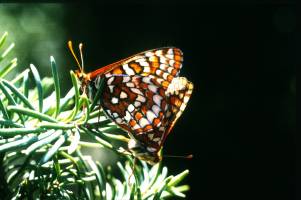
New research into the Edith's checkerspot butterfly shows how wild species react to human-induced changes to their environment. Camille Parmesan AUSTIN, Texas - New research confirms that wild species can adapt quickly to human-induced changes, but also shows how such adaptation can cause those species to be caught in deadly "eco-evolutionary traps" when humans introduce new resources in the environment and then quickly take them away.
History & Archeology - Life Sciences - 19.04.2018
Dodo’s violent death revealed
World famous Oxford Dodo died after being shot in the back of the head - breakthrough evidence revealed through new research by the University of Oxford's Museum of Natural History and WMG at the University of Warwick The Oxford Dodo is the only dodo specimen in the world to contain soft tissue and extractable DNA "This discovery reveals important new information about the history of the Oxford Dodo," says Professor Paul Smith from the Universit
History & Archeology - Physics - 19.04.2018
Red and yellow paint on Antonine Wall
Dr Louisa Campbell with the Summerston distance stone at The Hunterian Museum University of Glasgow archaeologist using cutting edge technology on remnants of the Antonine Wall has shown parts of it were painted in bright colours. Dr Louisa Campbell's research, which has used x-ray and laser technology to analyse parts of the Roman Empire's most north-western frontier, showed it was painted with vibrant red and yellows.
Health - History & Archeology - 16.04.2018
What’s in a name? Yale researchers track PTSD’s many identities during war
Posttraumatic stress disorder (PTSD) has been associated with military activities for as long as wars have been fought - but this disorder was only named in the 1980s. A new Yale paper published April 16, 2018 in Chronic Stress documents a different kind of war - a war of words - that has been fought over the name of the disorder, and may have slowed clinical and scientific progress on the disorder.
History & Archeology - Life Sciences - 10.04.2018
Wildlife haven of Sulawesi much younger than first thought
An Oxford University collaboration has shed light on the origins of some of South East Asia's most iconic and unique wildlife; the 'deer-pig' (Sulawesi Babirusa), 'warty pig' and the 'miniature buffalo.' In doing so, the research has revealed that Sulawesi, the island paradise where they were discovered, is younger than previously thought.
Social Sciences - History & Archeology - 05.04.2018
WW1 Prisoner of War letters published 100 years after being written
The letters speak of love, longing, worry and war. A prisoner of war and his family writing to each other to ease the pain of separation during the First World War. Now seven months of correspondence, between Professor Archibald Allan Bowman and his wife Mabel, will be published by the University of Glasgow on the centenary of the day they were first written.
Health - History & Archeology - 04.04.2018
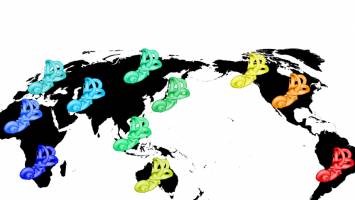
The early migration of humans out of Africa and across the world can be proven using genetic and morphological analyses. However, morphological data from the skull and skeleton often only allow limited conclusions to be drawn about the geographical dispersal pattern, especially because of the many ways in which the human skeleton adapts to local environmental conditions.
Computer Science - History & Archeology - 03.04.2018
Algorithms reveal changes in stereotypes
New Stanford research shows that, over the past century, linguistic changes in gender and ethnic stereotypes correlated with major social movements and demographic changes in the U.S. Census data. Artificial intelligence systems and machine-learning algorithms have come under fire recently because they can pick up and reinforce existing biases in our society, depending on what data they are programmed with.
Life Sciences - History & Archeology - 21.03.2018
Macaques choose stone tools based on own size and strength
Macaques appear to select stone tools to crack open oil palm nuts based on the size and strength of their own body, rather than the optimum weight and size of the stone, to make the process more efficient, according to new research led by UCL.
Life Sciences - History & Archeology - 21.03.2018
Oldest DNA from Africa offers clues to ancient cultures
One of the Taforalt skeletons under excavation by Louise Humphrey of the Natural History Museum and part of the frontal of a LSA human skull. Photo Credit: Ian Cartwright, School of Archaeology. The discovery of DNA - the oldest ever obtained from ancient African remains, has shed light on the continent's prehistoric migration patterns and cultures.
History & Archeology - 21.03.2018
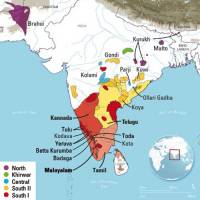
Using new linguistic analyses, a study, co-authored by the University of Bristol, has shown that the Dravidian languages - spoken by 220 million people across South Asia, date back to about 4,500 years ago. The findings, published today in the journal Royal Society Open Science , shed new light on the prehistory of these languages, of which there are around 80 varieties, and their speakers.
Earth Sciences - History & Archeology - 19.03.2018
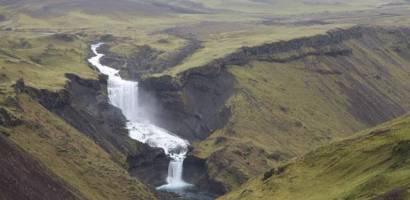
Memories of the largest lava flood in the history of Iceland, recorded in an apocalyptic medieval poem, were used to drive the island's conversion to Christianity, new research suggests. With a firm date for the eruption, many entries in medieval chronicles snap into place as likely consequences. Clive Oppenheimer A team of scientists and medieval historians, led by the University of Cambridge, has used information contained within ice cores and tree rings to accurately date a massive volcanic eruption, which took place soon after the island was first settled.
Physics - History & Archeology - 14.03.2018
China’s ’war against pollution’ shows promising results, study finds
"Physicists do not live in an ivory tower; they are not spared the ravages of history," wrote Prof. Peter Freund upon his retirement at the University of Chicago in 2002, following a half-century career in supersymmetry and string theory. Freund knew. Born into a Romanian Jewish family during a tumultuous era in Europe, he narrowly avoided the Holocaust and later a Communist firing squad before escaping the country.
History & Archeology - 09.03.2018
Going ballistic! Science meets conservation on The Mary Rose
Major advances into how to protect and preserve a huge haul of cannonballs found on Henry VIII's flagship vessel The Mary Rose, have been made through a ground-breaking partnership between UCL, The Mary Rose and Diamond Light Source. The Mary Rose is a famous Tudor ship that sank in 1545 and was raised from the sea in 1982, when 1,200 cannonballs were discovered.


Event - Mar 17
CEA Leti to Showcase Integrated Expertise In Microelectronics Reliability at IRPS 2026
CEA Leti to Showcase Integrated Expertise In Microelectronics Reliability at IRPS 2026
Health - Mar 17
AI was supposed to ease doctors' workload - instead they spend hours correcting errors
AI was supposed to ease doctors' workload - instead they spend hours correcting errors
Pharmacology - Mar 17
International trial finds rapid diagnostic testing alone does not reduce antibiotic prescribing for respiratory infections
International trial finds rapid diagnostic testing alone does not reduce antibiotic prescribing for respiratory infections
Social Sciences - Mar 17
Social background shapes how hard children work, according to a study by UC3M
Social background shapes how hard children work, according to a study by UC3M
Innovation - Mar 17
With Robotics Innovation Center, CMU and Hazelwood Partners Sustain Community Collaborations
With Robotics Innovation Center, CMU and Hazelwood Partners Sustain Community Collaborations