



Event - Mar 17
CEA Leti to Showcase Integrated Expertise In Microelectronics Reliability at IRPS 2026
CEA Leti to Showcase Integrated Expertise In Microelectronics Reliability at IRPS 2026

Health - Mar 17
AI was supposed to ease doctors' workload - instead they spend hours correcting errors
AI was supposed to ease doctors' workload - instead they spend hours correcting errors




Pharmacology - Mar 17
International trial finds rapid diagnostic testing alone does not reduce antibiotic prescribing for respiratory infections
International trial finds rapid diagnostic testing alone does not reduce antibiotic prescribing for respiratory infections

Social Sciences - Mar 17
Social background shapes how hard children work, according to a study by UC3M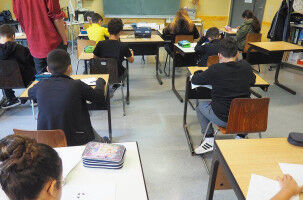
Social background shapes how hard children work, according to a study by UC3M
Innovation - Mar 17
With Robotics Innovation Center, CMU and Hazelwood Partners Sustain Community Collaborations
With Robotics Innovation Center, CMU and Hazelwood Partners Sustain Community Collaborations





news
History & Archeology
Results 681 - 700 of 979.
History & Archeology - 19.01.2016
Fish need wilderness reserves in which they can grow old
Permanent marine protected areas and wilderness are critical to the effective protection of marine fish, according to a study conducted by the Wildlife Conservation Society, James Cook University, and Lancaster University. Unlike previous research that focused primarily on the weight of fish (biomass) as a measure of reef recovery, this study evaluated the life histories of fish, such as growth rates and length.
Health - History & Archeology - 08.01.2016
Roman toilets gave no clear health benefit, and Romanisation actually spread parasites
Archaeological evidence shows that intestinal parasites such as whipworm became increasingly common across Europe during the Roman Period, despite the apparent improvements the empire brought in sanitation technologies.
Health - History & Archeology - 01.01.2016
Ymposium looks at the pioneering legacy of Scottish scientists in the field of tropical disease
They were far removed from the developing countries whose diseases they were studying, yet Scottish doctors and scientists have been at the forefront of research into tropical diseases, like sleeping sickness, leishmaniasis and schistosomiasis, since the late 19th century. Many of the diseases that are endemic to developing countries in the tropics are caused by parasites - an extraordinary number of which were first discovered by graduates of the University of Glasgow.
History & Archeology - Earth Sciences - 18.12.2015
’Virtual fossil’ reveals last common ancestor of humans and Neanderthals
New digital techniques have allowed researchers to predict structural evolution of the skull in the lineage of Homo sapiens and Neanderthals, in an effort to fill in blanks in the fossil record, and provide the first 3D rendering of their last common ancestor. The study suggests populations that led to the lineage split were older than previously thought.
History & Archeology - Health - 25.11.2015
Progesterone supplements do not improve outcomes for women with a history of recurrent miscarriages
New research from the University of Birmingham has shown that progesterone supplements in the first trimester of pregnancy do not improve outcomes in women with a history of unexplained recurrent miscarriages. The findings, published today in The New England Journal of Medicine , mark the end of a five year trial and provide a definitive answer to 60 years of uncertainty on the use of progesterone treatment for women with unexplained recurrent losses.
History & Archeology - 17.11.2015
Language Change within Coptic Egyptian
Long-term Research Project on Greek Loanwords in Coptic Egyptian Moved to Freie Universität Berlin The long-term research project "Database and Dictionary of Greek Loanwords in Coptic" (DDGLC) is in its second phase of funding by the German Research Foundation (DFG) and since November 2015 has moved to Freie Universität.
History & Archeology - Chemistry - 11.11.2015
Early farmers exploited beehive products at least 8,500 years ago
Humans have been exploiting bees as far back as the Stone Age, according to new research from the University of Bristol published in Nature today. Previous evidence from prehistoric rock art is inferred to show honey hunters and Pharaonic Egyptian murals show early scenes of beekeeping. However, the close association between early farmers and the honeybee remained uncertain.
History & Archeology - Linguistics & Literature - 09.11.2015
Academics to investigate unopened letters from 'lost mailbag' from 17th century
A haul of undelivered letters from the 17th-century recently discovered in the Netherlands will be analysed by an international team of academics. 600 unopened letters found in a postmaster's trunk were discovered in The Hague's Museum voor Communicatie in 2012, along with 2,000 opened but undelivered letters.
Life Sciences - History & Archeology - 06.11.2015

We welcome your feedback Please help us improve The University of Manchester website by completing a short questionnaire at the end of your visit. Yes, I'll give feedback No, thanks Rice - the staple food source of around 50% of the World's population, has been domesticated on three separate occasions, according to a new study by Faculty scientists.
Computer Science - History & Archeology - 02.11.2015
Revealing the mysteries of the Maya script
02. EPFL researchers have come up with an algorithm to analyze Mayan writing. This project could one day contribute to translating this complex and still partially unknown language. While some five million people still speak a language that evolved out of Mayan civilization in South America, the written language has suffered a different fate.
Life Sciences - History & Archeology - 13.10.2015
Feeding Stonehenge: what was on the menu for Stonehenge’s builders, 2500 BC
Archaeologists from a consortium of universities including UCL have found out what people ate while building Stonehenge, by analysing the food residues preserved in their pots as well as the animal bones and other food waste from the large settlement of Durrington Walls near Stonehenge. Pork and beef were the prime foods, barbecued and boiled.
History & Archeology - 07.10.2015

Scientists from the University of Liverpool have used new data which indicates that the Earth's inner core was formed 1 - 1.5bn years ago as it "froze" from the surrounding molten iron outer core. The inner core is Earth's deepest layer. It is a ball of solid iron just larger than Pluto which is surrounded by a liquid outer core.
History & Archeology - Life Sciences - 01.10.2015
Mummification was commonplace in Bronze Age Britain
First study to indicate that mummification may have been widely practised throughout Bronze Age Britain Archaeologists use microscopic bone analysis to compare British skeletons with known mummies Research paves the way for discovery of other ancient civilisations that mummified their dead Bronze Age Brits practised exotic, novel and bizarre funerary rituals Ancient Britons may have intentionally mummified some of their dead during the Bronze Age, according to archaeologists at the University of Sheffield.
History & Archeology - 01.10.2015
Evidence of ’thunderstorm asthma’ in Canberra »
Data collected by the Canberra Pollen app has revealed evidence of 'thunderstorm asthma' in Canberra. Image: John Fowler, Flickr. We saw one weekend last year where there was a massive spike in grass pollen corresponding in a record number of asthma suffers admitted to hospital. Research by The Australian National University (ANU) into pollen in Canberra has provided the first evidence that the region is prone to a phenomenon known as 'thunderstorm asthma'.
Life Sciences - History & Archeology - 16.09.2015
Genetic history maps centuries of European migration
Detail from a circos plot showing genetic admixture: Links join the best-matching major admixture source, which is always from West Eurasia, to the relevant cluster. Genetics researchers at the University of Oxford have used DNA to map the history of population movements in and around Europe. The technique may help historians to understand more about how over nearly three thousand years people across the continent have migrated, mingled and multiplied.
History & Archeology - Earth Sciences - 07.09.2015
’largest’ prehistoric stone monument
The remains of a major new prehistoric stone monument have been discovered less than 3 kilometres from Stonehenge. Using cutting-edge, multi-sensor technologies, the Stonehenge Hidden Landscapes Project - involving University of Birmingham archaeologists - has revealed evidence for a large stone monument hidden beneath the bank of the later Durrington Walls 'super-henge'.
History & Archeology - Linguistics & Literature - 01.09.2015
Stanford scholar discovers unknown Magna Carta scribe
Literary scholar Elaine Treharne painstakingly examined every letter and punctuation mark of the Salisbury Magna Carta in making her discovery about the document's origin. (Photo illustration by L.A. Cicero) Using handwriting analysis, Stanford manuscript expert Elaine Treharne shows for the first time that one of the world's most famous documents was written not by the king's own scribes, but by a cathedral scribe outside the central court.
History & Archeology - Linguistics & Literature - 24.08.2015
Stanford historian says falsified medieval history helped create feminism
Through research into the first historians of medieval Europe, Professor Paula Findlen discovers that an interest in women's history began much earlier than is assumed. The British Library Detail of a miniature of medieval writer Christine de Pizan. Stanford historian Paula Findlen has studied Renaissance biographies of medieval women and says these often embellished tales represent a kind of feminism.
History & Archeology - 12.08.2015
New clues to the fate of America’s Lost Colony
Archaeologists from the University of Bristol have uncovered artefacts that they believe may help solve the long-running mystery of the fate of the first English colonists in North America. Excavations on the Island of Hatteras (North Carolina) have discovered a number of artefacts, dated to late 16th century, which point to the possibility that the colonists assimilated into the local Native American tribe.
History & Archeology - 17.06.2015
Conflicting Histories Harm Negotiations, Researchers Say
The role of history in negotiations is a double-edged sword. Although different sides can develop trust over time, there are also countless instances of prolonged feuds that developed because of conflicting histories. A prime example is World War II, which was fought in part to rectify perceived wrongs from the past.


Event - Mar 17
CEA Leti to Showcase Integrated Expertise In Microelectronics Reliability at IRPS 2026
CEA Leti to Showcase Integrated Expertise In Microelectronics Reliability at IRPS 2026
Health - Mar 17
AI was supposed to ease doctors' workload - instead they spend hours correcting errors
AI was supposed to ease doctors' workload - instead they spend hours correcting errors
Pharmacology - Mar 17
International trial finds rapid diagnostic testing alone does not reduce antibiotic prescribing for respiratory infections
International trial finds rapid diagnostic testing alone does not reduce antibiotic prescribing for respiratory infections
Social Sciences - Mar 17
Social background shapes how hard children work, according to a study by UC3M
Social background shapes how hard children work, according to a study by UC3M
Innovation - Mar 17
With Robotics Innovation Center, CMU and Hazelwood Partners Sustain Community Collaborations
With Robotics Innovation Center, CMU and Hazelwood Partners Sustain Community Collaborations