



Health - Today
AI was supposed to ease doctors' workload - instead they spend hours correcting errors
AI was supposed to ease doctors' workload - instead they spend hours correcting errors



Pharmacology - Today
International trial finds rapid diagnostic testing alone does not reduce antibiotic prescribing for respiratory infections
International trial finds rapid diagnostic testing alone does not reduce antibiotic prescribing for respiratory infections

Social Sciences - Today
Social background shapes how hard children work, according to a study by UC3M
Social background shapes how hard children work, according to a study by UC3M
Innovation - Today
With Robotics Innovation Center, CMU and Hazelwood Partners Sustain Community Collaborations
With Robotics Innovation Center, CMU and Hazelwood Partners Sustain Community Collaborations



news
Mathematics
Results 301 - 320 of 565.
Mechanical Engineering - Mathematics - 23.05.2017
New way to test self-driving cars could cut 99.9 percent of validation costs
ANN ARBOR?Mobility researchers at the University of Michigan have devised a new way to test autonomous vehicles that bypasses the billions of miles they would need to log for consumers to consider them road-ready. The process, which was developed using data from more than 25 million miles of real-world driving, can cut the time required to evaluate robotic vehicles' handling of potentially dangerous situations by 300 to 100,000 times.
Mathematics - Chemistry - 23.05.2017
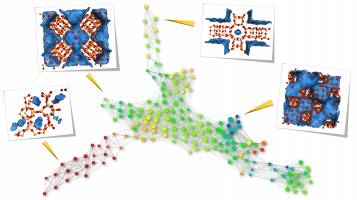
EPFL scientists have developed a mathematical 'face-recognition' method for identifying and discovering nanoporous materials based on their pore size. Image: Topological differences of top-performing materials for methane storage. Topological data analysis reveals the similarity between structures; each node represents a family of similar materials, while a network between two nodes indicates that they share at least one material.
Physics - Mathematics - 11.05.2017
Way to pack grains and drugs most efficiently
It's crazy - sand is one of the most common building materials in the world and drugs are often packed in the forms of pills, but we really don't understand how assembly of grains or pills behave. Scientists have discovered a way to solve a problem that has baffled humans for so long it is mentioned in the Bible: achieving the most efficient packing of objects such as grains and pharmaceutical drugs.
Mathematics - Physics - 13.04.2017
Unique water tank allows scientists to replicate rogue ocean waves
An international team of scientists have demonstrated how ocean winds can generate spontaneous rogue waves. This is the first step to predicting the potentially dangerous phenomena. Rogue or freak waves are extremely large, steep waves appearing in deep ocean, surging without warning and seemingly at random.
Physics - Mathematics - 30.03.2017
Sculpting optical microstructures with slight changes in chemistry
In 2013, materials scientists at the Harvard John A. Paulson School of Engineering and Applied Sciences (SEAS) and the Wyss Institute of Biologically Inspired Engineering grew a garden of self-assembled crystal microstructures. Now, applied mathematicians at the SEAS and Wyss have developed a framework to better understand and control the fabrication of these microstructures.
Mathematics - 22.03.2017
Maths formula offers key to sperm fertility
The rhythm with which individual sperm move could explain why some successfully fertilise the female egg and others fail, a new Oxford University collaboration has found. From studying the rhythmic movements, researchers at the Universities of York, Birmingham, Oxford and Kyoto University, Japan, have developed a mathematical formula which makes it easier to understand how sperm make the journey to fertilise an egg.
Computer Science - Mathematics - 21.03.2017
Making better decisions when outcomes are uncertain
Markov decision processes are mathematical models used to determine the best courses of action when both current circumstances and future consequences are uncertain. They've had a huge range of applications - in natural-resource management, manufacturing, operations management, robot control, finance, epidemiology, scientific-experiment design, and tennis strategy, just to name a few.
Computer Science - Mathematics - 13.03.2017
Computing with spiders’ webs
Do spiders use their web as a computer? New research, led by the Universities of Bristol and Oxford, will look at spiders' webs to investigate their computational capabilities and based on this research they will develop new sensor technology to measure vibrations and flow. Spiders' webs have evolved over hundreds of millions of years and can be surprisingly complex.
Mathematics - Life Sciences - 10.03.2017
Mathematical Theorem Finds Gerrymandering in Pennsylvania Congressional District Map
The slider above shows the current districting map for Pennsylvania and the map produced by an algorithm using a series of small random changes. Pennsylvania's congressional district maps are almost certainly the result of gerrymandering according to an analysis based on a new mathematical theorem on bias in Markov chains developed by Carnegie Mellon University and University of Pittsburgh mathematicians.
Mathematics - 07.03.2017
Infertility tied to relationship disruption in Ghana
Infertility is taking its toll on relationships in Ghana. New research shows Ghanaian women who have problems conceiving are more likely to experience relationship breakdown. The first long-term study of its kind, carried out by Dr Jasmine Fledderjohann, of Lancaster University, focused on information from 1,364 women.
Mathematics - Civil Engineering - 06.03.2017
Ride-sharing study findings are scalable to different cities
A still image taken from a video available at hubcab.com showing a map of Manhattan (upper left), with the yellow lines indicating taxi trips. Where lines intersect indicates sharing opportunities. Three years ago, Steven Strogatz, the Jacob Gould Schurman Professor of Applied Mathematics and Stephen H. Weiss Presidential Fellow, helped a group from the Massachusetts Institute of Technology identify the 'shareability' of cab service in New York City.
Mathematics - 27.02.2017
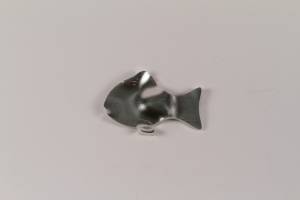
Using new computer algorithms, it is possible to adjust specific properties of three-dimensional objects, such as the sounds they produce or how stable they are. The thickness of a piece of metal made into different animal shapes - including a giraffe and a fish - is adjusted by using a computer algorithm in such a way that a specific sound spectrum is exhibited when the objects are struck.
Mathematics - 21.02.2017
Maths and maps make you nervous’ It could be in your genes
Our genes play a significant role in how anxious we feel when faced with spatial and mathematical tasks, such as reading a map or solving a geometry problem, according to a new study by researchers from King's College London. Spatial skills are important in everyday life, from navigation to assembling flat-pack furniture, and have also been linked to success in the STEM (Science, Technology, Engineering and Mathematics) professions.
Life Sciences - Mathematics - 20.02.2017
Computational Biologist Part of All-Star Alzheimer’s Collaboration
Two-year project aims to translate genetic findings into therapies Andreas Pfenning , assistant professor in Carnegie Mellon University's Computational Biology Department, is part of an all-star research team that aims to find new ways to translate genetic findings into new therapies for Alzheimer's disease.
Physics - Mathematics - 10.02.2017
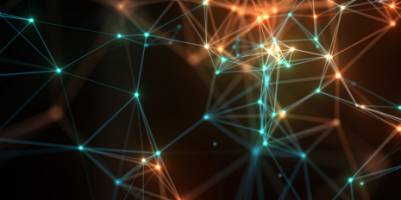
Quantum systems consisting of many particles are a major challenge for physicists, since their behaviour can be determined only with immense computational power. ETH physicists have now discovered an elegant way to simplify the problem. Classical physics offers a relatively easy approach to describing how objects move in our everyday world.
Mathematics - Computer Science - 01.02.2017
Center for Motion Research Begins Work at Universität Heidelberg
In addition to the mathematical and methodological foundations of motion studies, research at the Heidelberg Center for Motion Research will also include the connection between movement, the psyche, cognition and the body. With the support of the Carl Zeiss Foundation, an interdisciplinary center for motion research took up its work at Heidelberg University on 1 February of this year.
Mathematics - 11.01.2017
Young people could be limiting future salaries by dismissing A-level maths
England has one of the lowest levels of post-16 mathematics engagement among developed countries, according to international comparisons. This is despite the fact that mathematics qualifications such as A-level maths are linked to higher salaries, as reported in new research. In 2011 the Secretary of State for Education called for the 'vast majority' of young people to be studying mathematics up to 18 by the end of the decade.
History & Archeology - Mathematics - 09.01.2017
What did Big Data find when it analysed 150 years of British history?
What could be learnt about the world if you could read the news from over 100 local newspapers for a period of 150 years' This is what a team of Artificial Intelligence (AI) researchers from the University of Bristol have done, together with a social scientist and a historian, who had access to 150 years of British regional newspapers.
Mathematics - Chemistry - 06.01.2017
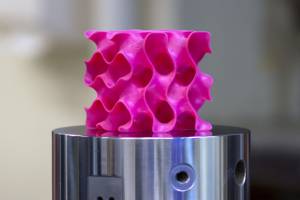
A team of researchers at MIT has designed one of the strongest lightweight materials known, by compressing and fusing flakes of graphene, a two-dimensional form of carbon. The new material, a sponge-like configuration with a density of just 5 percent, can have a strength 10 times that of steel. In its two-dimensional form, graphene is thought to be the strongest of all known materials.
Environment - Mathematics - 04.01.2017
Large-scale tornado outbreaks increasing in frequency, study finds
The frequency of large-scale tornado outbreaks is increasing in the United States, particularly when it comes to the most extreme events, according to research recently published in Science . The study by researchers including Joel E. Cohen, a visiting scholar at the University of Chicago, finds the increase in tornado outbreaks does not appear to be the result of a warming climate as earlier models suggested.


Health - Today
AI was supposed to ease doctors' workload - instead they spend hours correcting errors
AI was supposed to ease doctors' workload - instead they spend hours correcting errors
Pharmacology - Today
International trial finds rapid diagnostic testing alone does not reduce antibiotic prescribing for respiratory infections
International trial finds rapid diagnostic testing alone does not reduce antibiotic prescribing for respiratory infections
Social Sciences - Today
Social background shapes how hard children work, according to a study by UC3M
Social background shapes how hard children work, according to a study by UC3M
Innovation - Today
With Robotics Innovation Center, CMU and Hazelwood Partners Sustain Community Collaborations
With Robotics Innovation Center, CMU and Hazelwood Partners Sustain Community Collaborations