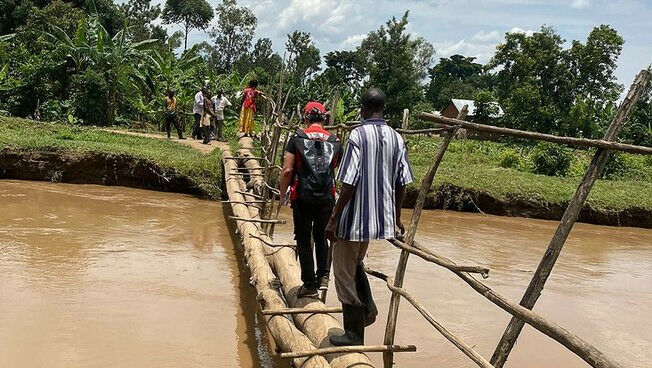
Photo: Daniel Geiger A bridge across a river in east African Uganda
Photo: Daniel Geiger A bridge across a river in east African Uganda - Introduce support measures before the catastrophe happens- this could help save human lives in the world's increasing climate catastrophes while also reducing the scope of destruction in the affected regions. Daniel Geiger, organization expert at Universität Hamburg, is looking at how suitable early warning systems can trigger support measures. A Canadian-British governmental consortium is now granting €5.8 million to the research. -How can I set up funds even before the catastrophe happens? This approach is completely new and marks a paradigm shift in catastrophe management,- says Daniel Geiger, who has been researching crisis coordination and crisis coping for the last 15 years. Worldwide, floods are the catastrophes that cost the most lives and destroy the conditions necessary for life, meaning houses, fields, and harvests. Droughts are a close second, although they are very different and involve a much longer look into the future. Geiger: -In our project, we are looking at both aspects because both are climate-induced catastrophes that we can to some extent predict-in contrast, for example, to earthquakes.
TO READ THIS ARTICLE, CREATE YOUR ACCOUNT
And extend your reading, free of charge and with no commitment.