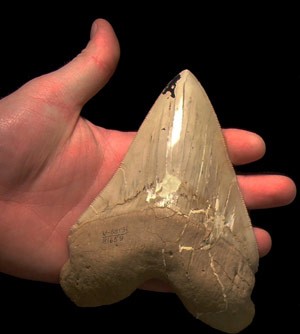
Teeth such as this from the extinct 40-foot-long shark Carcharocles megalodon are common in the Sharktooth Hill Bone Bed because, like modern sharks, these extinct sharks also shed teeth throughout their lives.
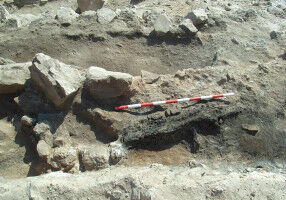
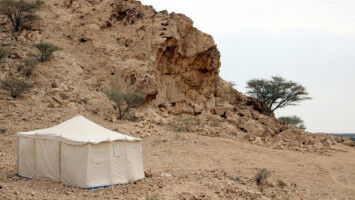
Randy Irmis of the University of Utah and Jere Lipps of UC Berkeley excavate fossils from the bone bed at Sharktooth Hill in 2008. (Nick Pyenson/University of British Columbia photos) BERKELEY — In the famed Sharktooth Hill Bone Bed near Bakersfield, Calif., shark teeth as big as a hand and weighing a pound each, intermixed with copious bones from extinct seals and whales, seem to tell of a 15-million-year-old killing ground. Yet, new research by a team of paleontologists from the University of California, Berkeley, the University of British Columbia in Vancouver, Canada, and the University of Utah paints a less catastrophic picture. Instead of a sudden die-off, the researchers say that the bone bed is a 700,000-year record of normal life and death, kept free of sediment by unusual climatic conditions between 15 million and 16 million years ago. Teeth such as this from the extinct 40-foot-long shark Carcharocles megalodon are common in the Sharktooth Hill Bone Bed because, like modern sharks, these extinct sharks also shed teeth throughout their lives. The team's interpretation of the fossils and the geology to establish the origins of the bone bed, the richest and most extensive marine deposit of bones in the world, are presented in the June 2009 issue of the journal Geology. The mix of shark bones and teeth, turtle shells three times the size of today's leatherbacks, and ancient whale, seal, dolphin and fish skeletons, comprise a unique six-to-20-inch-thick layer of fossil bones, 10 miles of it exposed, that covers nearly 50 square miles just outside and northeast of Bakersfield. Since the bed's discovery in the 1850s, paleontologists have battled over an obvious question: How did the bones get there?
TO READ THIS ARTICLE, CREATE YOUR ACCOUNT
And extend your reading, free of charge and with no commitment.