

Pharmacology - Mar 19
GSK, University of Oxford and Imperial College London launch centre to create computer models of lungs, liver, kidneys and cartilage
GSK, University of Oxford and Imperial College London launch centre to create computer models of lungs, liver, kidneys and cartilage
Innovation - Mar 19
India's new wave of Hindu Religious Entrepreneurship is reshaping our interpretation of success
India's new wave of Hindu Religious Entrepreneurship is reshaping our interpretation of success

Veterinary - Mar 19
New RVC study challenges common beliefs on desirable behaviours in designer 'Doodle' crossbreeds
New RVC study challenges common beliefs on desirable behaviours in designer 'Doodle' crossbreeds
Agronomy & Food Science - Mar 19
Bird Flu Risk to Danish Cattle - New Tool Can Warn Farmers Before Infection Spreads
Bird Flu Risk to Danish Cattle - New Tool Can Warn Farmers Before Infection Spreads
Chemistry - Mar 19
Leipzig University and Center for the Transformation of Chemistry conclude collaboration agreement
Leipzig University and Center for the Transformation of Chemistry conclude collaboration agreement
Psychology - Mar 19
Analysis: Trying your best in a second language? Here's why native speakers seem so rude
Analysis: Trying your best in a second language? Here's why native speakers seem so rude
Computer Science - Mar 18
SDU is part of global initiative to bring mathematical certainty to modern computing and artificial intelligence
SDU is part of global initiative to bring mathematical certainty to modern computing and artificial intelligence
science wire
Swiss Federal Institute of Technology Lausanne, EPFL
Results 1001 - 1050 of 1322.
Innovation - 18.01.2016
The new Switzerland Innovation has a hub in western Switzerland
18. With today's launch of the nationwide initiative called Switzerland Innovation, Switzerland affirms its position as a global leader in innovation.
Life Sciences - Health - 11.01.2016
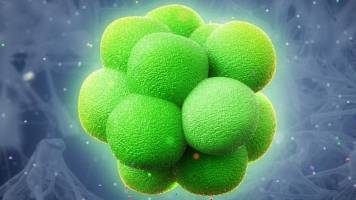
11. EPFL scientists have developed a new method that turns cells into stem cells by "squeezing" them. The method paves the way for large-scale production of stem cells for medical purposes. Stem cells are now at the cutting edge of modern medicine. They can transform into a cells of different organs, offering new ways to treat a range of injuries and diseases from Parkinson's to diabetes.
Life Sciences - Health - 04.01.2016
Looking back at 2015 (3/3)
04. The Human Brain Project provided a first proof of concept with a numerical reconstruction of a portion of a rat neocortex, the public came in droves to EPFL's new science festival, and researchers launched a social network platform to monitor public sentiment during the global climate conference.
Life Sciences - Health - 29.12.2015
Looking back at 2015 (2/3)
29. EPFL's Campus Biotech in Geneva was inaugurated in May. Researchers and students were full of imagination and made remarkable advances in the fields of infectious diseases, quantum technologies, the production of biofuels and rehabilitation.
Health - Innovation - 24.12.2015
Looking back at 2015 (1/3)
24. Considerable advances were made during the first months of 2015, notably in the field of brain implants. EPFL scientists also worked on research into graphene, extra-terrestrial life, robotics for teaching and the immune system. State representatives from all over the world came to our school in April.
Physics - 23.12.2015
Rotate an Image, Another One Appears
23. Hidden elements can now be placed into an inkjet printed image, thanks to EPFL software. These hidden elements become visible by simply rotating the print.
Environment - Innovation - 17.12.2015
Putting carbon back where it came from: underground
17. Will the future run entirely on renewables? According to Lyesse Laloui, the Paris Climate Conference could be catalytic, but in the meantime, we may have to bury our CO2 emissions underground.
Innovation - Computer Science - 16.12.2015
Swisscom and EPFL partner in the digital revolution
16. Be it in the world of work or in our daily routines, the digital revolution is in the process of transforming our way of life and our economy in a fundamental and lasting way.
Physics - Materials Science - 08.12.2015
Appointments at EPFL
08. The Board of the Swiss Federal Institutes of Technology has announced the appointment of four professors at EPFL. Jürgen Brugger as Full Professor of Microtechnology in the School of Engineering (STI) Jürgen Brugger is an innovator in the field of microsystems. His research focuses in particular on microand nano-manufacturing techniques as well as on the integration of novel functional materials such as microlenses and conductive inks into the latest generation of microsystems.
Social Sciences - 03.12.2015
EPFL to launch public opinion analysis platform during COP21 in Paris
03. EPFL's Social Media Lab (ESML) will take advantage of the COP21 Climate Forum in Paris to test Horizon, its social media-based public opinion tracking tool.
Environment - 27.11.2015
Measuring air pollution on a bicycle
27. A small group of EPFL students captured second place at the international competition iCan with their bike light with an air pollution gauge.
Astronomy & Space - Physics - 25.11.2015
100 years of relativity and enthusiasm for bringing science to the pu
25. Time and space are celebrating their 100th wedding anniversary. To mark the centenary of relativity theory, Anais Rassat and her cross-Channel accomplices have put Einstein front and center in an entertaining animated film.
Computer Science - Health - 24.11.2015
Smartphones to battle crop disease
24. EPFL and Penn State University are releasing an unprecedented 50,000 open-access photos of plant diseases.
Event - 21.11.2015
Scientastic shows strong public interest in the sciences
Computer Science - 16.11.2015
A program that captions your photos
16. Researchers have come up with a system capable of automatically captioning photos, including with sentences it was not taught.
Event - Architecture & Buildings - 12.11.2015
EPFL houses treasures from Vaud's heritage
Microtechnics - Computer Science - 05.11.2015
EPFL hosts robots from all over Switzerland
05. They fly, crawl, swim or sift through rubble after a disaster: robots from all across Switzerland were brought to EPFL on Wednesday for the first ever Swiss Robotics Industry Day (video report).
Innovation - 04.11.2015
Autonomous shuttles in the center of Sion
04. For the first time in Switzerland, autonomous shuttles could make the rounds of a city center. Researchers at EPFL, in association with the startup BestMile and the public bus operator PostBus, are working on how to integrate these vehicles into the public transport system.
Career - 30.10.2015
Why they rack up miles morning and evening for work
30. What drives people to spend hours commuting to and from work? A book written by EPFL sociologists analyzes this phenomenon - its structure, its social consequences and how it has changed over time.
Health - Computer Science - 29.10.2015
When false alarms pollute intensive care
29. Two EPFL doctoral students created algorithms capable of eliminating false alarms that pollute intensive care units.
Event - 26.10.2015
Alessandro De Simone wins "My Thesis in 180 Seconds" competition
Computer Science - Physics - 09.10.2015
Using optical fibre to generate a two-micron laser
09. Lasers with a wavelength of two microns could move the boundaries of surgery and molecule detection.
Administration - Career - 05.10.2015
There is no alternative to full association
l. to r. Patrick Aebischer (EPFL), Roberto Balzaretti (EU Swiss ambassador), Carlos Moedas (EU, Head of Research and Innovation), Lino Guzzella (ETH Zürich).
Event - 02.10.2015
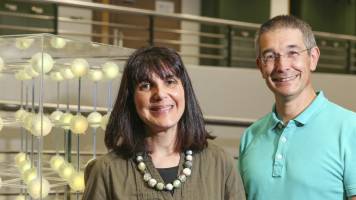
Health - Agronomy & Food Science - 29.09.2015
EPFL Dedicated to Research on the Challenges of Nutrition
29. Facing the lack of scientifically based evidence in the field of nutrition, a university and a foundation unite forces in the areas of research and public outreach.
Microtechnics - 28.09.2015
A folding robot weighing 4 grams that crawls and jumps
28. Researchers at EPFL have come up with a folding, reconfigurable robot that is capable of crawling and jumping.
Physics - Environment - 25.09.2015
Nominations of EPFL professors
25. At its most recent meeting on September 23th and 24th, the ETH Board nominated 15 EPFL professors.
Environment - 25.09.2015
Claudia R. Binder nominated to head chair for urban ecology
25. Tapping into the potential of cities to promote high quality of life with a low ecological footprint is more crucial than ever in an increasingly urbanized world.
Innovation - 25.09.2015
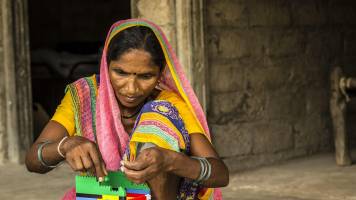
25. Two EPFL students have developed a model to teach women how to build toilets in India. They were invited to present their project this past summer at a conference held at UN headquarters in New York.
Innovation - Health - 24.09.2015
EPFL has chalked up 100 inventions per year over the past decade
1500e inevtion: the final step in a microscope capable of providing three-dimensional high-resolution images of functioning cells in the human body.
Pharmacology - Health - 24.09.2015
Antidepressants plus blood-thinners slow down brain cancer
24. EPFL scientists have found that combining antidepressants with anticoagulants slows down brain tumors (gliomas) in mice. Gliomas are aggressive brain tumors arising from the brain's supporting glial cells. They account for about a third of all brain tumors, and hold the highest incidence and mortality rate among primary brain cancer patients, creating an urgent need for effective treatments.
Physics - 22.09.2015
Swiss Plasma Center to harness the sun's energy
22. At EPFL, the Center for Research in Plasma Physics (CRPP) has become the Swiss Plasma Center (SPC), and for good reason: the Center is upgrading its facilities and expanding its scope of activities.
Life Sciences - Physics - 21.09.2015
DNA sequencing improved by slowing down
21. EPFL scientists have developed a method that improves the accuracy of DNA sequencing up to a thousand times. The method, which uses nanopores to read individual nucleotides, paves the way for better - and cheaper - DNA sequencing. DNA sequencing is a technique that can determine exact sequence of a DNA molecule.
Chemistry - Physics - 09.09.2015
Wrapped up in nanotubes
09. Summer Series: Student Projects - Aranya Goswami works on carbon nanotubes, which, among their many extraordinary properties, can also be combined with polymers and biological molecules to detect chemicals.
Pharmacology - Physics - 02.09.2015
Preventing crystallization to improve drug efficiency
02. Esther Amstad and an international team of researchers have developed a method to increase the solubility of poorly soluble substances, such as many of the newly developed drugs. "Each year, pharmaceutical companies refuse many drugs during early stages of their development because of their poor solubility in the body which prevents their efficient uptake by the human body" explains Esther Amstad.
Life Sciences - Health - 31.08.2015
Better learning through distinguishing
31. A study published describes work led by the University of Geneva's (UNIGE) Faculties of Medicine and Sciences, on the indisputable role of the olfactory bulb in mammal brains' ability to discriminate between smells.
Computer Science - 28.08.2015
An app to steer clear of Kenya's road hazards
28. Driving in Nairobi is often akin to navigating an obstacle course. Residents can now do something about it thanks to an app developed with EPFL.
Health - Life Sciences - 26.08.2015
Paralysis: primates recover better than rodents
26. Monkeys and humans exhibit greater motor recovery than rats after similar spinal cord injury, according to a study conducted in Grégoire Courtine's lab at EPFL.
Environment - Physics - 24.08.2015
Could urban disorder give way to sustainability?
24. An EPFL researcher is modeling cities in order to understand their metabolism and determine their ecological impact when they grow and change. Her research is aimed at identifying the urban form that is most efficient and consumes the least amount of natural resources. With cities expected to grow significantly in the future, it is vital to plan their development and anticipate their impact on the environment ahead of time.
Environment - 21.08.2015
Using fungi to harvest microalgae for biofuels
21. Microalgae are a promising feedstock for biofuels, but current methods of harvesting and dewatering them are unsustainable. Now researchers have shown that growing the algae with certain filamentous fungi to form lichens can reduce both cost and the energy input. Biofuels produced using microalgae could play an important role in the transition from a fossil fuel-based to a sustainable economy.
Environment - Chemistry - 14.08.2015
Transforming farm residues into biofuels and more
14. To cut the cost of biofuels, their production-process can be enhanced to include additional valuable biochemical compounds.
Microtechnics - Computer Science - 12.08.2015
An insect eye for drones
12. Inspired by the compound eyes of fruit flies, a team of researchers from EPFL has developed an artificial eye that allows robots to detect and avoid obstacles.
Health - Pharmacology - 16.03.2015
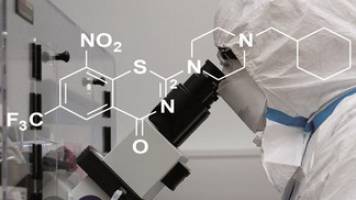
EPFL spin-off "Innovative Medicines for Tuberculosis" (iM4TB) has been awarded nearly USD 750,000 by the Bill & Melinda Gates Foundation to develop a breakthrough drug against tuberculosis.
Health - Electroengineering - 10.03.2015
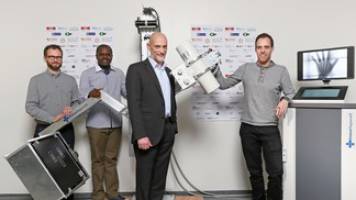
Two thirds of humankind do not have access to radiography, essential to the practice of modern medicine.
Environment - Life Sciences - 09.03.2015
The Council of Federal Institutes of Technology appointed ten professors at its march meeting.
Politics - 18.02.2015
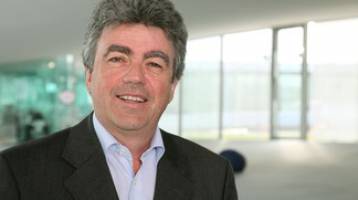
The Federal Council decided today to prolong the mandate of professor Patrick Aebischer until December 31, 2016, based on the unanimous proposal of the ETH Board and the wish of Patrick Aebischer to hand over the presidency of the School in a little less than two years.
Health - 12.02.2015

The UNIL-EPFL Centre sport et santé (CSS), the CHUV and the Zoé4life association are teaming up. They launched a programme for the benefit of children with cancer.
Innovation - 10.02.2015
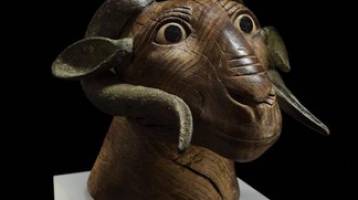
The Fondation Gandur pour l'Art is supporting the creation of a Digital Humanities research chair at Ecole Polytechnique Federale de Lausanne (EPFL), dedicated to the promotion and study of artistic heritage through new technologies. The research conducted will contribute to shaping the museums of tomorrow.
Innovation - Microtechnics - 09.02.2015
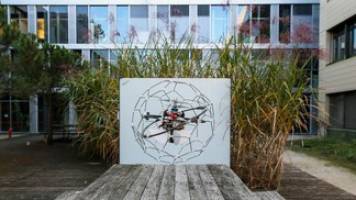
Health - Life Sciences - 09.02.2015
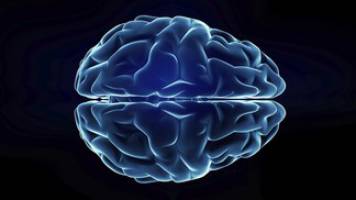
A new system of wireless microelectrodes aims to detect the location of epilepsy in the brain with high precision. This technique, under development at EPFL, is much less invasive than the current method. It will allow patients to go about their daily life while their brain activity is being monitored.


Pharmacology - Mar 19
GSK, University of Oxford and Imperial College London launch centre to create computer models of lungs, liver, kidneys and cartilage
GSK, University of Oxford and Imperial College London launch centre to create computer models of lungs, liver, kidneys and cartilage
Innovation - Mar 19
India's new wave of Hindu Religious Entrepreneurship is reshaping our interpretation of success
India's new wave of Hindu Religious Entrepreneurship is reshaping our interpretation of success
Veterinary - Mar 19
New RVC study challenges common beliefs on desirable behaviours in designer 'Doodle' crossbreeds
New RVC study challenges common beliefs on desirable behaviours in designer 'Doodle' crossbreeds
Agronomy & Food Science - Mar 19
Bird Flu Risk to Danish Cattle - New Tool Can Warn Farmers Before Infection Spreads
Bird Flu Risk to Danish Cattle - New Tool Can Warn Farmers Before Infection Spreads
Chemistry - Mar 19
Leipzig University and Center for the Transformation of Chemistry conclude collaboration agreement
Leipzig University and Center for the Transformation of Chemistry conclude collaboration agreement
Psychology - Mar 19
Analysis: Trying your best in a second language? Here's why native speakers seem so rude
Analysis: Trying your best in a second language? Here's why native speakers seem so rude
Computer Science - Mar 18
SDU is part of global initiative to bring mathematical certainty to modern computing and artificial intelligence
SDU is part of global initiative to bring mathematical certainty to modern computing and artificial intelligence