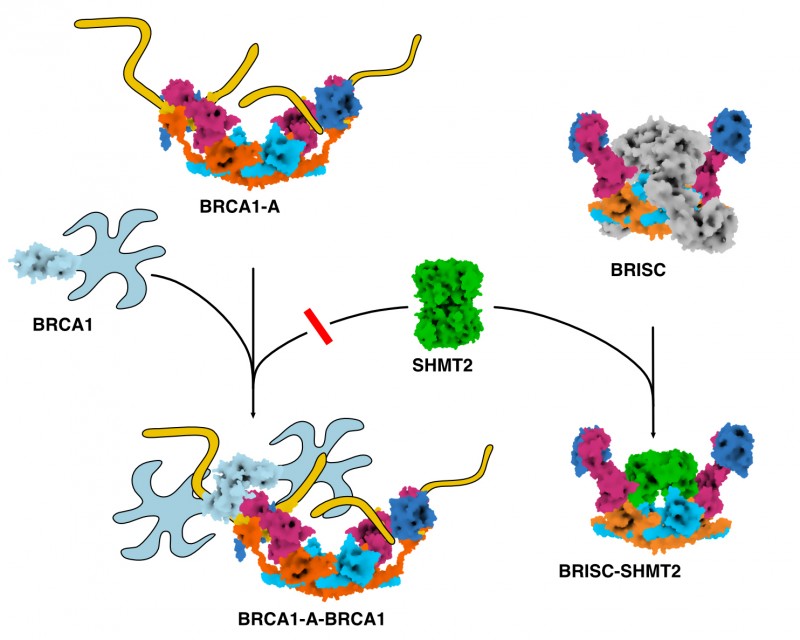
Schematic summary of BRCA1-A and BRISC function. Click to enlarge
Deubiquitinases (DUBs) play a general role removing protein-degrading ubiquitins throughout the cell and are not typically known for specificity. Analyzing the two protein complexes BRISC and BRCA1-A, which have the same DUB core but play different roles in human biology, the Thomä group - in a collaboration with the Novartis Institutes for BioMedical Research (NIBR) - showed that DUBs can have diversified targeting and regulatory functions. Protein function is modulated by post-translational modifications such as ubiquitination, leading to protein degradation or altering protein cellular location and activity. Ubiquitination can be reverted by DUBs, which are commonly regarded as constantly active enzymes with limited regulatory and targeting specificity. The multi-protein complexes BRCA1-A and BRISC serve respectively in DNA double-strand break repair (mutations to it are linked to early-onset breast cancer), and immune signaling and cellular stress response. Whereas they have distinct biological functions, the two complexes share the same catalytic subunit: the DUB BRCC36 - albeit with different subunits. With the available data suggesting BRCC36 has a "double-life" with distinct biological functions, Julius Rabl, a postdoc in the Thomä group, and colleagues sought to identify how BRCC36 works.
TO READ THIS ARTICLE, CREATE YOUR ACCOUNT
And extend your reading, free of charge and with no commitment.