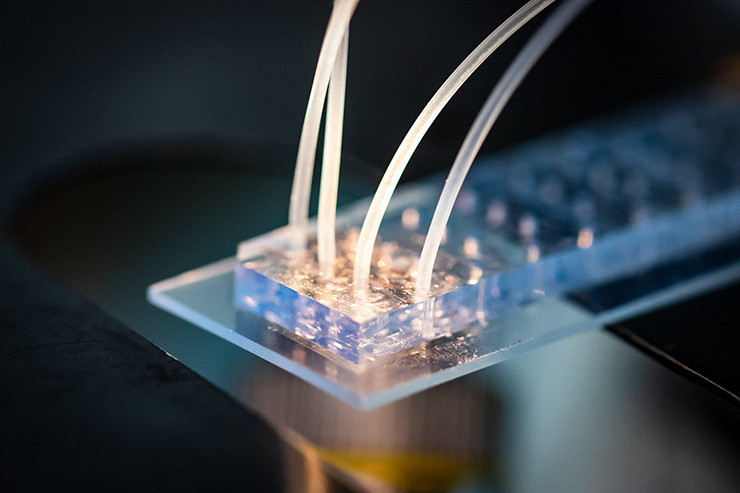
 Magnification of miniature chips: Single cells are encapsulated in tiny droplets and supplied with reagents for further processing.
Magnification of miniature chips: Single cells are encapsulated in tiny droplets and supplied with reagents for further processing. Felix Petermann, MDC/LifeTime - The FMI is a partner of the pan-European LifeTime initiative. In two publications, researchers involved with the initiative - including FMI group leader Susan Gasser - present a detailed roadmap of how to leverage the latest scientific breakthroughs and technologies over the next decade, to track, understand and treat human cells throughout an individual's lifetime. The LifeTime initiative has developed a strategy to advance personalized treatment for five major disease classes: cancer, neurological-, infectious-, chronic inflammatoryand cardiovascular diseases. The aim is a new age of personalized, cell-based interceptive medicine for Europe with the potential of improved health outcomes and more cost-effective treatment, resulting in profoundly changing a person's healthcare experience. To form a functioning, healthy body, our cells follow developmental paths during which they acquire specific roles in tissues and organs. But when they deviate from their healthy course, they accumulate changes leading to disease which remain undetected until symptoms appear.
TO READ THIS ARTICLE, CREATE YOUR ACCOUNT
And extend your reading, free of charge and with no commitment.
Your Benefits
- Access to all content
- Receive newsmails for news and jobs
- Post ads