Click image to enlarge
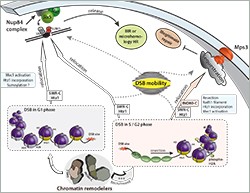
Large molecular motors consisting of up to a dozen different proteins regulate access to the genome, which is essential for the transcription of genes and for the repair of DNA damage. Susan Gasser and her team now reveal a new twist in the activity of such remodelers in the nucleus. In a recent paper in Molecular Cell they show that two related chromatin remodelers help transport broken DNA strands to specific sites in the nucleus for repair. Given the loss of genomic integrity that accompanies cancer and aging, it is not surprising to find that related remodelers are mutated early in the progression of human cancer. The architecture of the genome is constantly changing. Depending on the developmental program of the cell, stretches of DNA are compacted and then released again, primarily by modulating the position and composition of histones, the abundant, positively charged proteins that organize DNA into chromatin. The dynamics of DNA accessibility is regulated by a large and diverse group of ATPases, the SWI/SNF family of chromatin remodelers, which shift, replace, and evict histones from chromatin.
TO READ THIS ARTICLE, CREATE YOUR ACCOUNT
And extend your reading, free of charge and with no commitment.