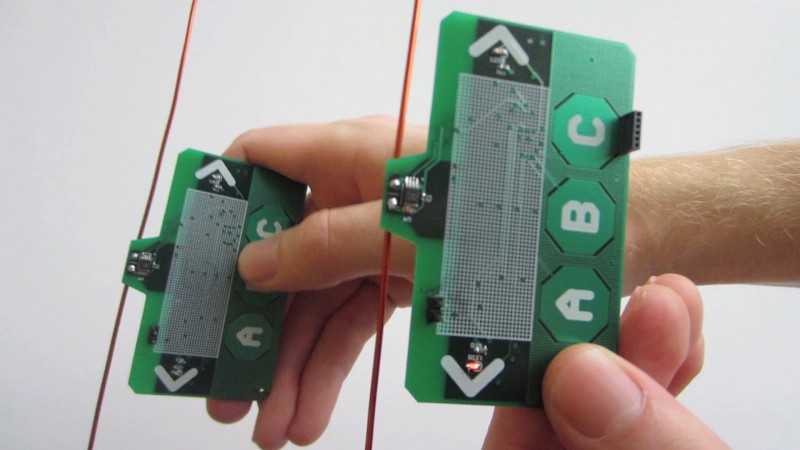
University of Washington Using ambient backscatter, these devices can interact with users and communicate with each other without using batteries. They exchange information by reflecting or absorbing pre-existing radio signals.
We might be one step closer to an Internet-of-things reality. University of Washington engineers have created a new wireless communication system that allows devices to interact with each other without relying on batteries or wires for power. The new communication technique, which the researchers call " ambient backscatter ,” takes advantage of the TV and cellular transmissions that already surround us around the clock. Two devices communicate with each other by reflecting the existing signals to exchange information. The researchers built small, battery-free devices with antennas that can detect, harness and reflect a TV signal, which then is picked up by other similar devices. The technology could enable a network of devices and sensors to communicate with no power source or human attention needed. "We can repurpose wireless signals that are already around us into both a source of power and a communication medium,” said lead researcher Shyam Gollakota , a UW assistant professor of computer science and engineering.
TO READ THIS ARTICLE, CREATE YOUR ACCOUNT
And extend your reading, free of charge and with no commitment.