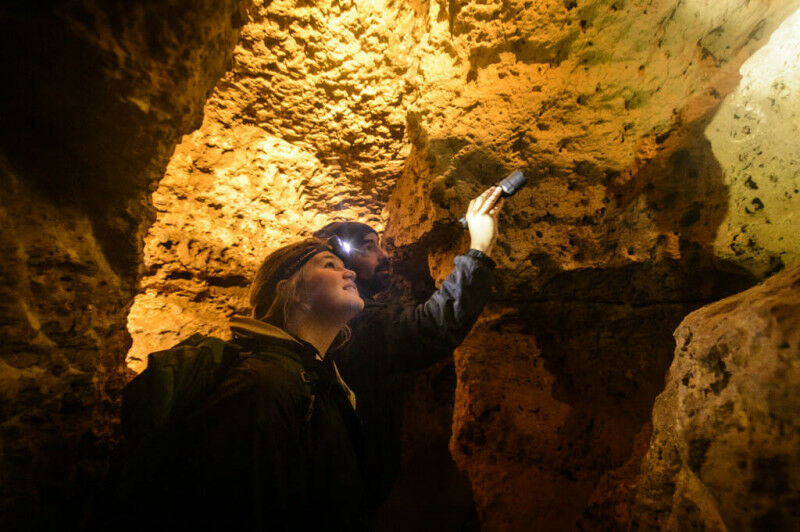
Then-UW student Cameron Batchelor (left) and Richard Slaughter (right), director of the Geology Museum at the University of Wisconsin-Madison, study cave walls while doing research at the Cave of the Mounds near Blue Mounds, Wisconsin. Batchelor led the analysis of mineral samples to identify a possible link between ice age warm-ups recorded in the Greenland ice sheet. Photo: Bryce Richter
Then-UW student Cameron Batchelor ( left ) and Richard Slaughter ( right ), director of the Geology Museum at the University of Wisconsin-Madison, study cave walls while doing research at the Cave of the Mounds near Blue Mounds, Wisconsin. Batchelor led the analysis of mineral samples to identify a possible link between ice age warm-ups recorded in the Greenland ice sheet. Photo: Bryce Richter - Even in their dark isolation from the atmosphere above, caves can hold a rich archive of local climate conditions and how they've shifted over the eons. Formed over tens of thousands of years, speleothems - rock formations unique to caves better known as stalagmites and stalactites - hold secrets to the ancient environments from which they formed. A newly published study of a stalagmite found in a cave in southern Wisconsin reveals previously undetected history of the local climate going back thousands of years. The new findings provide strong evidence that a series of massive and abrupt warming events that punctuated the most recent ice age likely enveloped vast swaths of the Northern Hemisphere. The research, conducted by a team of scientists at the University of Wisconsin-Madison, appears March 2 in the journal Nature Geoscience.
TO READ THIS ARTICLE, CREATE YOUR ACCOUNT
And extend your reading, free of charge and with no commitment.