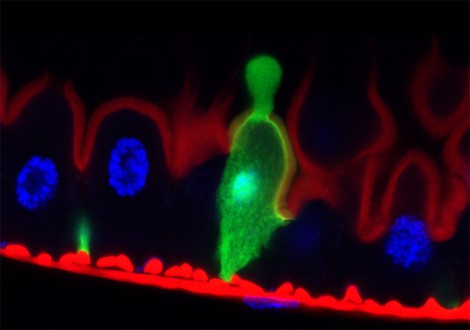
 © Catherine Socha. Drosophila epithelium. An enterocyte (green) dumps its damaged contents into the intestinal lumen. Also visible are actin filaments (red) and DNA .
Though purging is not prescribed as often as it was centuries ago, intestinal cells known as enterocytes frequently resort to this age-old remedy. Researchers from the Immune Response and Development in Insects (CNRS), Molecular Immunorheumatology (INSERM / Université de Strasbourg), and PAM Food Science and Microbiological Processes (AgroSup Dijon / Université de Bourgogne) laboratories have demonstrated that enterocytes attacked by pathogenic bacteria rapidly purge themselves of most of their contents. This protects them from infection and leads to a drastic though temporary thinning of the intestinal lining, or epithelium. This work, published on November 23 in Cell Host & Microbe , may eventually shed light on inflammatory bowel diseases like Crohn's disease. Serratia marcescens is an opportunistic bacterium common throughout our environment. Drosophila flies fed a steady diet of S. marcescens die in days. However, analysis of the intestinal epithelium every 24 hours reveals no apparent damage.
TO READ THIS ARTICLE, CREATE YOUR ACCOUNT
And extend your reading, free of charge and with no commitment.
Your Benefits
- Access to all content
- Receive newsmails for news and jobs
- Post ads