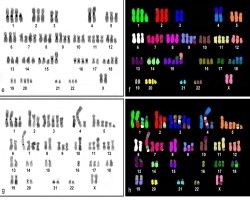
Example of genomic alteration (PLoS ONE 11(8) 2016,
DOI: 10.1371)
Work published by Isabella Marcomini and the Gasser laboratory sheds light on how repeat sequences found in the DNA of eukaryotic genomes can prevent accurate repair of DNA breaks, leading to dangerous chromosomal rearrangements. Repeat sequences make up nearly 70% of the human genome. While their function is unclear, it is well established that repeats are a source of genomic instability. In particular, when repeats are near a DNA double-strand break, they can lead to inappropriate translocations, which in turn can contribute to oncogenic transformation. The repetitive TG-rich sequences found at chromosome ends - so called telomeres, are thought to be an exception to this. Their role is usually beneficial because they help to prevent chromosomal fusions, a common type of DNA repair. In a paper published September 4 in Cell Reports , Marcomini et al.
TO READ THIS ARTICLE, CREATE YOUR ACCOUNT
And extend your reading, free of charge and with no commitment.