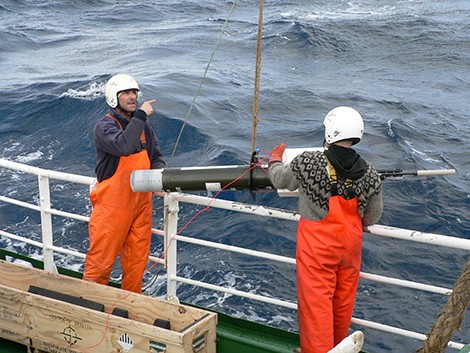
Phytoplankton blooms are one of the most important factors contributing to the efficiency of the carbon pump in the North Atlantic Ocean. To better understand this phenomenon, the ERC remOcean 1 project, led by researchers at the Laboratoire d'Océanographie de Villefranche (CNRS/UPMC), has developed a new class of robots: biogeochemical profiling floats, the first robots able to collect data in the ocean throughout the year. Using these unparalleled data, the researchers have identified the starting point for the explosive spring phytoplankton bloom. Their results are the subject of two articles published and Nature Communications. The North Atlantic Ocean located above the 50th parallel north is one of the most efficient carbon sinks in the world. Although it accounts for less than 1.5% of the total surface area of the world's oceans, it captures about 20% of the CO
2 sequestered by the oceans. Its very cold surface waters and relatively extreme weather conditions in winter enable efficient capture of CO
2 from the atmosphere.
TO READ THIS ARTICLE, CREATE YOUR ACCOUNT
And extend your reading, free of charge and with no commitment.
Your Benefits
- Access to all content
- Receive newsmails for news and jobs
- Post ads