



Chemistry - Mar 19
Leipzig University and Center for the Transformation of Chemistry conclude collaboration agreement
Leipzig University and Center for the Transformation of Chemistry conclude collaboration agreement


Chemistry - Feb 2
New material for use in the chemical industry capable of transforming CO2 into high value-added compounds
New material for use in the chemical industry capable of transforming CO2 into high value-added compounds
Chemistry - Feb 2
Material for modulating metal-organic frameworks for use in the chemical industry capable of transforming CO2 into high value-added compounds
Material for modulating metal-organic frameworks for use in the chemical industry capable of transforming CO2 into high value-added compounds
Chemistry - Jan 15
University of Glasgow spin-out hails milestone breakthrough in hydrogen energy process
University of Glasgow spin-out hails milestone breakthrough in hydrogen energy process

Life Sciences - Dec 17
Manchester Institute of Biotechnology welcomes three new professors, driving innovation in chemical and biological sciences
Manchester Institute of Biotechnology welcomes three new professors, driving innovation in chemical and biological sciences

Health - Nov 21
New Collaborative Research Centres: A Resounding Success for the University and the University Hospital
New Collaborative Research Centres: A Resounding Success for the University and the University Hospital
Chemistry - Nov 6
The scientific community and industry are seeking ways to accelerate the application of perovskite solar cells
The scientific community and industry are seeking ways to accelerate the application of perovskite solar cells
news
Chemistry
Results 3441 - 3460 of 3959.
Life Sciences - Chemistry - 14.10.2012
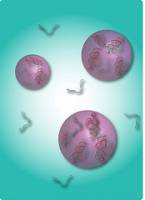
Researchers at Penn State University have developed a chemical model that mimics a possible step in the formation of cellular life on Earth 4 billion years ago. Using large "macromolecules" called polymers, the scientists created primitive cell-like structures that they infused with RNA - the genetic coding material that is thought to precede the appearance of DNA on Earth - and demonstrated how the molecules would react chemically under conditions that might have been present on the early Earth.
Life Sciences - Chemistry - 11.10.2012

The conventional wisdom would be that one of the products of this enzyme's activity is a chemical 'second messenger' that binds to and activates the channel. However, years of research had previously failed to find compelling evidence for such a straightforward mechanism." —Professor Roger Hardie, lead author of the study from the University of Cambridge's Department of Physiology, Development and Neuroscience Fly eyes have the fastest visual responses in the animal kingdom, but how they achieve this has long been an enigma.
Astronomy & Space - Chemistry - 11.10.2012

New research led by Yale University scientists suggests that a rocky planet twice Earth's size orbiting a nearby star is a diamond planet. "This is our first glimpse of a rocky world with a fundamentally different chemistry from Earth," said lead researcher Nikku Madhusudhan, a Yale postdoctoral researcher in physics and astronomy.
Physics - Chemistry - 09.10.2012
Large water reservoirs at the dawn of stellar birth
Scientists from the University of Leeds have discovered enough water vapour to fill Earth's oceans more than 2000 times over in a gas and dust cloud which is about to collapse into a Sun-like star. The research, led by Professor Paola Caselli, is the first detection of water vapour in a ‘pre-stellar core’, the cold, dark clouds of gas and dust from which stars form.
Chemistry - Physics - 09.10.2012
Drawing a line, with carbon nanotubes
Carbon nanotubes offer a powerful new way to detect harmful gases in the environment. However, the methods typically used to build carbon nanotube sensors are hazardous and not suited for large-scale production. A new fabrication method created by MIT chemists - as simple as drawing a line on a sheet of paper - may overcome that obstacle.
Chemistry - Physics - 08.10.2012
Catalytic converters like it hot
Vienna University of Technology has successfully clarified what it is the required operating temperatures of catalytic converters in cars depend on. Catalytic converters work poorly if they have not yet warmed up. Tiny metal particles in a catalytic converter require a minimum temperature to function efficiently.
Life Sciences - Chemistry - 07.10.2012
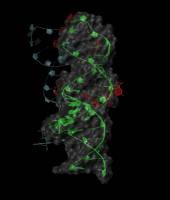
ANN ARBOR, Mich.-A University of Michigan biophysical chemist and his colleagues have discovered the smallest and fastest-known molecular switches made of RNA, the chemical cousin of DNA. The researchers say these rare, fleeting structures are prime targets for the development of new antiviral and antibiotic drugs.
Life Sciences - Chemistry - 05.10.2012
Spying on a bird's life at sea
Studying land-based birds is tough enough, but studying seabirds that spend much of their time over, on, or under water presents a new set of challenges. In this week's Journal of the Royal Society: Interface a team led by Oxford University scientists describes how new technologies and techniques made it possible to follow an important British seabird, the Manx Shearwater.
Environment - Chemistry - 05.10.2012

New models are being developed to predict how changing land use in the tropics could affect future climate, air quality and crop production. Is this change in land use resulting in unwelcome side-effects on ground-level ozone?" —Professor John Pyle Ozone has a dual personality best described as "good up high, bad nearby": the atmospheric gas is both vital - and potentially fatal - for our health.
Health - Chemistry - 04.10.2012
BPA’s Real Threat May Be After It Has Metabolized
Chemical found in many plastics linked to multiple health threats Bisphenol A or BPA is a synthetic chemical widely used in the making of plastic products ranging from bottles and food can linings to toys and water supply lines. When these plastics degrade, BPA is released into the environment and routinely ingested.
Chemistry - Physics - 04.10.2012
More efficient all-organic catalysts in fuel cells
Organic catalysts are a breakthrough in the quest for inexpensive and efficient materials for environmentally friendly production of energy in fuel cells. A new study by physicists at Umeå University in Sweden, published in ACS Nano, provides better knowledge about key processes in producing these catalysts.
Chemistry - Physics - 03.10.2012
Researchers develop efficient, scalable process for making renewable liquid fuels
Using simple technology developed primarily for producing electricity from hydrogen, a team of researchers from the University of Wisconsin-Madison, University of Massachusetts-Amherst and Gwangju Institute of Science and Technology of South Korea has developed what could be a commercially viable, continuous process for converting biomass and electricity into renewable liquid transportation fuels.
Health - Chemistry - 02.10.2012

Posted under: Engineering , Health and Medicine , News Releases , Research , Science , Technology A current focus in global health research is to make medical tests that are not just cheap, but virtually free. One such strategy is to start with paper - one of humanity's oldest technologies - and build a device like a home-based pregnancy test that might work for malaria, diabetes or other diseases.
Life Sciences - Chemistry - 01.10.2012

FINDINGS: The detection of specific DNA sequences is central to the identification of disease-causing pathogens and genetic diseases, as well as other activities. But current detection technologies require amplification by polymerase chain reaction (PCR), fluorescent or enzymatic labels, and expensive instrumentation.
Physics - Chemistry - 28.09.2012

CHAMPAIGN, Ill. University of Illinois researchers have a new low-cost method to carve delicate features onto semiconductor wafers using light - and watch as it happens. "You can use light to image the topography and you can use light to sculpture the topography," said electrical and computer engineering professor Gabriel Popescu.
Physics - Chemistry - 28.09.2012
Probing the mysteries of cracks and stresses
Analysis of molecular-level fracture and stress mechanisms could have broad implications for understanding materials' behavior. Diving into a pool from a few feet up allows you to enter the water smoothly and painlessly, but jumping from a bridge can lead to a fatal impact. The water is the same in each case, so why is the effect of hitting its surface so different? This seemingly basic question is at the heart of complex research by a team in MIT's Department of Nuclear Science and Engineering (NSE) that studied how materials react to stresses, including impacts.
Health - Chemistry - 26.09.2012
Umeå researchers even closer to early detection of Parkinson’s disease
In collaboration with colleagues at Oxford, a team of researchers at Umeå University in Sweden has now further elaborated its discovery of a way to detect Parkinson's disease at an early stage, and applications in clinical care are not far away. The project is an example of bridging the gap between basic and clinical research in care environments.
Life Sciences - Chemistry - 25.09.2012
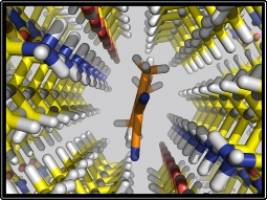
In the Alzheimer's brain, hard plaques accumulate between the nerve cells, while twisted fibers grow inside the nerve cells. The plaques arise from protein fragments called beta amlyoid, and the fibers form from a protein called tau. Doctors rely on brain scans to detect amyloid and tau and provide early intervention and treatments that potentially slow or reverse disease progression.
Environment - Chemistry - 24.09.2012
Scientific discovery offers ’green’ solution in fight against greenhouse gases
A low-cost new material that could lead to innovative technologies to tackle global warming has been discovered by scientists at The University of Nottingham. The porous material, named NOTT-300, has the potential to reduce fossil fuel emissions through the cheaper and more efficient capture of polluting gases such as carbon dioxide (CO2) and sulphur dioxide (SO2).
Physics - Chemistry - 20.09.2012

Theoretical physicists at Cornell may have found a new way to explain the formation of novae, stars that suddenly become very bright then quickly fade. At the heart of the theory is a pair of old, dense stars called white dwarfs, orbiting each other so closely that their gravitational forces create violent tidal waves of plasma that break near the surfaces of the stars.


Chemistry - Mar 19
Leipzig University and Center for the Transformation of Chemistry conclude collaboration agreement
Leipzig University and Center for the Transformation of Chemistry conclude collaboration agreement
Chemistry - Feb 2
New material for use in the chemical industry capable of transforming CO2 into high value-added compounds
New material for use in the chemical industry capable of transforming CO2 into high value-added compounds
Chemistry - Feb 2
Material for modulating metal-organic frameworks for use in the chemical industry capable of transforming CO2 into high value-added compounds
Material for modulating metal-organic frameworks for use in the chemical industry capable of transforming CO2 into high value-added compounds
Chemistry - Jan 15
University of Glasgow spin-out hails milestone breakthrough in hydrogen energy process
University of Glasgow spin-out hails milestone breakthrough in hydrogen energy process
Life Sciences - Dec 17
Manchester Institute of Biotechnology welcomes three new professors, driving innovation in chemical and biological sciences
Manchester Institute of Biotechnology welcomes three new professors, driving innovation in chemical and biological sciences
Health - Nov 21
New Collaborative Research Centres: A Resounding Success for the University and the University Hospital
New Collaborative Research Centres: A Resounding Success for the University and the University Hospital
Chemistry - Nov 6
The scientific community and industry are seeking ways to accelerate the application of perovskite solar cells
The scientific community and industry are seeking ways to accelerate the application of perovskite solar cells