

Computer Science - Today
SDU is part of global initiative to bring mathematical certainty to modern computing and artificial intelligence
SDU is part of global initiative to bring mathematical certainty to modern computing and artificial intelligence


Health - Today
Bilingual forms improve cancer treatment understanding among people with limited English
Bilingual forms improve cancer treatment understanding among people with limited English
Health - Today
Intratumoural microbiota and the immune system: a new study from the EOC-USI Institute for Translational Research
Intratumoural microbiota and the immune system: a new study from the EOC-USI Institute for Translational Research


Event - Mar 17
CEA Leti to Showcase Integrated Expertise In Microelectronics Reliability at IRPS 2026
CEA Leti to Showcase Integrated Expertise In Microelectronics Reliability at IRPS 2026

Health - Mar 17
AI was supposed to ease doctors' workload - instead they spend hours correcting errors
AI was supposed to ease doctors' workload - instead they spend hours correcting errors




news
Electroengineering
Results 301 - 320 of 763.
Health - Electroengineering - 20.06.2018
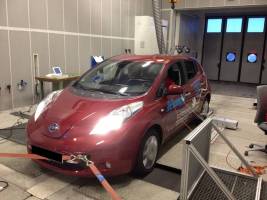
Research news Pacemakers and defibrillators are often implanted in patients with heart failure or cardiac arrhythmias to regulate heart function. These devices are susceptible to electromagnetic interference, which can potentially occur in electric cars. In a recent study, however, a team led by Dr. Carsten Lennerz, a cardiologist at the German Heart Centre Munich and scientist at the German Centre for Cardiovascular Research (DZHK), concludes that current electric cars pose no threat to patients.
Astronomy & Space - Electroengineering - 20.06.2018
XMM-Newton Finds Missing Intergalactic Material
After a nearly twenty-year long game of cosmic hide-and-seek, astronomers using ESA's XMM-Newton space observatory have finally found evidence of hot, diffuse gas permeating the cosmos, closing a puzzling gap in the overall budget of 'normal' matter in the Universe. While the mysterious dark matter and dark energy make up about 25 and 70 percent of our cosmos respectively, the ordinary matter that makes up everything we see - from stars and galaxies to planets and people - amounts to only about five percent.
Computer Science - Electroengineering - 20.06.2018
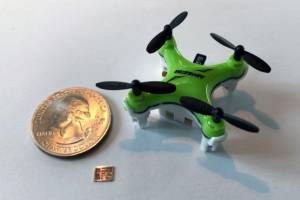
Researchers at MIT, who last year designed a tiny computer chip tailored to help honeybee-sized drones navigate, have now shrunk their chip design even further, in both size and power consumption. The team, co-led by Vivienne Sze, associate professor in MIT's Department of Electrical Engineering and Computer Science (EECS), and Sertac Karaman, the Class of 1948 Career Development Associate Professor of Aeronautics and Astronautics, built a fully customized chip from the ground up, with a focus on reducing power consumption and size while also increasing processing speed.
Electroengineering - Physics - 13.06.2018
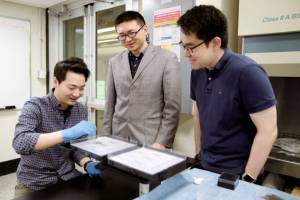
MIT engineers have created soft, 3-D-printed structures whose movements can be controlled with a wave of a magnet, much like marionettes without the strings. The menagerie of structures that can be magnetically manipulated includes a smooth ring that wrinkles up, a long tube that squeezes shut, a sheet that folds itself, and a spider-like "grabber" that can crawl, roll, jump, and snap together fast enough to catch a passing ball.
Physics - Electroengineering - 11.06.2018
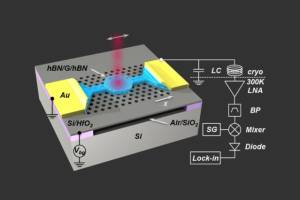
Bolometers, devices that monitor electromagnetic radiation through heating of an absorbing material, are used by astronomers and homeowners alike. But most such devices have limited bandwidth and must be operated at ultralow temperatures. Now, researchers say they've found a ultrafast yet highly sensitive alternative that can work at room temperature - and may be much less expensive.
Physics - Electroengineering - 04.06.2018
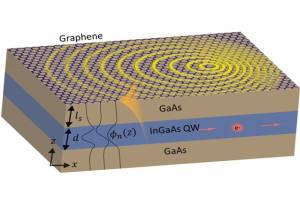
A new way of enhancing the interactions between light and matter, developed by researchers at MIT and Israel's Technion, could someday lead to more efficient solar cells that collect a wider range of light wavelengths, and new kinds of lasers and light-emitting diodes (LEDs) that could have fully tunable color emissions.
Life Sciences - Electroengineering - 31.05.2018
An artificial nerve system gives prosthetic devices and robots a sense of touch
Stanford Professor Zhenan Bao is leading American and Korean researchers in the quest for an artificial nerve system. (Image credit: Kevin Craft) Stanford and Seoul National University researchers have developed an artificial nervous system that could give prosthetic limbs or robots reflexes and the ability to sense touch.
Life Sciences - Electroengineering - 30.05.2018
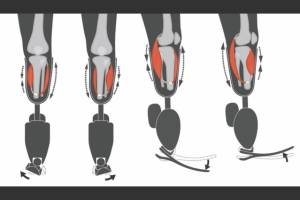
Humans can accurately sense the position, speed, and torque of their limbs, even with their eyes shut. This sense, known as proprioception, allows humans to precisely control their body movements. Despite significant improvements to prosthetic devices in recent years, researchers have been unable to provide this essential sensation to people with artificial limbs, limiting their ability to accurately control their movements.
Physics - Electroengineering - 28.05.2018
Physicists invent flux capacitor to break time-reversal symmetry
Physicists have invented a flux capacitor and, while it might not run a 'Back to the Future' inspired time machine, they say it will have important applications in communication technology and quantum computing . The team from The University of Queensland, RMIT University and ETH Zurich have proposed a device which uses the quantum tunnelling of magnetic flux around a capacitor which they say can break time-reversal symmetry.
Electroengineering - Computer Science - 24.05.2018
A new technology to secure integrated systems and circuits
The Laboratoire d'informatique, de robotique et de microélectronique de Montpellier (LIRMM) (CNRS/Université Montpellier 2) has recently developed a new technology capable of reducing data leakage fr
Electroengineering - Mechanical Engineering - 03.05.2018
Koman Family Outpatient Pavilion at UC San Diego Health Dedicated
An innovative, eel-like robot developed by engineers and marine biologists at the University of California can swim silently in salt water without an electric motor. Instead, the robot uses artificial muscles filled with water to propel itself. The foot-long robot, which is connected to an electronics board that remains on the surface, is also virtually transparent.
Physics - Electroengineering - 30.04.2018
Laser frequency combs may be the future of Wi-Fi
Wi-Fi and cellular data traffic are increasing exponentially but, unless the capacity of wireless links can be increased, all that traffic is bound to lead to unacceptable bottlenecks. Upcoming 5G networks are a temporary fix but not a long-term solution. For that, researchers have focused on terahertz frequencies, the submillimeter wavelengths of the electromagnetic spectrum.
Physics - Electroengineering - 17.04.2018
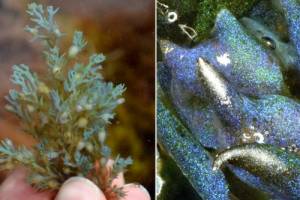
Scientists have discovered a completely new type of opal formed by a common seaweed which harnesses natural technology by self-assembling a nanostructure of oil droplets to control how light reflects from its cells to display a shimmering array of colours that until now, has only been seen in the gem stone.
Physics - Electroengineering - 16.04.2018
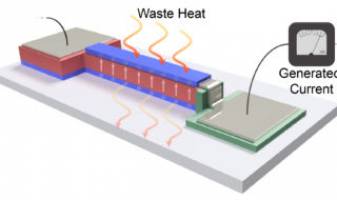
Nearly 70 percent of the energy produced in the United States each year is wasted as heat. Much of that heat is less than 100 degrees Celsius and emanates from things like computers, cars or large industrial processes. Engineers at the University of California, Berkeley, have developed a thin-film system that can be applied to sources of waste heat like these to produce energy at levels unprecedented for this kind of technology.
Computer Science - Electroengineering - 16.04.2018

Research news Radar satellites supply the data used to map sea level and ocean currents. However, up until now the radar's "eyes" have been blind where the oceans are covered by ice. Researchers at the Technical University of Munich (TUM) have now developed a new analysis method to solve this problem.
Physics - Electroengineering - 09.04.2018
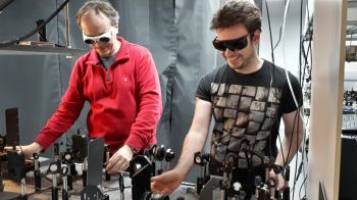
Physicists explore a safe alternative to x-ray security scanners A team of physicists at the University of Sussex are developing the science to create a safe and efficient 'paint' that can reveal, with terahertz (THz) radiation, the contents of luggage or objects hidden in clothing. THz radiation could replace the use of harmful x-rays and ultraviolet light in security scanners.
Health - Electroengineering - 27.03.2018
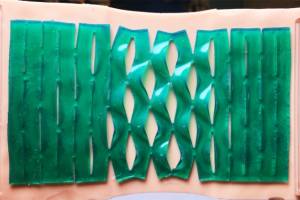
Scraped up knees and elbows are tricky places to securely apply a bandage. More often than not, the adhesive will peel away from the skin with just a few bends of the affected joint. Now MIT engineers have come up with a stickier solution, in the form of a thin, lightweight, rubber-like film. The adhesive film can stick to highly deformable regions of the body, such as the knee and elbow, and maintain its hold even after 100 bending cycles.
Physics - Electroengineering - 26.03.2018
A potential revolution in device engineering could be underway, thanks to the discovery of functional electronic interfaces in quantum materials that can self-assemble spontaneously. This illustrates that if we can learn to control and exploit the remarkable properties at the interfaces of quantum materials, this will likely result in a new generation of devices beyond our current imagination.
Computer Science - Electroengineering - 22.03.2018
Water-carrying robot brings help to Indian village
On World Water Day, a University of Glasgow computer scientist is highlighting how residents of a remote Indian village have benefited from social robot which helped them with their daily burden of water-gathering. Dr Amol Deshmukh, a research associate in the School of Computing Science, recently completed a project with partners from Amrita University which aimed to explore how a water-carrying robot would affect the lives of villagers in Ayyampathy in southern India.
Innovation - Electroengineering - 22.03.2018
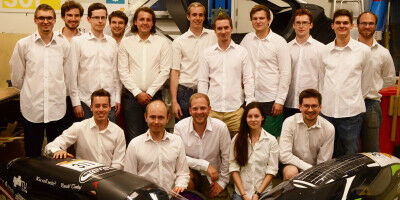
By Julian Naderer How to build the world's most efficient vehicle? What materials are suitable? Is electromobility the mobility of the future? In the TERA team we deal with all these TERA TU Graz is a student team that develops energy-efficient vehicles. We are students of various Graz universities, and we work together because we want to educate ourselves further and because we want to help shape the future of mobility.


Computer Science - Today
SDU is part of global initiative to bring mathematical certainty to modern computing and artificial intelligence
SDU is part of global initiative to bring mathematical certainty to modern computing and artificial intelligence
Health - Today
Bilingual forms improve cancer treatment understanding among people with limited English
Bilingual forms improve cancer treatment understanding among people with limited English
Health - Today
Intratumoural microbiota and the immune system: a new study from the EOC-USI Institute for Translational Research
Intratumoural microbiota and the immune system: a new study from the EOC-USI Institute for Translational Research
Event - Mar 17
CEA Leti to Showcase Integrated Expertise In Microelectronics Reliability at IRPS 2026
CEA Leti to Showcase Integrated Expertise In Microelectronics Reliability at IRPS 2026
Health - Mar 17
AI was supposed to ease doctors' workload - instead they spend hours correcting errors
AI was supposed to ease doctors' workload - instead they spend hours correcting errors