

Computer Science - Today
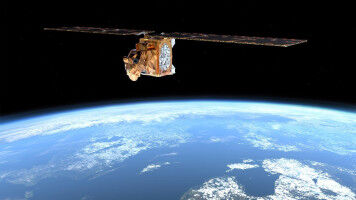
SDU is part of global initiative to bring mathematical certainty to modern computing and artificial intelligence
SDU is part of global initiative to bring mathematical certainty to modern computing and artificial intelligence


Health - Today
Bilingual forms improve cancer treatment understanding among people with limited English
Bilingual forms improve cancer treatment understanding among people with limited English
Health - Today
Intratumoural microbiota and the immune system: a new study from the EOC-USI Institute for Translational Research
Intratumoural microbiota and the immune system: a new study from the EOC-USI Institute for Translational Research


Event - Mar 17
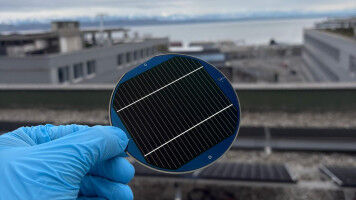
CEA Leti to Showcase Integrated Expertise In Microelectronics Reliability at IRPS 2026
CEA Leti to Showcase Integrated Expertise In Microelectronics Reliability at IRPS 2026

Health - Mar 17
AI was supposed to ease doctors' workload - instead they spend hours correcting errors
AI was supposed to ease doctors' workload - instead they spend hours correcting errors




news
Electroengineering
Results 521 - 540 of 763.
Physics - Electroengineering - 16.03.2015
Scientists move closer to "two for one deal" on solar cell efficiency
The causes of a hitherto mysterious process that could enhance the power of solar cells have been explained in a new study. If we want to implement this in a solar cell, we need to understand more about why and how singlet exciton fission occurs in the first place. Andrew Musser The underlying mechanism behind an enigmatic process called "singlet exciton fission", which could enable the development of significantly more powerful solar cells, has been identified by scientists in a new study.
Electroengineering - Mechanical Engineering - 16.03.2015
Cyborg beetle research allows free-flight study of insects
Hard-wiring beetles for radio-controlled flight turns out to be a fitting way to learn more about their biology. Cyborg insect research led by engineers at UC Berkeley and Singapore's Nanyang Technological University (NTU) is enabling new revelations about a muscle used by beetles for finely graded turns.
Life Sciences - Electroengineering - 09.03.2015

The process of wrinkle formation is familiar to anyone who has ever sat in a bathtub a little too long. But exactly why layered materials sometimes form one kind of wrinkly pattern or another - or even other variations, such as creases, folds, or delaminated buckles - has now been explained at a fundamental level by researchers at MIT.
Physics - Electroengineering - 26.02.2015
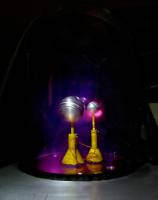
Researchers find 3-D printed parts to provide low-cost, custom alternatives for lab equipment Posted February 26, 2015; 02:00 p.m. by Raphael Rosen, Princeton Plasma Physics Laboratory The 3-D printing scene, a growing favorite of do-it-yourselfers, has spread to the study of plasma physics.
Electroengineering - Health - 25.02.2015
Electronic alerts may do more harm than good for kidney patients
The use of electronic alerts by hospitals treating patients with acute kidney injury may increase interventions without improving care, a study by Yale researchers found. The study was published Feb. 25 in The Lancet. Acute kidney injury (AKI) is a serious condition that can lead to dialysis and even death in hospitalized patients.
Life Sciences - Electroengineering - 17.02.2015
Nerve-cell signaling traced back to common ancestor of humans and sea anemone
New research shows that a burst of evolutionary innovation in the genes responsible for electrical communication among nerve cells in our brains occurred over 600 million years ago in a common ancestor of humans and the sea anemone. The research, led by Timothy Jegla, an assistant professor of biology at Penn State University, shows that many of these genes, which when mutated in humans can lead to neurological disease, first evolved in the common ancestor of people and a group of animals called cnidarians, which includes jellyfish, coral, and sea anemones.
Physics - Electroengineering - 09.02.2015
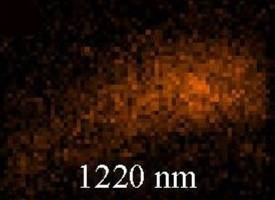
Metamaterials - artificial nanostructures engineered with electromagnetic properties not found in nature - offer tantalizing future prospects such as high resolution optical microscopes and superfast optical computers. To realize the vast potential of metamaterials, however, scientists will need to hone their understanding of the fundamental physics behind them.
Electroengineering - Physics - 06.02.2015
UCLA and USC scientists devise breakthrough technique for mapping temperature in tiny electronic devices
Courtesy of CEMMA and Regan Group Artist's conception of plasmon energy expansion thermometry showing a focused electron beam penetrating a 100 nanometer wide aluminum wire atop a thin glass window. The wire's temperature is mapped by scanning the electron beam. Overheating is a major problem for the microprocessors that run our smartphones and computers.
Physics - Electroengineering - 05.02.2015
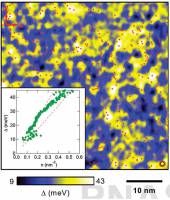
Exotic new materials called "ferromagnetic topological insulators" were supposed to be the next big thing, offering potential breakthroughs in electronics and new insights into the physics of solids - but it hasn't happened. Researchers at Cornell and Brookhaven National Laboratory have found out that tinkering with the materials to make the insulators work has actually introduced a disorder that spoils the desired effects.
Electroengineering - 03.02.2015
New technique doubles the distance of optical fibre communications
A new way to process fibre optic signals has been demonstrated by UCL researchers, which could double the distance at which data travels error-free through transoceanic sub-marine cables. The new method has the potential to reduce the costs of long-distance optical fibre as signals wouldn't need to be electronically boosted on their journey, which is important when the cables are buried underground or at the bottom of the ocean.
Electroengineering - Physics - 02.02.2015
Graphene displays clear prospects for flexible electronics
Semi-transparent, flexible electronics are no longer just science-fiction thanks to graphene's unique properties, University of Sheffield researchers have found. Published in the scientific , University of Sheffield and University of Manchester researchers show that new 2D 'designer materials' can be produced to create flexible, see-through and more efficient electronic devices.
Electroengineering - Physics - 02.02.2015
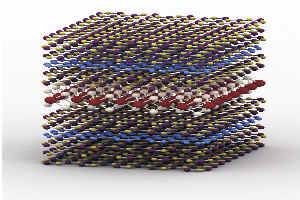
Semi-transparent, flexible electronics are no longer just science-fiction thanks to graphene's unique properties, University of Manchester researchers have found. Published in the scientific , University of Manchester and University of Sheffield researchers show that new 2D 'designer materials' can be produced to create flexible, see-through and more efficient electronic devices.
Physics - Electroengineering - 02.02.2015
Team led by UCLA and Columbia engineers uses disorder to control light on a nanoscale
Nicoletta Barolini Artist's depiction of light traveling through a photonic crystal superlattice, where holes have been randomly patterned. The result is a more narrow beam of light. A breakthrough by a team of researchers from UCLA, Columbia University and other institutions could lead to the more precise transfer of information in computer chips, as well as new types of optical materials for light emission and lasers.
Health - Electroengineering - 29.01.2015
Virtual gallery showcases the silicon chips behind a revolution in healthcare
A new Instagram series will show off the surprising beauty of the silicon chips being developed by researchers at Imperial to improve health. A silicon chip that can form a bridge to connect severed nerves together in people with spinal injuries and a chip that could help patients with locked in syndrome to communicate with the outside world are some of the prototypes that will be showcased in the Instagram campaign, which starts tomorrow (30 January).
Electroengineering - 28.01.2015
Electronic circuits with reconfigurable pathways closer to reality
Multitasking circuits capable of reconfiguring themselves in real time and switching functions as the need arises - this is the promising application stemming from a discovery made at EPFL and published. Other potential uses: miniaturising our electronic devices and developing resilient circuits. Will it be possible one day to reconfigure electronic microchips however we want, even when they are in use? A recent discovery by a team at EPFL suggests as much.
Physics - Electroengineering - 26.01.2015
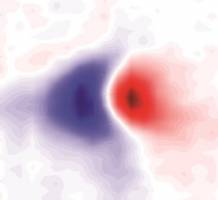
A potential avenue to quantum computing currently generating quite the buzz in the high-tech industry is "valleytronics," in which information is coded based on the wavelike motion of electrons moving through certain two-dimensional (2D) semiconductors. Now, a promising new pathway to valleytronic technology has been uncovered by researchers with the Lawrence Berkeley National Laboratory (Berkeley Lab).
Chemistry - Electroengineering - 15.01.2015
Improved solar panels and printed electronics on the horizon with new discovery
New and improved solar panels could result from the discovery of a new liquid crystal material, making printable organic solar cells better performing. Published today in Nature , University of Melbourne researchers say their discovery of the highly sought-after 'nematic liquid crystals' can now lead to vastly improved organic solar cell performance.
Physics - Electroengineering - 16.12.2014
New law for superconductors
MIT researchers have discovered a new mathematical relationship - between material thickness, temperature, and electrical resistance - that appears to hold in all superconductors. They describe their findings in the latest issue of Physical Review B . The result could shed light on the nature of superconductivity and could also lead to better-engineered superconducting circuits for applications like quantum computing and ultralow-power computing.
Chemistry - Electroengineering - 08.12.2014
Chemists create ’artificial chemical evolution’ for the first time
Scientists have taken an important step towards the possibility of creating synthetic life with the development of a form of artificial evolution in a simple chemistry set without DNA. A team from the University of Glasgow's School of Chemistry report in a new paper today (Monday 8 December) on how they have managed to create an evolving chemical system for the first time.
Electroengineering - Mechanical Engineering - 01.12.2014
New research could transform high speed optical networks
Press release issued: 1 December 2014 There is an ever growing demand for high speed internet communication systems. New research has shown optical switching technology built on nanoantenna reflectarrays and tunable materials could transform high speed optical networks. The study by Dr Maciej Klemm and Professor Martin Cryan from the University of Bristol's Department of Electrical and Electronic Engineering is published in the journal, Optics Express .


Computer Science - Today
SDU is part of global initiative to bring mathematical certainty to modern computing and artificial intelligence
SDU is part of global initiative to bring mathematical certainty to modern computing and artificial intelligence
Health - Today
Bilingual forms improve cancer treatment understanding among people with limited English
Bilingual forms improve cancer treatment understanding among people with limited English
Health - Today
Intratumoural microbiota and the immune system: a new study from the EOC-USI Institute for Translational Research
Intratumoural microbiota and the immune system: a new study from the EOC-USI Institute for Translational Research
Event - Mar 17
CEA Leti to Showcase Integrated Expertise In Microelectronics Reliability at IRPS 2026
CEA Leti to Showcase Integrated Expertise In Microelectronics Reliability at IRPS 2026
Health - Mar 17
AI was supposed to ease doctors' workload - instead they spend hours correcting errors
AI was supposed to ease doctors' workload - instead they spend hours correcting errors