



Life Sciences - Mar 27
Understanding the Brain - TU Ilmenau's EU EMBRACE Project Nominated for European Excellence Award
Understanding the Brain - TU Ilmenau's EU EMBRACE Project Nominated for European Excellence Award
Social Sciences - Mar 27
A manual addresses, for the first time in Spain, child and adolescent sexual exploitation
A manual addresses, for the first time in Spain, child and adolescent sexual exploitation


Environment - Mar 26
Changing vegetation in thawing permafrost increases emissions of greenhouse gases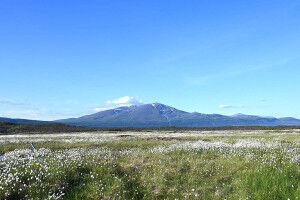
Changing vegetation in thawing permafrost increases emissions of greenhouse gases
Environment - Mar 26
University of Manchester hits major sustainability milestone, with Main Campus becoming 100% 'Zero Landfill'
University of Manchester hits major sustainability milestone, with Main Campus becoming 100% 'Zero Landfill'
Social Sciences - Mar 26
"It would be naive to believe that a social media ban will solve all problems"
"It would be naive to believe that a social media ban will solve all problems"


Health - Mar 26
Earlier detection, better outcomes: Irish researchers target rising bowel cancer rates with new blood test
Earlier detection, better outcomes: Irish researchers target rising bowel cancer rates with new blood test
Environment - Mar 26
UK must improve energy efficiency to end 50 years of policy failure and prevent future energy crises, study argues
UK must improve energy efficiency to end 50 years of policy failure and prevent future energy crises, study argues
Mathematics - Mar 26
From Materials to Medical Imaging, Fonseca's Work Shapes the Future of Innovation
From Materials to Medical Imaging, Fonseca's Work Shapes the Future of Innovation

news
Swiss Federal Institute of Technology Lausanne, EPFL
Results 861 - 880 of 1376.
Health - Life Sciences - 20.05.2019
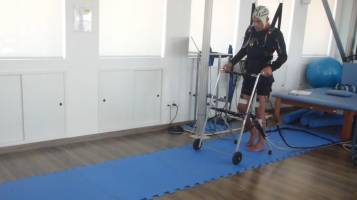
Researchers from the Alberto Santos Dumont Association for Research Support (AASDAP) in Brazil, in collaboration with EPFL, have developed a non-invasive strategy that combines functional electrostimulation and a brain-machine interface to help people with paraplegia walk again. This rehabilitation approach was tested on two patients, who showed an improvement in their motor skills and a partial neurological recovery.
Life Sciences - Health - 16.05.2019

Neuroscientists at EPFL have discovered an area of the brain, the insular cortex, that processes painful experiences and thereby drives learning from aversive events. Acute pain, e.g. hitting your leg against a sharp object, causes an abrupt, unpleasant feeling. In this way, we learn from painful experiences to avoid future harmful situations.
Health - Chemistry - 15.05.2019

Researchers have taken a critical look at how much we really know about our exposure to particles and chemicals transported by our clothing. His study concludes that further research is needed and opens up new areas of investigation. There is growing evidence that our clothing exposes us to particles and chemicals on a daily basis - and that this exposure could carry significant health risks.
Health - Physics - 09.05.2019
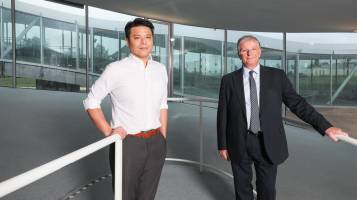
EPFL researchers have discovered that cancer cells use exosomes to communicate with each other and send information through the bloodstream. This breakthrough opens up new possibilities for the use of cancer immunotherapy techniques. "It was a huge surprise, we didn't expect to find so many melanoma cancer cell markers in blood exosomes," explains Hubert Girault, who heads up the Laboratory of Physical and Analytical Electrochemistry at EPFL Valais Wallis.
Physics - 07.05.2019

Using a novel approach, EPFL physicists have been able to create ultrafast electron vortex beams, with significant implications for fundamental physics, quantum computing, future data-storage and even certain medical treatments. In Jules Verne's famous classic Twenty Thousand Leagues Under the Sea , the iconic submarine Nautilus disappears into the Moskenstraumen, a massive whirlpool off the coast of Norway.
Health - Life Sciences - 06.05.2019
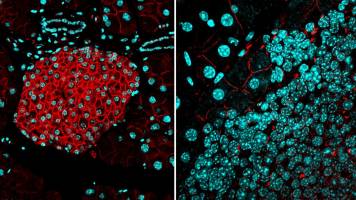
Scientists at EPFL have discovered a biological "barrier" that prevents cancer cells from forming new tumors and more importantly, from metastasizing. The study examines pancreatic neuroendocrine tumors and breast cancer. Activins are proteins involved in a number of important biological functions, including the regulation of the menstrual cycle, cell proliferation, differentiation, apoptosis, metabolism, homeostasis, immune response, wound repair, and endocrine function.
Physics - 03.05.2019
New holographic technique opens the way for quantum computation
EPFL physicists have developed a method based on the principles of holograms to capture 3D images of objects beyond the reach of light. Photography measures how much light of different color hits the photographic film. However, light is also a wave, and is therefore characterized by the phase. Phase specifies the position of a point within the wave cycle and correlates to depth of information, meaning that recording the phase of light scattered by an object can retrieve its full 3D shape, which cannot be obtained with a simple photograph.
Chemistry - Physics - 29.04.2019

EPFL researchers have created a smart device capable of producing large amounts of clean hydrogen. By concentrating sunlight, their device uses a smaller amount of the rare, costly materials that are required to produce hydrogen, yet it still maintains a high solar-to-fuel efficiency. Their research has been taken to the next scale with a pilot facility installed on the EPFL campus.
Environment - Electroengineering - 26.04.2019
Using 60% less water in paper production
An EPFL researcher has developed a mathematical model for optimizing heat transfer in factories and dramatically reducing water and energy consumption. The model could, in theory, cut water use by 60% at a Canadian paper mill and allow the facility to produce as much as six times more power. Manufacturing consumer goods requires vast quantities of water, heat and electricity.
Environment - 25.04.2019
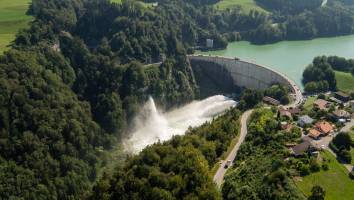
Researchers at EPFL conducted a large-scale experiment downstream of Rossens arch dam, employing a laboratory-developed method to successfully preserve wildlife habitats. The absence of natural flood events means that, downstream of dams, rivers always flow at the same rate. The channel bed silts up as time passes, and the lack of sediment replenishment degrades fish and invertebrate habitats and causes species diversity to decline.
History & Archeology - Innovation - 23.04.2019

In an important first, EPFL and Vaud Canton's archeology office used X-ray scanning technology to unlock the mysteries of an extremely rare chainmail shirt dating from Roman times. The results will go on display at the Cantonal Museum of Archeology and History in Lausanne from 26 April to 25 August.
Life Sciences - Health - 18.04.2019
Taming the genome's "jumping" sequences
EPFL scientists have discovered how a family of proteins that regulates the activity of transposable elements in the genome allows them to make inheritable changes to the growing fetus. The human genome is fascinating. Once predicted to contain about a hundred thousand protein-coding genes, it now seems that the number is closer to twenty thousand, and maybe less.
Environment - Computer Science - 15.04.2019
Algorithms to enhance forest inventories
An EPFL doctoral student has come up with methods to map out forests more effectively using aerial remote sensing, in support of on-the-ground forest inventories. Forests are an essential component of the world's ecosystems and a key indicator of our planet's health. They provide valuable resources - like wood for construction and heating - and they filter rainwater, protect against erosion and avalanches, and can be used for numerous leisure pursuits.
Health - Pharmacology - 11.04.2019
The way people walk says a lot about how healthy they are
Gait characteristics are sometimes regarded as the sixth vital sign in humans. They serve as a valuable indicator of a person's health, particularly in older adults - so why not measure them? A team of EPFL researchers is taking part in a major European project to design a device that can assess a person's gait more accurately.
Life Sciences - Chemistry - 08.04.2019
New biologically derived metal-organic framework mimics DNA
Chemical engineers at EPFL have synthesized a biologically-derived metal-organic framework on which the hydrogen bonding that forms the DNA double helix can be mimicked and studied like never before.
Physics - 04.04.2019
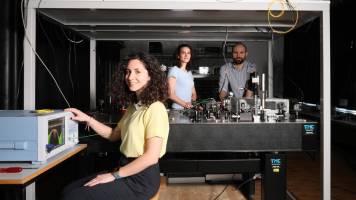
Researchers at EPFL have developed a simple mid-infrared laser source that can be used to detect pollution in the air or molecules in someone's breath. Their system takes up considerably less space than the large ones typically used for such tasks. Researchers at EPFL have come up with a new middle infrared light source that can detect greenhouse and other gases, as well as molecules in a person's breath.
Life Sciences - 03.04.2019
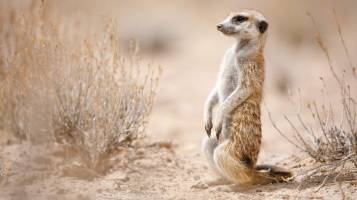
Researchers from EPFL and the University of Zurich have developed a model that uses data from sensors worn by meerkats to gain a more detailed picture of how animals behave in the wild. Advancement in sensor technologies has meant that field biologists are now collecting a growing mass of ever more precise data on animal behaviour.
Innovation - Pharmacology - 02.04.2019
Nestlé Health Science set to use anti-aging compound
Amazentis, an EPFL spin-off based in Innovation Park, announced today that it is entering into a strategic partnership with Nestlé Health Science. The startup plans to develop products based on urolithin A, a promising anti-aging compound. The Fountain of Youth is still the stuff of legend, but the anti-aging compound urolithin A is now one step closer to the market.
Physics - Health - 02.04.2019
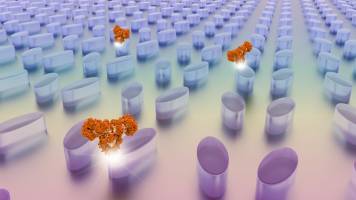
With nothing more than a photonic chip and an ordinary camera, EPFL researchers have managed to count biomolecules one by one in a small sample and determine their position. Their tiny device - a marriage of optics and smart image analysis - is even able to detect a graphene sheet only a single atom thick.
Chemistry - Physics - 01.04.2019


Life Sciences - Mar 27
Understanding the Brain - TU Ilmenau's EU EMBRACE Project Nominated for European Excellence Award
Understanding the Brain - TU Ilmenau's EU EMBRACE Project Nominated for European Excellence Award
Social Sciences - Mar 27
A manual addresses, for the first time in Spain, child and adolescent sexual exploitation
A manual addresses, for the first time in Spain, child and adolescent sexual exploitation
Environment - Mar 26
Changing vegetation in thawing permafrost increases emissions of greenhouse gases
Changing vegetation in thawing permafrost increases emissions of greenhouse gases
Environment - Mar 26
University of Manchester hits major sustainability milestone, with Main Campus becoming 100% 'Zero Landfill'
University of Manchester hits major sustainability milestone, with Main Campus becoming 100% 'Zero Landfill'
Social Sciences - Mar 26
"It would be naive to believe that a social media ban will solve all problems"
"It would be naive to believe that a social media ban will solve all problems"
Health - Mar 26
Earlier detection, better outcomes: Irish researchers target rising bowel cancer rates with new blood test
Earlier detection, better outcomes: Irish researchers target rising bowel cancer rates with new blood test
Environment - Mar 26
UK must improve energy efficiency to end 50 years of policy failure and prevent future energy crises, study argues
UK must improve energy efficiency to end 50 years of policy failure and prevent future energy crises, study argues
Mathematics - Mar 26
From Materials to Medical Imaging, Fonseca's Work Shapes the Future of Innovation
From Materials to Medical Imaging, Fonseca's Work Shapes the Future of Innovation