


Event - Mar 17
CEA Leti to Showcase Integrated Expertise In Microelectronics Reliability at IRPS 2026
CEA Leti to Showcase Integrated Expertise In Microelectronics Reliability at IRPS 2026

Health - Mar 17
AI was supposed to ease doctors' workload - instead they spend hours correcting errors
AI was supposed to ease doctors' workload - instead they spend hours correcting errors



Pharmacology - Mar 17
International trial finds rapid diagnostic testing alone does not reduce antibiotic prescribing for respiratory infections
International trial finds rapid diagnostic testing alone does not reduce antibiotic prescribing for respiratory infections

Social Sciences - Mar 17
Social background shapes how hard children work, according to a study by UC3M
Social background shapes how hard children work, according to a study by UC3M
Innovation - Mar 17
With Robotics Innovation Center, CMU and Hazelwood Partners Sustain Community Collaborations
With Robotics Innovation Center, CMU and Hazelwood Partners Sustain Community Collaborations




news
History & Archeology
Results 501 - 520 of 979.
Earth Sciences - History & Archeology - 22.08.2018
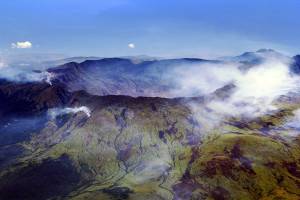
Electrically charged volcanic ash short-circuited Earth's atmosphere in 1815, causing global poor weather and Napoleon's defeat, says new research. Historians know that rainy and muddy conditions helped the Allied army defeat the French Emperor Napoleon Bonaparte at the Battle of Waterloo. The June 1815 event changed the course of European history.
Environment - History & Archeology - 10.08.2018
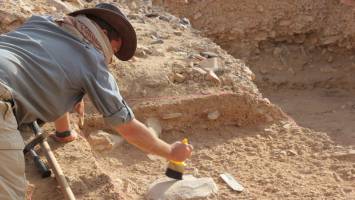
New archaeological research from The Australian National University (ANU) has found that Homo erectus , an extinct species of primitive humans, went extinct in part because they were 'lazy'. An archaeological excavation of ancient human populations in the Arabian Peninsula during the Early Stone Age, found that Homo erectus used 'least-effort strategies' for tool making and collecting resources.
History & Archeology - 02.08.2018
New evidence on the origins of people buried at Stonehenge
People buried at Stonehenge 5,000 years ago likely lived in west Wales where Stonehenge's smaller standing stones - bluestones - originated from, according to a new study involving UCL, University of Oxford, Vrije Universiteit Brussel, and the Muséum National d'Histoire Naturelle de Paris, France. The study, published in Nature Scientific Reports , suggests that a number of people buried at the Wessex site had moved with and likely transported the bluestones, which were sourced from the Preseli Mountains in west Wales and used in the early construction of Stonehenge.
History & Archeology - 02.08.2018
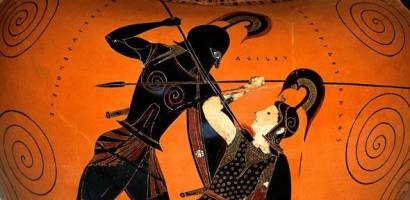
Epic poems telling of cultures colliding, deeply conflicted identities and a fast-changing world were written by the Greeks under Roman rule in the first to the sixth centuries CE. Now, the first comprehensive study of these vast, complex texts is casting new light on the era that saw the dawn of Western modernity.
History & Archeology - 01.08.2018
New light shed on the people who built Stonehenge
Despite over a century of intense study, we still know very little about the people buried at Stonehenge or how they came to be there. Now suggests that a number of the people that were buried at the Wessex site had moved with and likely transported the bluestones used in the early stages of the monument's construction, sourced from the Preseli Mountains of west Wales.
History & Archeology - 26.07.2018
Historian uncovers new evidence of 18th century London’s ’Child Support Agency’
How 18th and 19th century London supported its unmarried mothers and illegitimate children - essentially establishing an earlier version of today's Child Support Agency - is the subject of newly-published research by a Cambridge historian.
History & Archeology - 26.07.2018
Making thread in Bronze Age Britain
Bronze Age Britons spliced plant fibres together to make cloth rather than spinning, a new study has found. The study, published this week in the journal Archaeological and Anthropological Sciences identified that the earliest plant fibre technology for making thread in Early Bronze Age Britain and across Europe and the Near East was splicing not spinning.
History & Archeology - 18.07.2018
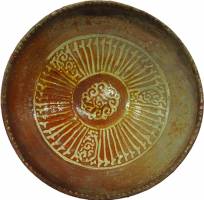
Showcased in museums the world over, Byzantine ceramics are the vestiges of an ancient empire that dominated the Mediterranean region for nearly ten centuries. One CNRS researcher 1 , in cooperation with Greek colleagues 2 , has focused her attention on a widely disseminated style of ceramics called the “main Middle Byzantine Production,” found in all four corners of the Mediterranean.
Agronomy & Food Science - History & Archeology - 16.07.2018
Bread predates agriculture by 4,000 years, discover archaeologists
The charred remains of a flatbread baked by hunter-gatherers over 14,000 years ago has been discovered in north-eastern Jordan by a team of researchers from UCL, University of Copenhagen and University of Cambridge. It is the oldest direct evidence of bread found to date, predating the advent of agriculture by at least 4,000 years.
History & Archeology - 14.07.2018
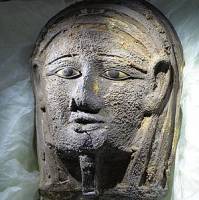
German-Egyptian team presents the latest findings from Saqqara excavations Researchers at the University of Tübingen have discovered a gilded mask on the mummy of a priest in Saqqara, Egypt. It is from the Saite-Persian period (664-404 BCE). The head of the German-Egyptian team, Dr. Ramadan Badry Hussein, reported on Saturday that the mask was found in an extensive tomb complex which Tübingen archaeologists have been investigating since 2016, using the latest methods.
History & Archeology - 12.07.2018
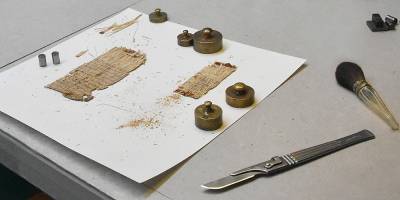
Since the 16th century, Basel has been home to a mysterious papyrus. With mirror writing on both sides, it has puzzled generations of researchers. A research team from the University of Basel has now discovered that it is an unknown medical document from late antiquity. The text was likely written by the famous Roman physician Galen.
History & Archeology - Art & Design - 05.07.2018

Why is UC Berkeley Assistant Professor Stephanie Syjuco sewing American historical garments - all of them bright green - at her Richmond Field Station art studio while researching Hollywood Civil War movies? She's preparing an eye-catching, thought-provoking exhibit that opens in November at the Smithsonian American Art Museum in Washington, D.C. Berkeley News recently visited with Syjuco, who is internationally known for her large-scale sculptures and installations that combine handcrafting methods with digital technologies and social engagement.
History & Archeology - 04.07.2018
New study questions when the brown bear became extinct in Britain
PA 143/18 New research provides insights into the extinction of Britain's largest native carnivore. The study - ' The Presence of the brown bear in Holocene Britain: a review of the evidence' published in Mammal Review - is the first of its kind to collate and evaluate the evidence for the brown bear in post-Ice Age Britain.
History & Archeology - 03.07.2018
Archaeologists reveal castle’s medieval secrets
Volunteers, students and staff at the Auckland Castle excavation site. Credit: Jamie Sproates, courtesy of The Auckland Project. Medieval mysteries, hidden beneath the grounds of a 900-year-old British castle, have been uncovered during a major archaeological excavation. More than 90 archaeologists, undergraduate and postgraduate students, and volunteers from Durham University and The Auckland Project spent a month peeling back the centuries at Auckland Castle, Bishop Auckland, as part of the latest excavation at the former home of the powerful Prince Bishops of Durham.
History & Archeology - Health - 28.06.2018
Shell shock stories and beyond
The psychological trauma experienced by soldiers during the First World War - and relatives who have been traumatised by researching their family's history of the conflict - will be the focus of a new community engagement project led by academics at the University of Nottingham.
Chemistry - History & Archeology - 27.06.2018
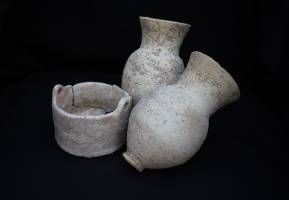
University of Glasgow research identifies barley beer in Bronze Age Mesopotamian drinking vessels People living some 3500 years ago in Mesopotamia, which now is modern-day Iraq, enjoyed a pint as much as we do today.
History & Archeology - Event - 21.06.2018
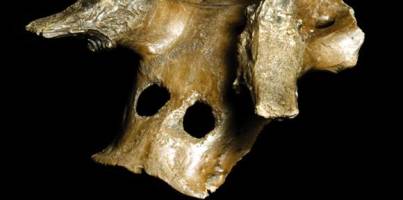
Three 11,500-year-old deer skull headdresses - excavated from a world-renowned archaeological site in Yorkshire - will go on display, one for the first time, at Cambridge University's Museum of Archaeology and Anthropology (MAA) from today. The most mysterious objects found at Star Carr are 33 deer skull headdresses.
History & Archeology - Life Sciences - 20.06.2018
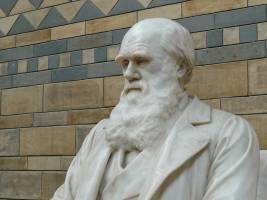
Some anonymously published papers on evolution far predate the publication of Charles Darwin's Origin of Species (1859). With the help of modern AI software, Koen Tanghe (UGent) and Mike Kestemont (UAntwerpen) have revealed the authors of two of these papers. This work may help to foster interest in those early, intriguing publications on evolution, their authors and their possible influence on Charles Darwin.
History & Archeology - 07.06.2018
A lost world in a former empire in Europe has been brought to life thanks to University of Bristol researchers who used artificial intelligence (AI) techniques to analyse 47,000 multilingual pages from newspapers dating back to 1873. The study, published in Historical Methods , aimed to discover whether historical changes could be detected from the collective content of local newspapers from the Princely County of Gorizia and Gradisca.
Life Sciences - History & Archeology - 31.05.2018
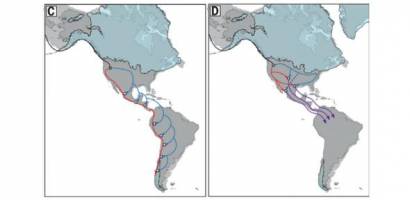
New research using ancient DNA finds that a population split after people first arrived in North America was maintained for millennia before mixing again before or during the expansion of humans into the southern continent. The lab-based science should only be a part of the research. We need to work with Indigenous communities in a more holistic way Dr Christiana Scheib Recent research has suggested that the first people to enter the Americas split into two ancestral branches, the northern and southern, and that the "southern branch" gave rise to all populations in Central and South America.


Event - Mar 17
CEA Leti to Showcase Integrated Expertise In Microelectronics Reliability at IRPS 2026
CEA Leti to Showcase Integrated Expertise In Microelectronics Reliability at IRPS 2026
Health - Mar 17
AI was supposed to ease doctors' workload - instead they spend hours correcting errors
AI was supposed to ease doctors' workload - instead they spend hours correcting errors
Pharmacology - Mar 17
International trial finds rapid diagnostic testing alone does not reduce antibiotic prescribing for respiratory infections
International trial finds rapid diagnostic testing alone does not reduce antibiotic prescribing for respiratory infections
Social Sciences - Mar 17
Social background shapes how hard children work, according to a study by UC3M
Social background shapes how hard children work, according to a study by UC3M
Innovation - Mar 17
With Robotics Innovation Center, CMU and Hazelwood Partners Sustain Community Collaborations
With Robotics Innovation Center, CMU and Hazelwood Partners Sustain Community Collaborations