


Event - Mar 17
CEA Leti to Showcase Integrated Expertise In Microelectronics Reliability at IRPS 2026
CEA Leti to Showcase Integrated Expertise In Microelectronics Reliability at IRPS 2026

Health - Mar 17
AI was supposed to ease doctors' workload - instead they spend hours correcting errors
AI was supposed to ease doctors' workload - instead they spend hours correcting errors


Pharmacology - Mar 17
International trial finds rapid diagnostic testing alone does not reduce antibiotic prescribing for respiratory infections
International trial finds rapid diagnostic testing alone does not reduce antibiotic prescribing for respiratory infections

Social Sciences - Mar 17
Social background shapes how hard children work, according to a study by UC3M
Social background shapes how hard children work, according to a study by UC3M
Innovation - Mar 17
With Robotics Innovation Center, CMU and Hazelwood Partners Sustain Community Collaborations
With Robotics Innovation Center, CMU and Hazelwood Partners Sustain Community Collaborations





news
History & Archeology
Results 541 - 560 of 979.
History & Archeology - 08.03.2018
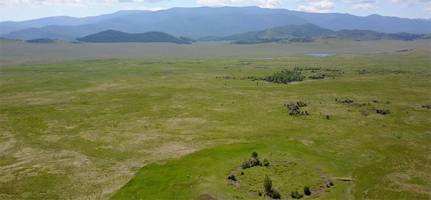
Deep in a swamp in the Russian republic of Tuva, SNSF-funded archaeologist Gino Caspari has discovered an undisturbed Scythian burial mound. All the evidence suggests that this is not only the largest Scythian princely tomb in South Siberia, but also the earliest - and that it may be harbouring some outstandingly well-preserved treasures.
History & Archeology - Career - 05.03.2018
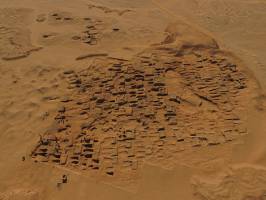
The archaeological site of Sedeinga is located in Sudan, a hundred kilometers to the north of the third cataract of the Nile, on the river's western shore. Known especially for being home to the ruins of the Egyptian temple of Queen Tiye, the royal wife of Amenhotep III, the site also includes a large necropolis containing sepulchers dating from the kingdoms of Napata and Mereo (seventh century BCE–fourth century CE), a civilization 1 mixing local traditions and Egyptian influences.
Mathematics - History & Archeology - 27.02.2018
What are voice-controlled personal assistants like Alexa and Siri to do when faced with words like "face” that have multiple meanings ranging from a body part to an action? Scientists from UC Berkeley, the University of Toronto and Lehigh University in Pennsylvania have begun to identify the algorithms humans have used over the last thousand years to give words new meanings.
Life Sciences - History & Archeology - 22.02.2018
Beaker culture in Britain came about through large-scale migration
Beaker pottery and culture spread through large-scale migration of people and through the exchange of new ideas, according to new research by an international team involving UCL scientists. The study involved analysis of ancient-DNA data from 400 prehistoric skeletons drawn from sites across Europe. It is the largest study of ancient human DNA ever conducted.
Life Sciences - History & Archeology - 19.02.2018
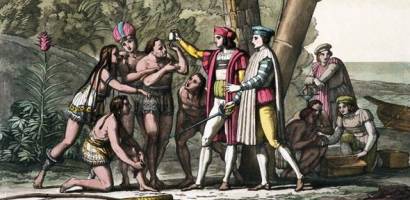
A thousand-year-old tooth has provided genetic evidence that the so-called "Taíno", the first indigenous Americans to feel the full impact of European colonisation after Columbus arrived in the New World, still have living descendants in the Caribbean today. It has always been clear that people in the Caribbean have Native American ancestry, but it was difficult to prove whether this was specifically indigenous to the Caribbean, until now.
History & Archeology - Life Sciences - 14.02.2018
The history of domestication: a rabbit’s tale
Wild rabbits are widely thought to have been first tamed in 600 A.D. by French monks, when they were prized as food as a 'meat substitute' during Lent. But, according to Oxford University research, that isn't true. Domestication, which is often defined as 'the process of taming an animal and keeping it as a pet or on a farm, and the cultivation of a plant for food', can be dated using historical and archaeological records.
History & Archeology - Environment - 13.02.2018
Citrus fruit peel offers new evidence on early cultivation
Citrus fruit was being cultivated in India in the Late Neolithic period and in southern Thailand in the Iron Age, according to new findings by archaeologists at UCL and Peking University, Beijing. Citrus fruit are widespread and well known nearly everywhere today, but very little is known about how they were domesticated and diversified.
Life Sciences - History & Archeology - 07.02.2018
Face of first Brit revealed
The face of 'Cheddar Man', Britain's oldest nearly complete skeleton at 10,000 years old, is revealed for the first time and with unprecedented accuracy by UCL and Natural History Museum researchers. The results indicate that Cheddar Man had blue eyes, dark coloured curly hair and 'dark to black' skin pigmentation.
Earth Sciences - History & Archeology - 06.02.2018
Giant earthquakes: not as random as thought
Scientists discovered that giant earthquakes reoccur with relatively regular intervals. When also taking into account smaller earthquakes, the repeat interval becomes increasingly more irregular to a level where earthquakes happen randomly in time. In their recent paper in Earth and Planetary Science Letters , Moernaut`s team of Belgian, Chilean and Swiss researchers presented a new approach to tackle the problem of large earthquake recurrence.
Astronomy & Space - History & Archeology - 05.02.2018

Astronomers have managed to take unusually colourful images of a group of galaxies using a telescope in Hawaii. The photos reveal new facts about this spectacular galaxy cluster. Remnants of star matter attest to a phenomenon known as galactic cannibalism. Colourful clutter of both distant galaxies and foregrounded stars in our own galaxy.
History & Archeology - 02.02.2018
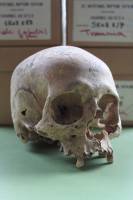
A team of archaeologists, led by Cat Jarman from the University of Bristol's Department of Anthropology and Archaeology, has discovered that a mass grave uncovered in the 1980s dates to the Viking Age and may have been a burial site of the Viking Great Army war dead. Although the remains were initially thought to be associated with the Vikings, radiocarbon dates seemed to suggest the grave consisted of bones collected over several centuries.
Life Sciences - History & Archeology - 31.01.2018
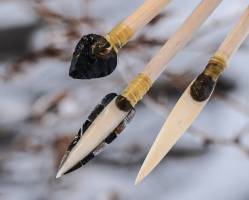
Archaeologists are a little like forensic investigators: They scour the remains of past societies, looking for clues in pottery, tools and bones about how people lived, and how they died. And just as detectives might re-create the scene of a crime, University of Washington archaeologists have re-created the weapons used by hunter-gatherers in the post-Ice Age Arctic some 14,000 years ago.
Art & Design - History & Archeology - 25.01.2018
Major Robert Burns Research Revealed - 50 songs were not by Scotland’s national bard
UofG's @P14Murray revealed on @BBCTheOneShow that up to 50 #RobertBurns songs were not really by the Bard! #BurnsNight2018 #UofGRabbie #CheerstoRabbie https://t.co/ZuzzWI7unB pic.twitter.com/0uB6BqTNy8 — University of Glasgow (@UofGlasgow) January 25, 2018 Some 50 airs in an 18th century landmark publication credited with saving Scotland's folk song tradition were not by Robert Burns, according to new University of Glasgow research.
History & Archeology - Earth Sciences - 24.01.2018

Artefacts revealed by melting ice patches in the high mountains of Oppland shed new light on ancient high-altitude hunting. Town-dwellers needed mountain products such as antlers for artefact manufacture and probably also furs James Barrett Climate change is one of the most important issues facing people today and year on year the melting of glacial ice patches in Scandinavia, the Alps and North America reveals and then destroys vital archaeological records of past human activity.
Life Sciences - History & Archeology - 17.01.2018
Origins of the Bornean elephant
The mystery behind the origins of the Bornean elephant has been uncovered by collaborative research between Cardiff University and researchers across the globe. How the endangered species of elephants came to live in Borneo has been unknown, until a recent study discovered part of the story, finding that elephants might have migrated between the Sunda Islands in Southeast Asia during low sea levels.
History & Archeology - 11.01.2018
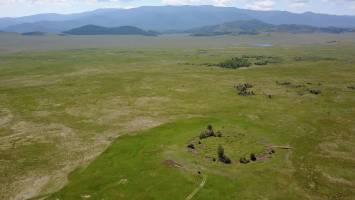
Deep in a swamp in the Russian republic of Tuva, SNSF-funded archaeologist Gino Caspari has discovered an undisturbed Scythian burial mound. All the evidence suggests that this is not only the largest Scythian princely tomb in South Siberia, but also the earliest - and that it may be harbouring some outstandingly well-preserved treasures.
Life Sciences - History & Archeology - 03.01.2018

Direct genetic traces of the earliest Native Americans have been identified for the first time in a new study. The genetic evidence suggests that people may have entered the continent in a single migratory wave, perhaps arriving more than 20,000 years ago.
History & Archeology - Economics - 18.12.2017

Researchers have published details of the largest collection of artefacts from an early English coffeehouse ever discovered. Described as an 18th century equivalent of Starbucks, the finds nonetheless suggest that it may have been less like a café, and more like an inn. Coffee houses were important social centres during the 18th century.
History & Archeology - Health - 15.12.2017

Earliest archaeological evidence of intestinal parasitic worms infecting the ancient inhabitants of Greece confirms descriptions found in writings associated with Hippocrates, the early physician and 'father of Western medicine'.
History & Archeology - Law - 14.12.2017
New image brings people face to face with Seventeenth Century Scottish soldier
New image brings people face to face with Seventeenth Century Scottish soldier (14 December 2017) The face of one of the Seventeenth Century Scottish soldiers who was imprisoned and died in Durham following the Battle of Dunbar in 1650 has been revealed through a remarkable new digital reconstruction.


Event - Mar 17
CEA Leti to Showcase Integrated Expertise In Microelectronics Reliability at IRPS 2026
CEA Leti to Showcase Integrated Expertise In Microelectronics Reliability at IRPS 2026
Health - Mar 17
AI was supposed to ease doctors' workload - instead they spend hours correcting errors
AI was supposed to ease doctors' workload - instead they spend hours correcting errors
Pharmacology - Mar 17
International trial finds rapid diagnostic testing alone does not reduce antibiotic prescribing for respiratory infections
International trial finds rapid diagnostic testing alone does not reduce antibiotic prescribing for respiratory infections
Social Sciences - Mar 17
Social background shapes how hard children work, according to a study by UC3M
Social background shapes how hard children work, according to a study by UC3M
Innovation - Mar 17
With Robotics Innovation Center, CMU and Hazelwood Partners Sustain Community Collaborations
With Robotics Innovation Center, CMU and Hazelwood Partners Sustain Community Collaborations