



Health - Today
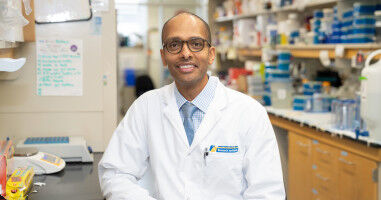
AI was supposed to ease doctors' workload - instead they spend hours correcting errors
AI was supposed to ease doctors' workload - instead they spend hours correcting errors


Pharmacology - Today
International trial finds rapid diagnostic testing alone does not reduce antibiotic prescribing for respiratory infections
International trial finds rapid diagnostic testing alone does not reduce antibiotic prescribing for respiratory infections

Social Sciences - Today
Social background shapes how hard children work, according to a study by UC3M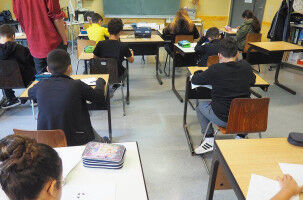
Social background shapes how hard children work, according to a study by UC3M
Innovation - Today
With Robotics Innovation Center, CMU and Hazelwood Partners Sustain Community Collaborations
With Robotics Innovation Center, CMU and Hazelwood Partners Sustain Community Collaborations





news
History & Archeology
Results 701 - 720 of 979.
History & Archeology - Agronomy & Food Science - 03.06.2015
Britain’s oldest tea (and first modern commodity)
Dr Richard Coulton, based at QMUL's School of English and Drama, reflects on the discovery of Britain's oldest tea. Dr Coulton is one of three authors of a forthcoming book, Empire of Tea: The Asian Leaf that Conquered the World. Last week we released a news story about our discovery of Britain's oldest tea leaves alongside colleagues at the Natural History Museum in London.
Life Sciences - History & Archeology - 20.04.2015
Mummified bodies from 18th century Europe found to have multiple tuberculosis infections
Bodies found in a 200 year-old Hungarian crypt have revealed the secrets of how tuberculosis (TB) took hold in 18th century Europe, according to a research team involving UCL scientists. A new study published in Nature details how samples taken from naturally mummified bodies found in an 18th century crypt in the Dominican church of Vác in Hungary have yielded 14 TB genomes, suggesting that mixed infections were common when TB was at peak prevalence in Europe.
Life Sciences - History & Archeology - 20.04.2015
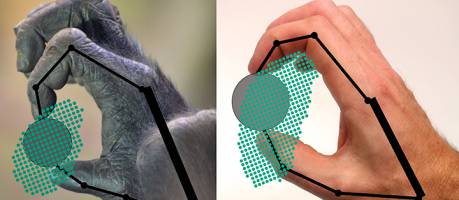
Scientists are coming to grips with the superior grasping ability of humans and other primates throughout history. In a new study, a research team led by Yale University found that even the oldest known human ancestors may have had precision grip capabilities comparable to modern humans. This includes Australopithecus afarensis , which appears in the fossil record a million years before the first evidence of stone tools.
History & Archeology - Health - 31.03.2015
Archaeologists unearth medieval graveyard beneath Cambridge College
Archaeological investigations discovered one of Britain's largest medieval hospital cemeteries, containing over 1,000 human remains, when excavating beneath the Old Divinity School at St John's College, Cambridge, a new report shows.
Astronomy & Space - History & Archeology - 30.03.2015

Stars form when gravity pulls together material within giant clouds of gas and dust. But gravity isn't the only force at work. Both turbulence and magnetic fields battle gravity, either by stirring things up or by channeling and restricting gas flows, respectively. New research focusing on magnetic fields shows that they influence star formation on a variety of scales, from hundreds of light-years down to a fraction of a light-year.
Life Sciences - History & Archeology - 27.03.2015
Female embryos less likely to survive to birth
New research has challenged the prevailing belief that the higher proportion of male babies born in the general population results from a higher proportion of males being conceived. The conclusions suggest that embryonic death is bound up with the embryo's sex in ways that are not yet fully understood.
Earth Sciences - History & Archeology - 25.03.2015
Prehistoric super salamander was top predator, fossils suggest
A previously undiscovered species of crocodile-like amphibian that lived during the rise of dinosaurs was among Earth's top predators more than 200 million years ago, a study shows. Palaeontologists identified the prehistoric species - which looked like giant salamanders - after excavating bones buried on the site of an ancient lake in southern Portugal.
Life Sciences - History & Archeology - 24.03.2015
Complex genetic ancestry of Americans uncovered
By comparing the genes of current-day North and South Americans with African and European populations, a new study has found the genetic fingerprints of the slave trade and colonisation that shaped migrations to the Americas hundreds of years ago. The team, from Oxford University, UCL and the Universita' del Sacro Cuore of Rome, analysed more than 4,000 previously collected DNA samples from 64 different populations, covering multiple locations in Europe, Africa and the Americas.
Life Sciences - History & Archeology - 24.03.2015
Complex genetic ancestry of Americans uncovered
By comparing the genes of current-day North and South Americans with African and European populations, an Oxford University study has found the genetic fingerprints of the slave trade and colonisation that shaped migrations to the Americas hundreds of years ago. The study published in Nature found that: While Spaniards provide the majority of European ancestry in continental American Hispanic/Latino populations, the most common European genetic source in African-Americans and Barbadians comes from Great Britain.
Life Sciences - History & Archeology - 18.03.2015
Who do you think you really are? A genetic map of the British Isles
By constructing the first fine-scale map of the British Isles, Oxford University researchers have uncovered distinct geographical groupings of genetically similar individuals across the UK. The study found that: There was no single 'Celtic' genetic group. In fact the Celtic parts of the UK (Scotland, Northern Ireland, Wales and Cornwall) are among the most different from each other genetically.
History & Archeology - Health - 17.03.2015
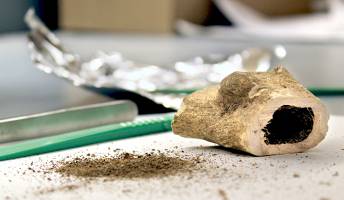
Ancient malaria patients, the anthropologist will see you now. A Yale University scientist has developed a promising new method to identify malaria in the bone marrow of ancient human remains. It is the first time researchers have been able to establish a diagnostic, human skeletal profile for the disease, which is transmitted by mosquitoes and continues to infect millions of people a year.
Environment - History & Archeology - 13.03.2015
Early humans adapted to living in rainforests much sooner than thought
An international research team has shed new light on the diet of some of the earliest recorded humans in Sri Lanka. The researchers from Oxford University, working with a team from Sri Lanka and the University of Bradford, analysed the carbon and oxygen isotopes in the teeth of 26 individuals, with the oldest dating back 20,000 years and found that nearly all the teeth analysed suggest a diet largely sourced from the rainforest.
Health - History & Archeology - 24.02.2015
Drug-resistant malaria close to border with India
Resistance to the antimalarial drug artemisinin is established in Myanmar and has reached within 25 kilometres of the Indian border, a study involving Oxford University researchers has found. Resistance to the antimalarial drug artemisinin is established in Myanmar and has reached within 25 kilometres of the Indian border, a study involving Oxford University researchers has found.
Life Sciences - History & Archeology - 05.02.2015

Darwin's 'survival of the fittest' theory continues to shape human evolution Study shows genetic influence on family size is higher in recent times Research will help predict what the population will look like in the face of global challenges like an ageing society Charles Darwin's theory on evolution still holds true despite lower mortality and fertility rates in the modern world, according to new research by the University of Sheffield.
Health - History & Archeology - 03.02.2015
Stanford historian explores how gender analysis leads to innovation
Working with an international team, Stanford history Professor Londa Schiebinger has used gender analysis to spark discovery in science and innovation in technology. Daniel Pozo Londa Schiebinger, a Stanford professor of the history of science, directs a program that explores the role of gender in all areas of science and health research.
Astronomy & Space - History & Archeology - 27.01.2015
’Astro-archaeological’ discovery of replica solar system with Earth-sized planets from the dawn of Time
Scientists led by University of Birmingham asteroseismologists have discovered a solar system with 5 Earth-sized planets dating back to the dawn of the Galaxy. Thanks to the NASA Kepler mission , the scientists announced today (Tuesday 27 January 2015) in The Astrophysical Journal the observation of a Sun-like star (Kepler-444) hosting 5 planets with sizes between Mercury and Venus.
History & Archeology - 16.01.2015
Antiquity of dairying on Emerald Isle revealed
As dairy farmers across Europe anxiously await the lifting of EU milk quotas in April this year, new research from the University of Bristol has revealed the antiquity of dairy farming in a region famous for its dairy exports: Ireland. Research published today in the Journal of Environmental Archaeology shows that dairying on the island goes back approximately 6,000 years, revealed through traces of ancient dairy fats found in pots dating to around 4,000 to 2,500 BC.
History & Archeology - 13.01.2015
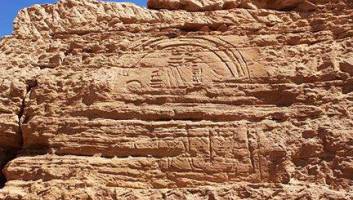
A team of archaeologists in Egypt has made a number of exceptional discoveries, including a stela - a relief design carved into a stone wall - with what are believed to be 2500-year-old inscriptions. The project is led by Maria Nilsson from Lund University in Sweden. "What is unique about the stela is that it shows the gods Amun-Ra and Toth together.
History & Archeology - 07.01.2015
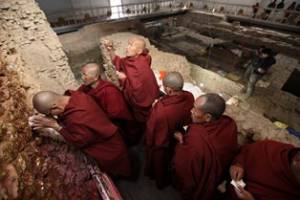
We use cookies to ensure that we give you the best experience on our website. You can change your cookie settings at any time. Otherwise, we'll assume you're OK to continue. Excavation of Buddhist temple in top 10 world discoveries The uncovering of the first archaeological material linking the life of the Buddha to a specific century has been featured amongst the top 10 world discoveries of 2014 by the Archaeological Institute of America's Archaeology Magazine.
History & Archeology - 04.12.2014
Ancient engravings rewrite human history »
An international team of scientists has discovered the earliest known engravings from human ancestors on a 400,000 year-old fossilised shell from Java. The discovery is the earliest known example of ancient humans deliberately creating pattern. "It rewrites human history," said Dr Stephen Munro from the School of Archaeology and Anthropology.


Health - Today
AI was supposed to ease doctors' workload - instead they spend hours correcting errors
AI was supposed to ease doctors' workload - instead they spend hours correcting errors
Pharmacology - Today
International trial finds rapid diagnostic testing alone does not reduce antibiotic prescribing for respiratory infections
International trial finds rapid diagnostic testing alone does not reduce antibiotic prescribing for respiratory infections
Social Sciences - Today
Social background shapes how hard children work, according to a study by UC3M
Social background shapes how hard children work, according to a study by UC3M
Innovation - Today
With Robotics Innovation Center, CMU and Hazelwood Partners Sustain Community Collaborations
With Robotics Innovation Center, CMU and Hazelwood Partners Sustain Community Collaborations