

Computer Science - Mar 20
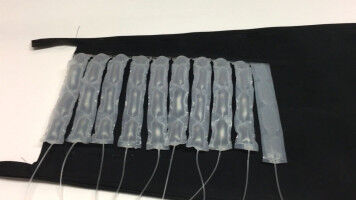
New computer chip material inspired by the human brain could slash AI energy use
New computer chip material inspired by the human brain could slash AI energy use
Politics - Mar 20
Argentina 50 years on from start of dictatorship - is it forgetting the disappeared?
Argentina 50 years on from start of dictatorship - is it forgetting the disappeared?

Life Sciences - Mar 20
Courting the Competition: Some Male Fruit Flies Serenade Each Other Rather Than Fight
Courting the Competition: Some Male Fruit Flies Serenade Each Other Rather Than Fight
Social Sciences - Mar 20
Louis Theroux's manosphere documentary shows some of the subtle ways we can undermine online misogyny
Louis Theroux's manosphere documentary shows some of the subtle ways we can undermine online misogyny
Life Sciences - Mar 20
Hidden Helpers: Pittsburgh's Industrial Past Might Hold the Key to a Cleaner Future
Hidden Helpers: Pittsburgh's Industrial Past Might Hold the Key to a Cleaner Future
Pharmacology - Mar 19
GSK, University of Oxford and Imperial College London launch centre to create computer models of lungs, liver, kidneys and cartilage
GSK, University of Oxford and Imperial College London launch centre to create computer models of lungs, liver, kidneys and cartilage
Innovation - Mar 19
India's new wave of Hindu Religious Entrepreneurship is reshaping our interpretation of success
India's new wave of Hindu Religious Entrepreneurship is reshaping our interpretation of success


Pharmacology - Mar 19
Oxford University spinout Dark Blue Therapeutics acquired to advance leukaemia treatment
Oxford University spinout Dark Blue Therapeutics acquired to advance leukaemia treatment

Veterinary - Mar 19
New RVC study challenges common beliefs on desirable behaviours in designer 'Doodle' crossbreeds
New RVC study challenges common beliefs on desirable behaviours in designer 'Doodle' crossbreeds
Agronomy & Food Science - Mar 19
Bird Flu Risk to Danish Cattle - New Tool Can Warn Farmers Before Infection Spreads
Bird Flu Risk to Danish Cattle - New Tool Can Warn Farmers Before Infection Spreads



news
History & Archeology
Results 821 - 840 of 980.
History & Archeology - 25.06.2012

A landmark study of criminal activity in teenagers indicates that some never see crime as a course of action while others are vulnerable to environmental inducements to crime. The study reveals factors that explains why some young people are 'crime-prone' and others 'crime-averse', and explains why crime hot spots occur.
History & Archeology - Chemistry - 20.06.2012

The first unequivocal evidence that humans in prehistoric Saharan Africa used cattle for their milk nearly 7,000 years ago is described in research by an international team of scientists, led by the University of Bristol, UK, published today in Nature. By analysing fatty acids extracted from unglazed pottery excavated from an archaeological site in Libya, the researchers showed that dairy fats were processed in the vessels.
History & Archeology - Chemistry - 20.06.2012

The first unequivocal evidence that humans in prehistoric Saharan Africa used cattle for their milk nearly 7,000 years ago is described in research by an international team of scientists, led by researchers from the University of Bristol in the United Kingdom and including Kathleen Ryan of the University of Pennsylvania Museum of Archaeology and Anthropology.
History & Archeology - Life Sciences - 15.06.2012
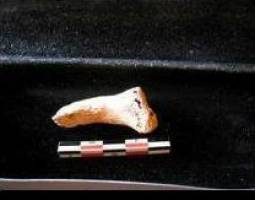
A knucklebone claimed to be of John the Baptist has been dated as first century AD by Oxford researchers. The new dating evidence supports claims that bones found under a church floor in Bulgaria may be of the leading prophet and relative of Jesus Christ as described in the Bible. The research by the Oxford University team will be explored in a documentary 'Head of John the Baptist' to be aired in the UK on National Geographic Channel on Sunday 17 June.
Health - History & Archeology - 08.06.2012
Emphasising patient outcomes in clinical trials
Professor Paula Williamson (c) with the COMET Team, from left, Mike Clarke, Elizabeth Gargon, Professor Doug Altman and Professor Jane Blazeby A special Europe wide event hosted in Dublin to mark International Clinical Trials Day (ICTD) saw Professor Paula Williamson deliver a keynote speech. The University's Head of Biostatistics , Professor Williamson emphasised the importance of patient relevant outcome measures, on a day of talks organised by the European Clinical Research Infrastructure Network (ECRIN).
History & Archeology - 28.05.2012
Hereditary inequality dates back to Stone Age
Hereditary inequality began more than 7,000 years ago in the early Neolithic era, with new evidence showing that farmers buried with tools had access to better land than those buried without. By studying more than 300 human skeletons from sites across central Europe, an international team of colleagues led by Professor Alasdair Whittle from the University's School of History, Archeology and Religion and funded by the Arts and Humanities Research Council uncovered evidence of differential land use among the first farmers of Europe, called the Neolithic period.
History & Archeology - 24.05.2012
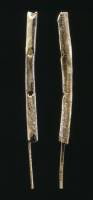
The first modern humans in Europe were playing musical instruments and showing artistic creativity as early as 40,000 years ago, according to new research from Oxford and Tübingen universities. The researchers have obtained important new radiocarbon dates for bones found in the same archaeological layers as a variety of musical instruments.
Life Sciences - History & Archeology - 22.05.2012
Modern dog breeds “genetically disconnected” from ancient ancestors
Modern dog breeds "genetically disconnected” from ancient ancestors Cross-breeding of dogs over thousands of years has made it extremely difficult to trace the ancient genetic roots of today's pets, according to a new study led by Durham University. An international team of scientists analysed data of the genetic make-up of modern-day dogs, alongside an assessment of the global archaeological record of dog remains, and found that modern breeds genetically have little in common with their ancient ancestors.
Life Sciences - History & Archeology - 17.05.2012

Two studies led by scientists from the University of Pennsylvania and National Geographic's Genographic Project reveal new information about the migration patterns of the first humans to settle the Americas. The studies identify the historical relationships among various groups of Native American and First Nations peoples and present the first clear evidence of the genetic impact of the groups' cultural practices.
History & Archeology - Social Sciences - 16.05.2012
Religion is a potent force for cooperation and conflict, research shows
ANN ARBOR, Mich.-Across history and cultures, religion increases trust within groups but also may increase conflict with other groups, according to an article in Science. "Moralizing gods, emerging over the last few millennia, have enabled large-scale cooperation and sociopolitical conquest even without war," said University of Michigan anthropologist Scott Atran, lead author of the article with Jeremy Ginges of the New School for Social Research.
Life Sciences - History & Archeology - 08.05.2012
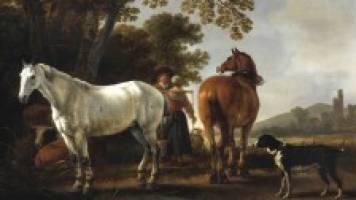
Our research clearly shows that the original founder population of domestic horses was established in the western Eurasian Steppe, an area where the earliest archaeological evidence for domesticated horses has been found." —Dr Vera Warmuth, from the University of Cambridge's Department of Zoology New research indicates that domestic horses originated in the steppes of modern-day Ukraine, southwest Russia and west Kazakhstan, mixing with local wild stocks as they spread throughout Europe and Asia.
History & Archeology - 04.05.2012

Find A Better Way, the charity founded by Sir Bobby Charlton to improve the lives of individuals and communities around the world affected by landmines, will host a visit of prominent Westminster MPs at the University of Manchester today. The All Party Parliamentary Group on Landmines will visit the headquarters of the Mines Advisory Group (MAG) and The University of Manchester to discover more about the humanitarian research into better methods of detecting landmines.
Life Sciences - History & Archeology - 03.05.2012
Biologists turn back the clock to understand evolution of sex differences
Battles of sexes shown to spur adaptive sex differences For video and explanations Sex differences account for some of the most spectacular traits in nature: the wild colours of male guppies, the plumage of peacocks, tusks on walruses and antlers on moose. Sexual conflict - the battle between males and females over mating - is thought to be a particularly potent force in driving the evolution traits that differ in males and females.
History & Archeology - 30.04.2012

"Love thy neighbor" is preached from many a pulpit. But new research from the University of California, Berkeley, suggests that the highly religious are less motivated by compassion when helping a stranger than are atheists, agnostics and less religious people. In three experiments, social scientists found that compassion consistently drove less religious people to be more generous.
Health - History & Archeology - 23.04.2012
Racial Bias Skews Medical Diagnosis and Treatment for African Americans, Research Shows
AUSTIN, Texas — Pervasive racial bias in American medical practice adversely affects treatment and diagnosis for African American patients, according to new research from The University of Texas at Austin. Although the existence of racial bias in medical treatment and diagnosis has been well documented, a study by John Hoberman , professor of Germanic Studies, is the first to examine racial biases among currently practicing physicians.
History & Archeology - Economics - 17.04.2012
When it comes to being generous with time and money, Americans who are not Mormons can learn from Americans who are. A new study from researchers at the University of Pennsylvania and Indiana University-Purdue University Indianapolis explores Church of Jesus Christ of Latter-day Saints culture and explains LDS members' volunteering and charitable giving-habits.
History & Archeology - Mathematics - 13.04.2012
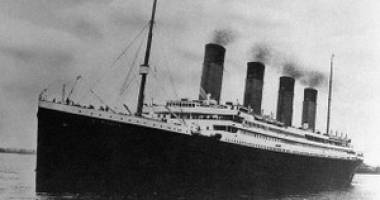
A hundred years ago this Sunday, a luxury ocean liner billed as "unsinkable” hit an iceberg on its maiden voyage. The Titanic sank to the bottom of the North Atlantic, leaving more than 1,500 passengers and crew dead. On this weekend's centennial, many are revisiting the story of the disaster and trying to piece together how it happened.
History & Archeology - 11.04.2012

Thirty-seven skeletons found in a mass burial site in the grounds of St John's College may not be who they initially seemed, according to Oxford researchers studying the remains. When the bodies were discovered in the grounds of the college in 2008 by Thames Valley Archaeological Services, archaeologists speculated that they could have been part of the St Brice's Day Massacre in Oxford - a well documented event in 1002, in which King Aethelred the Unredy ordered the killing of 'all Danes living in England'.
History & Archeology - 29.03.2012
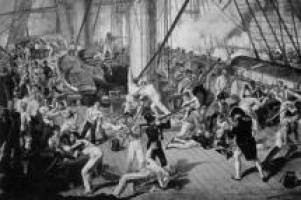
Salt beef, sea biscuits and the occasional weevil were the foods endured by sailors during the Napoleonic wars, according to new Oxford University research. A new chemical analysis technique has allowed archaeologists to find out just how grim the diet of Georgian sailors really was. The team's findings, published in the American Journal of Physical Anthropology, also reveal how little had changed for sailors in the 200 years between the Elizabethan and Georgian eras.
Health - History & Archeology - 13.03.2012
Studying sleep in young people: links to growth, use of new technologies
Shahrad Taheri leads the Midlands Adolescent Schools Sleep Education Study (MASSES). He is Senior Lecturer in medicine, diabetes and endocrinology at the University of Birmingham. He is also a consultant physician at the Heart of England NHS Foundation Trust. The landmark sleep study led by Taheri, the first of its kind in the UK, will contribute to better understanding of sleep and its effects on the health and well-being of young people.


Computer Science - Mar 20
New computer chip material inspired by the human brain could slash AI energy use
New computer chip material inspired by the human brain could slash AI energy use
Politics - Mar 20
Argentina 50 years on from start of dictatorship - is it forgetting the disappeared?
Argentina 50 years on from start of dictatorship - is it forgetting the disappeared?
Life Sciences - Mar 20
Courting the Competition: Some Male Fruit Flies Serenade Each Other Rather Than Fight
Courting the Competition: Some Male Fruit Flies Serenade Each Other Rather Than Fight
Social Sciences - Mar 20
Louis Theroux's manosphere documentary shows some of the subtle ways we can undermine online misogyny
Louis Theroux's manosphere documentary shows some of the subtle ways we can undermine online misogyny
Life Sciences - Mar 20
Hidden Helpers: Pittsburgh's Industrial Past Might Hold the Key to a Cleaner Future
Hidden Helpers: Pittsburgh's Industrial Past Might Hold the Key to a Cleaner Future
Pharmacology - Mar 19
GSK, University of Oxford and Imperial College London launch centre to create computer models of lungs, liver, kidneys and cartilage
GSK, University of Oxford and Imperial College London launch centre to create computer models of lungs, liver, kidneys and cartilage
Innovation - Mar 19
India's new wave of Hindu Religious Entrepreneurship is reshaping our interpretation of success
India's new wave of Hindu Religious Entrepreneurship is reshaping our interpretation of success
Pharmacology - Mar 19
Oxford University spinout Dark Blue Therapeutics acquired to advance leukaemia treatment
Oxford University spinout Dark Blue Therapeutics acquired to advance leukaemia treatment
Veterinary - Mar 19
New RVC study challenges common beliefs on desirable behaviours in designer 'Doodle' crossbreeds
New RVC study challenges common beliefs on desirable behaviours in designer 'Doodle' crossbreeds
Agronomy & Food Science - Mar 19
Bird Flu Risk to Danish Cattle - New Tool Can Warn Farmers Before Infection Spreads
Bird Flu Risk to Danish Cattle - New Tool Can Warn Farmers Before Infection Spreads