



Health - Today
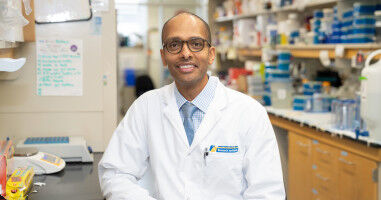
AI was supposed to ease doctors' workload - instead they spend hours correcting errors
AI was supposed to ease doctors' workload - instead they spend hours correcting errors


Pharmacology - Today
International trial finds rapid diagnostic testing alone does not reduce antibiotic prescribing for respiratory infections
International trial finds rapid diagnostic testing alone does not reduce antibiotic prescribing for respiratory infections

Social Sciences - Today
Social background shapes how hard children work, according to a study by UC3M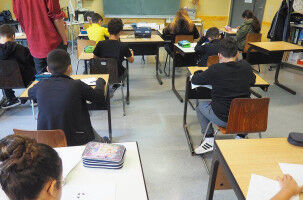
Social background shapes how hard children work, according to a study by UC3M
Innovation - Today
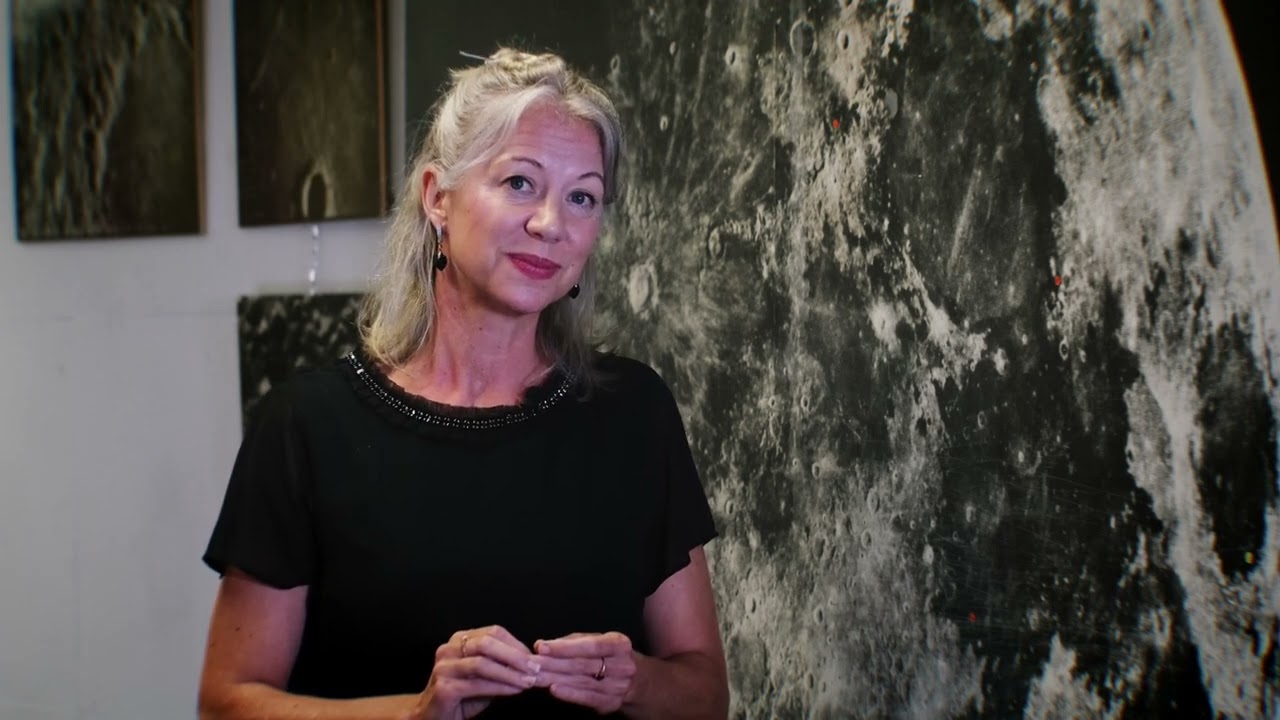
With Robotics Innovation Center, CMU and Hazelwood Partners Sustain Community Collaborations
With Robotics Innovation Center, CMU and Hazelwood Partners Sustain Community Collaborations




news
Swiss TPH
Results 81 - 94 of 94.
Social Sciences - Health - 24.04.2018
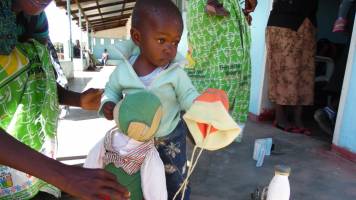
Parenting groups in rural communities can improve early childhood development in low-resource settings. These are the findings of a study conducted by Swiss TPH in collaboration with the Boston University and partners in Zambia. The study Many children in lowand middle-income countries do not reach their developmental potential due to malnutrition, infectious diseases and a lack of appropriate stimulation and learning opportunities in their home environment.
Health - Pharmacology - 16.04.2018

Swiss TPH researchers were able to show high efficacy of a triple drug therapy against hookworm and whipworm in a clinical trial in school-aged children in Lao PDR.
Health - Pharmacology - 29.03.2018
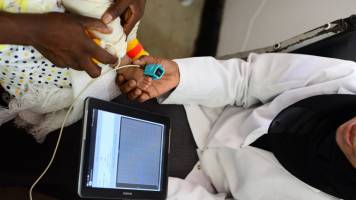
New technologies are progressively transforming health care. Swiss TPH developed two generations of digital point of care systems that support clinical personnel in the diagnosis and care of sick children. Swiss TPH will actively participate at this year's Geneva Health Forum on "Precision Global Health in the Digital Age" from 10-12 April 2018.
Health - Pharmacology - 15.03.2018
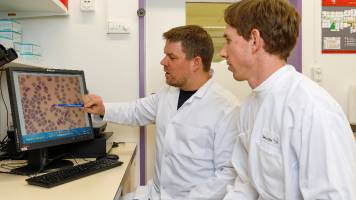
Researchers at Swiss TPH made an important step toward deeper understanding of how malaria blood stage parasites turn the switch to become transmissible to other humans. This knowledge is fundamental for future research aiming to interrupt malaria transmission. The results will be published on Friday 16 March 2018 in the multidisciplinary journal Science.
Health - Pharmacology - 06.03.2018

Home-based HIV testing and prompt treatment with antiretroviral therapy increases the number of patients under treatment as well as treatment success. This is the key result of a clinical trial in Lesotho carried out by the Swiss Tropical and Public Health Institute, in collaboration with SolidarMed and the Government of Lesotho.
Health - Innovation - 15.02.2018

To improve diagnosis and treatment of children under five, Swiss TPH together with the International Committee of the Red Cross (ICRC) developed the electronic decision support tool ALMANACH.
Health - Life Sciences - 12.01.2018
Health - Veterinary - 20.12.2017

The Swiss Tropical and Public Health Institute, together with European and African collaborators, carried out a mass dog vaccination in Chad and determined its effect on human rabies exposure. The study employed a bio-mathematical method for estimating the transmission dynamics of rabies. The researchers conclude that with political will and the necessary funding, elimination of rabies is possible in Africa.
Environment - Health - 14.11.2017

The largest global study to date on the effects of climate change on temperature-related mortality shows that more deaths due to hot weather may not be balanced by fewer deaths in colder world regions should global temperatures continue to rise. Swiss TPH, working for improved health of the people around the globe, prepared the data set for Switzerland.
Health - 09.11.2017
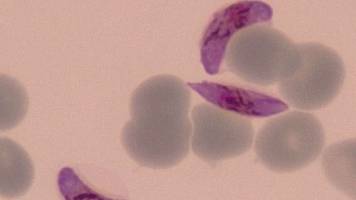
The malaria parasite employs an effective trick: it forces transmission from human to human as soon as the conditions in the host deteriorate. An international research team has discovered the molecule that plays a key role in this process. Malaria parasites are both dangerous and versatile. On entering the human bloodstream, they multiply exponentially.
Health - 15.09.2017
Countries have saved more lives over the past decade according to the annual Global Burden of Diseases (GBD) study published yesterday. In Switzerland, life expectancy has increased to 85 years for women and to 81 years for men. The Swiss Tropical and Public Health Institute contributed to the GDB, the world's largest scientific collaboration on population health.
Health - Life Sciences - 01.11.2016
Tuberculosis bacteria find their ecological niche
Researchers at the Swiss Tropical and Public Health Institute (Swiss TPH) and the University of Basel have isolated and analyzed genetically tuberculosis bacteria from several thousand patients from over a hundred countries. This analysis demonstrates that the tuberculosis bacteria vary in their ecological niche.
Health - 12.08.2016
Gastrointestinal illnesses cost the Swiss health care sector up to EUR 45 million per year
Acute diarrhoea entails annual health care costs of EUR 29 to 45 million in Switzerland. Thereof, around a quarter is due to infections of the diarrhoea-causing pathogen Campylobacter. This was revealed in a new study by the Swiss Tropical and Public Health Institute (Swiss TPH). In Switzerland, between 300,000 and 700,000 patients per year visit a doctor due to acute diarrhoea.
Health - Environment - 10.08.2016

The use of a newly-developed mosquito trap incorporating human odour has resulted in a 70% decline in the population of the most significant malaria mosquito on the Kenyan island of Rusinga. In the following, the number of malaria infections declined by 30% according to a «Lancet»-study published today.


Health - Today
AI was supposed to ease doctors' workload - instead they spend hours correcting errors
AI was supposed to ease doctors' workload - instead they spend hours correcting errors
Pharmacology - Today
International trial finds rapid diagnostic testing alone does not reduce antibiotic prescribing for respiratory infections
International trial finds rapid diagnostic testing alone does not reduce antibiotic prescribing for respiratory infections
Social Sciences - Today
Social background shapes how hard children work, according to a study by UC3M
Social background shapes how hard children work, according to a study by UC3M
Innovation - Today
With Robotics Innovation Center, CMU and Hazelwood Partners Sustain Community Collaborations
With Robotics Innovation Center, CMU and Hazelwood Partners Sustain Community Collaborations