

Environment - Mar 25
UCalgary expedition, with NASA, Canadian and European space agencies, sets out to better understand state of Arctic ice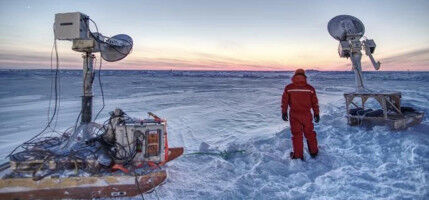
UCalgary expedition, with NASA, Canadian and European space agencies, sets out to better understand state of Arctic ice
Social Sciences - Today
Young people's wellbeing is improving in Greater Manchester, major survey finds
Young people's wellbeing is improving in Greater Manchester, major survey finds

Environment - Today
Australia's environment is improving but climate change is 'accelerating' damage to ecosystems and wildlife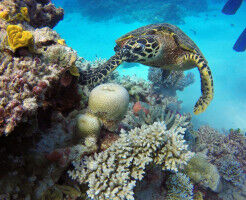
Australia's environment is improving but climate change is 'accelerating' damage to ecosystems and wildlife

Psychology - Mar 23
The grief myth: it doesn't come in stages or follow a checklist - like love, it endures
The grief myth: it doesn't come in stages or follow a checklist - like love, it endures



History & Archeology - Mar 23
The UV has played a part in the discovery of a 3,500-year-old loom that sheds light on key aspects of the Bronze Age textile revolution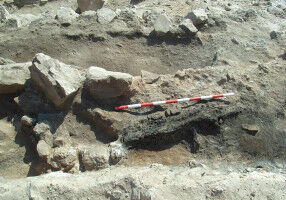
The UV has played a part in the discovery of a 3,500-year-old loom that sheds light on key aspects of the Bronze Age textile revolution
Innovation - Mar 23
The University of Valencia launches ClioViz, an open digital platform for accessing cultural heritage data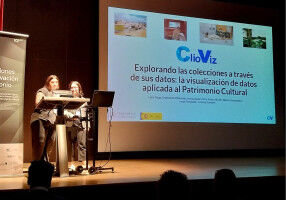
The University of Valencia launches ClioViz, an open digital platform for accessing cultural heritage data

Social Sciences - Mar 23
Study links higher concentration of pokie machines to increase in family and domestic violence
Study links higher concentration of pokie machines to increase in family and domestic violence
Health - Mar 23
Screening blitz could achieve cervical cancer elimination among Indigenous communities within a generation
Screening blitz could achieve cervical cancer elimination among Indigenous communities within a generation

Computer Science - Mar 20
New computer chip material inspired by the human brain could slash AI energy use
New computer chip material inspired by the human brain could slash AI energy use

news
University College London
Results 441 - 460 of 2143.
Health - Life Sciences - 28.06.2023
We found coronaviruses in UK bats - so far the danger’s minimal but we need to know more
Professor Francois Balloux, PhD candidate Cedric Tan and Dr Lucy van Dorp (all UCL Biosciences) share their new research in The Conversation on RNA viruses, generally considered the most worrying infectious threats, circulating in UK bats and their zoonotic potential. Most emerging infectious diseases are caused by zoonotic pathogens - viruses and bacteria which circulate in wild and domestic animals but are also capable of infecting humans.
Life Sciences - Chemistry - 28.06.2023
People with obsessive-compulsive disorder have an imbalance of brain chemicals
According to new research shared in The Conversation, Dr Marjan Biria (UCL Psychiatry) and researchers from Cambridge University have discovered an imbalance in brain chemicals in OCD that could lead to radically different and improved treatments. People often jokingly say they've "got a bit of OCD" (obsessive-compulsive disorder) if they are overly organised or tidy.
Life Sciences - 27.06.2023

UCL researchers have uncovered the process in the brain that supports our understanding of ongoing experiences. The study, published in Nature Neuroscience, has found that daily experiences require us to process a continuous stream of information. This is shown when watching a movie, as although the film is continuous, our brains break it down into discrete events, such as scenes.
Environment - 26.06.2023

Governments and companies planning to pursue the circular economy need to involve scientists more directly, states a new report published by the International Society for Industrial Ecology, and led by UCL's Dr Stijn van Ewijk. The report, published today, draws attention to the weight of relevant expertise found in the field of industrial ecology, a discipline that has been focusing on the minimisation of waste, predicting the impacts of new products, and designing environmentally friendly systems for decades.
Health - 22.06.2023

About one in ten NHS healthcare workers experienced suicidal thoughts during the first year of the Covid-19 pandemic, according to a new study involving UCL researchers. Concerns were raised about the risk of suicide among healthcare workers during the pandemic after a number of high-profile cases were reported in the media.
Life Sciences - Health - 19.06.2023

Daytime napping may help to preserve brain health by slowing the rate at which our brains shrink as we age, suggests a new study led by researchers at UCL and the University of the Republic in Uruguay. The study, published in the journal Sleep Health , analysed data from people aged 40 to 69 and found a causal link between habitual napping and larger total brain volume - a marker of good brain health linked to a lower risk of dementia and other diseases.
Health - Pharmacology - 16.06.2023
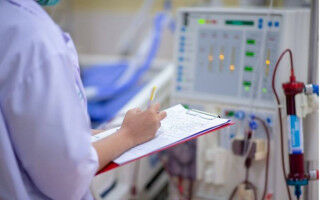
Mortality in patients with kidney failure has been found to be 23% lower among those treated with high dose haemodiafiltration compared to those treated with high flux haemodialysis, according to new research from the CONVINCE consortium led by University Medical Center Utrecht. The study, published in the New England Journal of Medicine , is the first international, randomised trial to compare the two treatments.
Health - Life Sciences - 15.06.2023
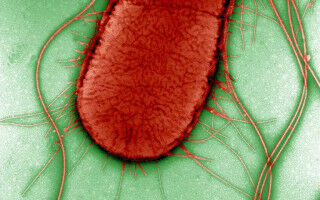
A multi-centre team led by UCL, the Wellcome Sanger Institute, the University of Oslo and Imperial College London have shown how targeting the bacterium's protective capsule could help to prevent and treat bloodstream infections. The new study, published in Nature Communications , is the first to map the evolutionary timeline and population distribution of Escherichia coli's protective outer capsule, which is responsible for the bacterium's virulence.
Health - Pharmacology - 14.06.2023
Analysis: Long COVID - effects on fatigue and quality of life can be comparable to some cancers
Dr Henry Goodfellow (UCL Institute of Epidemiology & Health) explains how Long Covid is continuing to impact the lives of patients both in the UK and globally following the pandemic, in The Conversation. As of March 2023, the Office for National Statistics estimated that 1.7 million people in the UK were living with self-reported long COVID.
Health - Psychology - 14.06.2023

Across Europe, depression and anxiety disorders became more common following the onset of the pandemic, reports a major review of evidence led by UCL researchers. Later in 2020, depression and anxiety rates reduced again, but fluctuated over the following year. The systematic review, published in The Lancet Psychiatry , pulls together evidence from 177 studies in 20 European countries to assess how the Covid-19 pandemic affected mental health across the continent for the first two years after lockdowns began.
Health - 13.06.2023
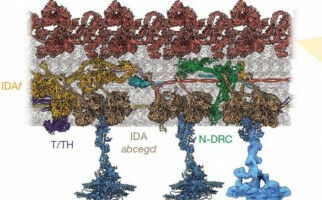
The first image of the structures that power human cilia - the tiny, hairlike projections that line our airways - has been produced by a team involving UCL researchers and could lead to much-needed treatments for people with rare cilial diseases. The study, published in Nature , combined advanced microscopy and artificial intelligence techniques to create a detailed snapshot of the structure of human cilia.
Life Sciences - Physics - 12.06.2023
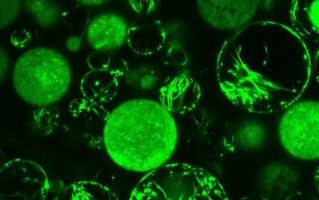
The tiny tubes and thread-like structures that give cells their shape and help determine their function have been artificially re-created using strands of DNA in a study led by UCL researchers. The research, published in Nature Communications , represents a key step towards synthetic "smart cells" that could be used to sense diseases, deliver drugs or repair damaged cells inside the body.
Health - Psychology - 09.06.2023

Lesbian, gay and bisexual (LGB) people are more than twice as likely than their straight peers to experience suicidal thoughts or self-harming behaviours, finds a new study led by UCL researchers. The study, published in Social Psychiatry and Psychiatric Epidemiology , is the first ever to analyse nationally representative data on sexual orientation and suicidality in England whilst being able to compare individual sexual minority groups.
Health - Pharmacology - 09.06.2023
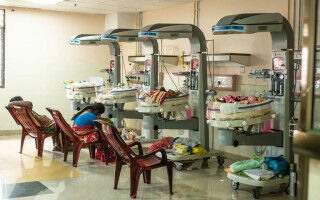
A global observational study co-led by UCL, which involved more than 3,200 newborn babies suffering from sepsis in 19 hospitals in 11 countries, has shown that many newborns are dying because the antibiotics used to treat sepsis are losing their effectiveness. The study, conducted from 2018 to 2020, found there was high mortality among infants with culture-positive* sepsis (almost 1 in 5 across the hospital sites), and a significant burden of antibiotic resistance.
Earth Sciences - 09.06.2023

The Campi Flegrei volcano in southern Italy has become weaker and more prone to rupturing, making an eruption more likely, according to a new study by researchers at UCL and Italy's National Research Institute for Geophysics and Volcanology (INGV). The volcano, which last erupted in 1538, has been restless for more than 70 years, with two-year spikes of unrest in the 1950s, 1970s and 1980s, and a slower phase of unrest over the last decade.
Earth Sciences - 09.06.2023

The Campi Flegrei volcano in southern Italy has become weaker and more prone to rupturing, making an eruption more likely, according to a new study by researchers at UCL and Italy's National Research Institute for Geophysics and Volcanology (INGV). The volcano, which last erupted in 1538, has been restless for more than 70 years, with two-year spikes of unrest in the 1950s, 1970s and 1980s, and a slower phase of unrest over the last decade.
Health - Life Sciences - 09.06.2023

Scientists from across UCL, Great Ormond Street Hospital and the University of Padova have shown how 3D printing can be achieved inside 'mini-organs' growing in hydrogels, which could help better understand how cancer spreads through different tissues. The new technique can help control the shape and activity of the mini-organs, and even force tissue to grow into 'moulds'.
Life Sciences - 08.06.2023
Why we’re searching for the evolutionary origins of masturbation - and the results so far
Dr Matilda Brindle (UCL Anthropology) shares her new study in The Conversation on the evolutionary origins and advantages of auto sexual behaviour across the animal kingdom. "Spanking the monkey", "petting the poodle" and "pulling the python": all fitting euphemisms for masturbation, and closer to the truth than you might imagine.
Health - 08.06.2023
Long Covid can impact fatigue and quality of life worse than some cancers
Fatigue is the symptom that most significantly impacts the daily lives of long Covid patients, and can affect quality of life more than some cancers, finds a new study led by researchers at UCL and the University of Exeter. The research, published in BMJ Open and funded by the National Institute for Health and Care Research (NIHR), examines the impact of long Covid on the lives of over 3,750 patients who were referred to a long Covid clinic and used a digital app as part of their NHS treatment for the condition.
Health - 07.06.2023
The evolutionary origins and advantages of masturbation
The evolutionary advantages of autosexual behaviour have been revealed in a new study led by UCL researchers. Masturbation is common across the animal kingdom but is especially prevalent amongst primates, including humans. Historically, this behaviour was considered to be either pathological or a by-product of sexual arousal, and recorded observations were too fragmented to understand its distribution, evolutionary history, or adaptive significance.


Environment - Mar 25
UCalgary expedition, with NASA, Canadian and European space agencies, sets out to better understand state of Arctic ice
UCalgary expedition, with NASA, Canadian and European space agencies, sets out to better understand state of Arctic ice
Social Sciences - Today
Young people's wellbeing is improving in Greater Manchester, major survey finds
Young people's wellbeing is improving in Greater Manchester, major survey finds
Environment - Today
Australia's environment is improving but climate change is 'accelerating' damage to ecosystems and wildlife
Australia's environment is improving but climate change is 'accelerating' damage to ecosystems and wildlife
Psychology - Mar 23
The grief myth: it doesn't come in stages or follow a checklist - like love, it endures
The grief myth: it doesn't come in stages or follow a checklist - like love, it endures
History & Archeology - Mar 23
The UV has played a part in the discovery of a 3,500-year-old loom that sheds light on key aspects of the Bronze Age textile revolution
The UV has played a part in the discovery of a 3,500-year-old loom that sheds light on key aspects of the Bronze Age textile revolution
Innovation - Mar 23
The University of Valencia launches ClioViz, an open digital platform for accessing cultural heritage data
The University of Valencia launches ClioViz, an open digital platform for accessing cultural heritage data
Social Sciences - Mar 23
Study links higher concentration of pokie machines to increase in family and domestic violence
Study links higher concentration of pokie machines to increase in family and domestic violence
Health - Mar 23
Screening blitz could achieve cervical cancer elimination among Indigenous communities within a generation
Screening blitz could achieve cervical cancer elimination among Indigenous communities within a generation
Computer Science - Mar 20
New computer chip material inspired by the human brain could slash AI energy use
New computer chip material inspired by the human brain could slash AI energy use