

Computer Science - Mar 20
New computer chip material inspired by the human brain could slash AI energy use
New computer chip material inspired by the human brain could slash AI energy use
Politics - Mar 20
Argentina 50 years on from start of dictatorship - is it forgetting the disappeared?
Argentina 50 years on from start of dictatorship - is it forgetting the disappeared?
Life Sciences - Mar 20
Courting the Competition: Some Male Fruit Flies Serenade Each Other Rather Than Fight
Courting the Competition: Some Male Fruit Flies Serenade Each Other Rather Than Fight
Social Sciences - Mar 20
Louis Theroux's manosphere documentary shows some of the subtle ways we can undermine online misogyny
Louis Theroux's manosphere documentary shows some of the subtle ways we can undermine online misogyny
Life Sciences - Mar 20
Hidden Helpers: Pittsburgh's Industrial Past Might Hold the Key to a Cleaner Future
Hidden Helpers: Pittsburgh's Industrial Past Might Hold the Key to a Cleaner Future
Pharmacology - Mar 19
GSK, University of Oxford and Imperial College London launch centre to create computer models of lungs, liver, kidneys and cartilage
GSK, University of Oxford and Imperial College London launch centre to create computer models of lungs, liver, kidneys and cartilage
Innovation - Mar 19
India's new wave of Hindu Religious Entrepreneurship is reshaping our interpretation of success
India's new wave of Hindu Religious Entrepreneurship is reshaping our interpretation of success

Pharmacology - Mar 19
Oxford University spinout Dark Blue Therapeutics acquired to advance leukaemia treatment
Oxford University spinout Dark Blue Therapeutics acquired to advance leukaemia treatment

Veterinary - Mar 19
New RVC study challenges common beliefs on desirable behaviours in designer 'Doodle' crossbreeds
New RVC study challenges common beliefs on desirable behaviours in designer 'Doodle' crossbreeds
Agronomy & Food Science - Mar 19
Bird Flu Risk to Danish Cattle - New Tool Can Warn Farmers Before Infection Spreads
Bird Flu Risk to Danish Cattle - New Tool Can Warn Farmers Before Infection Spreads

news
University of Fribourg
Results 1 - 20 of 40.
Health - 10.02.2026
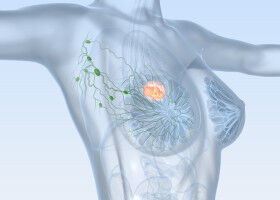
Cancer cells that have detached from the original tumor often spread to other organs. There they can either form metastases or remain 'dormant' for years until they wake up. A team of scientists at the University of Freiburg has discovered a mechanism by which cancer cells can be kept dormant by stimulating the immune response.
Agronomy & Food Science - Health - 15.12.2025

A study carried out under the direction of the University of Fribourg in collaboration with the University of Lausanne and the University of Geneva shows that the majority of food supplements based o
Life Sciences - 27.11.2025
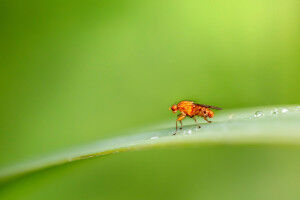
To ensure their survival in a new environment, insects must be able to change their eating habits depending on the food supply. In collaboration with experts from Switzerland, Portugal and Germany, researchers at the University of Fribourg were able to show that this ability to adapt is also controlled by mechanisms in the brain.
Health - Innovation - 26.11.2025
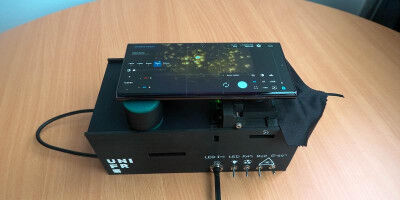
A team of physicists from the University of Fribourg has applied for a patent for a fluorescence microscope that can be operated using a simple smartphone. This very affordable and handy tool enables rapid medical tests, among other things - even outside of hospitals The fluorescence microscope, invented over a century ago, has established itself as an indispensable tool in biology and medicine.
Environment - Life Sciences - 16.09.2025
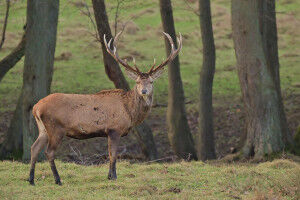
The road to hell is paved with good intentions. In the hope of preserving endangered species and ecosystems, some conservation projects propose to introduce large herbivorous mammals into regions outside their natural range. Yet, as laudable as this strategy may seem, it could be a false good idea. This is what three researchers from the University of Fribourg have just shown: in the majority of cases, the negative effects on native biodiversity clearly outweigh the benefits.
Physics - Electroengineering - 23.07.2025

We're constantly surrounded by background electromagnetic noise from cell phones, Wi-Fi routers, power lines and natural sources. Noise we often regard as an unnecessary disturbance, or even as dangerous. But recently, a research team involving the University of Freiburg discovered a material that can convert it quite efficiently into electrical signals and currents capable of operating electronic devices without batteries, light sources or mechanical drives Imagine a device that, despite the failure of all traditional power sources, would continue to monitor and store data.
Sport - Computer Science - 06.05.2025

In just 15 minutes, training with a simulator enabled professional field hockey players to significantly improve their perceptive skills in front of the opposing net. This new approach, developed by researchers at the University of Fribourg's Perception and Control Laboratory, enables players to better and more quickly identify the area of the goal least covered by the goalkeeper.
Social Sciences - Psychology - 12.03.2025

The presence of an unknown person can significantly slow down the speed at which children complete tests. This is the conclusion of a study involving 123 children. This finding is by no means trivial, but underlines the importance of the physical and social environment, as it can influence cognitive control.
Life Sciences - Health - 03.03.2025
Cyanide: a toxic gas essential to our cells
Everything is poison, nothing is poison: it's the dose that makes the poison! A team of scientists from the University of Freiburg has described the mechanisms that lead our cells to naturally produce hydrogen cyanide. This gas, toxic in excessive doses, plays a major role in the proper functioning of our bodies.
Agronomy & Food Science - Life Sciences - 30.01.2025

At the slightest sign of rot on an apple or pear, little flies start swirling around it. No wonder! Drosophila and their larvae love rotting fruit. Researchers at the University of Fribourg have discovered how they can sense when a fruit is 'ripe '. Thanks to taste cells called mechanoreceptors, fly larvae can not only taste food, but also appreciate its consistency.
Life Sciences - 20.11.2024
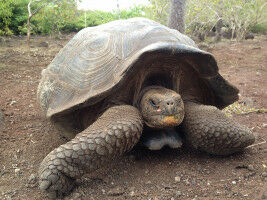
A study by the University of Fribourg suggests that turtles' shells are a major hindrance to their evolutionary development, which would explain the low number of species compared with other animal groups .
Health - Life Sciences - 17.10.2024
Cancer causes mutations in cellular DNA. Detecting these mutations in a patient's blood enables the most appropriate and effective anti-cancer treatments to be prescribed. However, detection of these mutations is only possible in specialized centers, which is time-consuming and costly. To remedy this situation, scientists at the University of Fribourg have developed nanosensors for cheaper, faster detection of these mutations.
Life Sciences - Health - 20.09.2024
Breathing and heartbeat influence perception
Study reveals new links between body and brain. The findings, conducted at the University of Fribourg, show how our body cycles modify our visual perception. Taking a deep breath to see more clearly may be more concrete than we thought. Breathing has a physiological impact on the perception of visual stimuli.
Health - 19.09.2024

Why is it that we often find it difficult to sleep well on the first night in an unfamiliar place? The phenomenon of suffering from insomnia on the first night in unfamiliar surroundings is known as the first-night effect. We usually sleep better on the second night. It is unclear whether this improvement also occurs if there are several days between sleepless nights in unfamiliar surroundings.
Earth Sciences - Environment - 10.07.2024
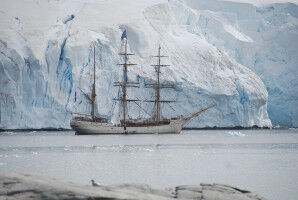
An international research team led by Silvia Spezzaferri from the University of Freiburg has discovered why the Antarctic polar ice cap is melting faster on the western side of the continent than on the eastern side. New drillings and sophisticated modeling have shown that this phenomenon can be traced back to the original formation of the ice sheet 34 million years ago .
Paleontology - Computer Science - 03.06.2024

The patchy fossil record makes it difficult for paleontologists to draw an accurate picture of the extent of past biodiversity and to understand how it has changed over time. A study led by Rebecca Cooper and Daniele Silvestro from the University of Fribourg shows how artificial intelligence (AI) can make this task easier .
Life Sciences - Economics - 29.04.2024
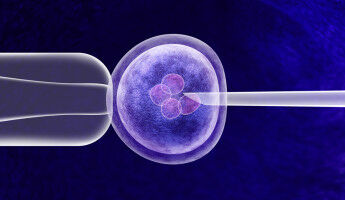
Before the advent of CRISPR-Cas9 in 2012, precise genome modification was a complex process requiring heavy investment. Simple and fast, this revolutionary technology enables scientists to cut the DNA of plants, animals and humans at precise points, opening up previously unimaginable opportunities, such as the creation of disease-resistant plants or the treatment of diseases of genetic origin .
Health - Life Sciences - 25.04.2024

Sleep cycles and neurological development in children are closely linked to interactions between the brain and the gut. Two researchers from the University of Fribourg, in collaboration with colleagues from ETH Zurich and Lucerne Children's Hospital, have just been awarded a 2.4 million SNSF grant to better understand these mechanisms, which are fundamental to the health of toddlers .
Life Sciences - Health - 22.04.2024
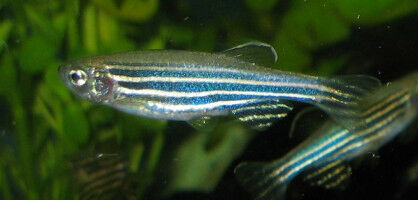
In humans, muscles can only regenerate from small injuries, such as those resulting from sporting activities. After an accident or combat injury, large wounds often cause deep damage to muscles, which fail to regenerate and scar. Some animals, on the other hand, replace injured body parts perfectly.
Chemistry - Environment - 12.04.2024
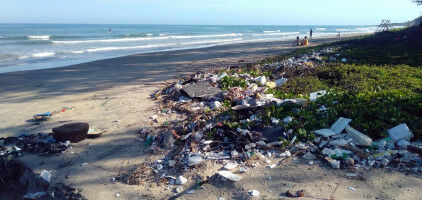
A research team has developed a new type of polymer, the main component of plastics, which is more easily degradable than conventional materials. Mechanical treatment such as grinding, combined with the use of an alkaline solution, is all that's needed to facilitate chemical recycling and reduce environmental impact .


Computer Science - Mar 20
New computer chip material inspired by the human brain could slash AI energy use
New computer chip material inspired by the human brain could slash AI energy use
Politics - Mar 20
Argentina 50 years on from start of dictatorship - is it forgetting the disappeared?
Argentina 50 years on from start of dictatorship - is it forgetting the disappeared?
Life Sciences - Mar 20
Courting the Competition: Some Male Fruit Flies Serenade Each Other Rather Than Fight
Courting the Competition: Some Male Fruit Flies Serenade Each Other Rather Than Fight
Social Sciences - Mar 20
Louis Theroux's manosphere documentary shows some of the subtle ways we can undermine online misogyny
Louis Theroux's manosphere documentary shows some of the subtle ways we can undermine online misogyny
Life Sciences - Mar 20
Hidden Helpers: Pittsburgh's Industrial Past Might Hold the Key to a Cleaner Future
Hidden Helpers: Pittsburgh's Industrial Past Might Hold the Key to a Cleaner Future
Pharmacology - Mar 19
GSK, University of Oxford and Imperial College London launch centre to create computer models of lungs, liver, kidneys and cartilage
GSK, University of Oxford and Imperial College London launch centre to create computer models of lungs, liver, kidneys and cartilage
Innovation - Mar 19
India's new wave of Hindu Religious Entrepreneurship is reshaping our interpretation of success
India's new wave of Hindu Religious Entrepreneurship is reshaping our interpretation of success
Pharmacology - Mar 19
Oxford University spinout Dark Blue Therapeutics acquired to advance leukaemia treatment
Oxford University spinout Dark Blue Therapeutics acquired to advance leukaemia treatment
Veterinary - Mar 19
New RVC study challenges common beliefs on desirable behaviours in designer 'Doodle' crossbreeds
New RVC study challenges common beliefs on desirable behaviours in designer 'Doodle' crossbreeds
Agronomy & Food Science - Mar 19
Bird Flu Risk to Danish Cattle - New Tool Can Warn Farmers Before Infection Spreads
Bird Flu Risk to Danish Cattle - New Tool Can Warn Farmers Before Infection Spreads