

Politics - Today
Argentina 50 years on from start of dictatorship - is it forgetting the disappeared?
Argentina 50 years on from start of dictatorship - is it forgetting the disappeared?
Life Sciences - Today
Courting the Competition: Some Male Fruit Flies Serenade Each Other Rather Than Fight
Courting the Competition: Some Male Fruit Flies Serenade Each Other Rather Than Fight
Social Sciences - Today
Louis Theroux's manosphere documentary shows some of the subtle ways we can undermine online misogyny
Louis Theroux's manosphere documentary shows some of the subtle ways we can undermine online misogyny
Pharmacology - Mar 19
GSK, University of Oxford and Imperial College London launch centre to create computer models of lungs, liver, kidneys and cartilage
GSK, University of Oxford and Imperial College London launch centre to create computer models of lungs, liver, kidneys and cartilage
Innovation - Mar 19
India's new wave of Hindu Religious Entrepreneurship is reshaping our interpretation of success
India's new wave of Hindu Religious Entrepreneurship is reshaping our interpretation of success


Pharmacology - Mar 19
Oxford University spinout Dark Blue Therapeutics acquired to advance leukaemia treatment
Oxford University spinout Dark Blue Therapeutics acquired to advance leukaemia treatment

Veterinary - Mar 19
New RVC study challenges common beliefs on desirable behaviours in designer 'Doodle' crossbreeds
New RVC study challenges common beliefs on desirable behaviours in designer 'Doodle' crossbreeds
Agronomy & Food Science - Mar 19
Bird Flu Risk to Danish Cattle - New Tool Can Warn Farmers Before Infection Spreads
Bird Flu Risk to Danish Cattle - New Tool Can Warn Farmers Before Infection Spreads
Chemistry - Mar 19
Leipzig University and Center for the Transformation of Chemistry conclude collaboration agreement
Leipzig University and Center for the Transformation of Chemistry conclude collaboration agreement


science wire
Friedrich Miescher Institute for Biomedical Research
Results 101 - 150 of 164.
Chemistry - Pharmacology - 28.01.2019
How do mRNAs deal with stress?
Two hallmarks of the integrated stress response of cells are the inhibition of translation and the formation of stress granules (SGs) and processing bodies (PBs). However, it is not well understood how both processes are coupled. In a study published in Molecular Cell, researchers from the Chao group applied single-molecule RNA imaging to study the interactions of mRNAs with SGs and PBs, and found out that the generally accepted assumptions about the function of granules need to be revised.
Health - Life Sciences - 22.01.2019
Botond Roska awarded Louis-Jeantet Prize for Medicine
Life Sciences - 19.11.2018
Precise synaptic organization of a memory network
In order to examine how synaptic inputs to individual neurons are organized in a distributed memory network, researchers from the Friedrich group performed electrophysiological recordings in the zebrafish homolog of the olfactory cortex. They found that large excitatory inputs were paired with large inhibitory inputs, which may seem counterintuitive because inhibition cancels excitation.
Health - Life Sciences - 23.10.2018
The epigenetics of cartilage repair and regeneration
The European Research Council (ERC) has awarded a prestigious ERC Synergy Grant - perhaps the most competitive funding scheme from ERC - to the research groups of Prof. Filippo Rijli from the
Life Sciences - Event - 05.10.2018
Congratulations to the FMI Prize winners 2018
As in previous years, several internal prizes were awarded during the FMI Annual Meeting, a 3 day scientific meeting attended by most scientists in the institute.
Life Sciences - 23.08.2018

In a collaboration, Matthias Heindorf (FMI/Biozentrum), Silvia Arber (FMI/Biozentrum), and Georg Keller (FMI) investigated the role of motor cortex in the control of movement. Their study - published in 'Neuron' today - demonstrates that motor cortex is necessary for the execution of corrective movements in response to unexpected changes of sensory input but not when the same movements are executed spontaneously.
Life Sciences - 18.07.2018
New EMBO and HFSP fellows at FMI
This summer four FMI postdocs have been awarded an EMBO fellowship and one an HFSP fellowship. These fellowships spark huge interest among young researchers but are rare, and hard to get.
Life Sciences - 14.05.2018
Marc Bühler elected as EMBO Member
Health - Life Sciences - 08.03.2018
2018 Bressler Prize in Vision Science awarded to Botond Roska
Botond Roska from the Friedrich Miescher Institute for Biomedical Research and the Institute of Molecular and Clinical Ophthalmology in Basel is the recipient of the 2018 Bressler Prize.
Life Sciences - Event - 18.01.2018
Silvia Arber receives 2018 Pradel Research Award
Life Sciences - Health - 20.01.2017
Cell fate regulation by LIN41: activity determined by binding location
Helge Großhans and his group at the Friedrich Miescher Institute for Biomedical Research (FMI) have elucidated the mode of action of the RNA-binding protein and stem cell factor LIN41. In an animal model, they showed that LIN41 silences four specific mRNAs, by two distinct mechanisms. They found that the choice of mechanism is determined by where on the mRNA LIN41 binds.
Life Sciences - Psychology - 21.10.2016
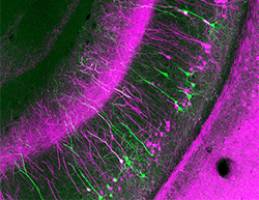
Scientists in the group of Andreas Lüthi have identified two neuronal circuits that mediate the association of contextual information with emotional memories. In their publication in Cell, they describe networks of neurons that are active in the hippocampus and the amygdala, when we associate for example an unpleasant situation with a certain place.
Life Sciences - 02.05.2016
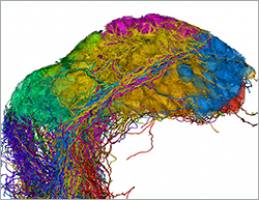
One of the fundamental questions in neuroscience is how neuronal circuits are wired to process information. The research group led by Rainer Friedrich has developed new methods to determine the complex morphology of densely packed neurons and their synaptic connections by 3D electron microscopy. As reported , these methods allowed them to reconstruct the entire olfactory bulb of a zebrafish larva, comprising more than 1000 neurons.
Life Sciences - 26.01.2016
Interneuron plasticity ensuring long-term memory formation
Understanding learning and memory processes is of fundamental importance to the study of brain function and provides valuable insights for disorders where these processes are disturbed. The current study of Pico Caroni from the Friedrich Miescher Institute for Biomedical Research, identifies plasticity induced at the time of learning, which is necessary during 12-14 hours after acquisition for long-term memory formation.
Life Sciences - Health - 19.01.2016
Keeping RNases poised for action
A better knowledge of RNA metabolism is key to understanding how RNAs regulate development and differentiation, and how their malfunction leads to disease. A team led by Helge Grosshans of the Friedrich Miescher Institute for Biomedical Research (FMI) has now identified a novel and evolutionarily conserved mechanism that preserves the stability of RNases and keeps them poised for RNA processing and degradation.
Health - Life Sciences - 12.08.2015
Common breast cancer mutation induces multipotency and tumor heterogeneity
Understanding how different cell populations arise within a tumor - so-called tumor heterogeneity - is widely regarded as a major challenge for cancer biology. Mohamed Bentires-Alj and his group at the FMI have discovered how the most frequent mutation in human breast cancer leads to tumor heterogeneity.
Life Sciences - Health - 18.06.2015
Four "ERC Advanced Grants" awarded to FMI group leaders
Andreas Lüthi, Botond Roska, Dirk Schübeler and Nicolas Thomä, leading scientists at the Friedrich Miescher Institute for Biomedical Research in Basel, will each receive one of the prestigious ERC Advanced Grants from the European Research Council (ERC).
Life Sciences - Pharmacology - 26.03.2015
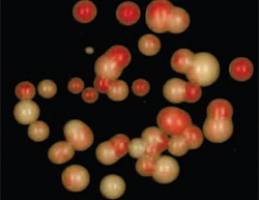
Marc Bühler and his team at the Friedrich Miescher Institute for Biomedical Research (FMI) have elucidated the mechanism underlying small RNA-mediated gene silencing, thus solving a mystery which has been puzzling the research community for over a decade. Back in 2002, the discovery by several research groups that small RNA molecules can shut down clearly defined genome regions was hailed by Science as the Breakthrough of the Year.
Life Sciences - 20.03.2015
A spotlight on protein translation
Jeff Chao, Junior group leader at the FMI, together with colleagues in New York and Heidelberg, has developed a sophisticated technique that makes it possible to monitor the precise time and place of the first translation event within a cell. This novel method, known as TRICK, is described and initial results are reported in Science today.
Life Sciences - Computer Science - 09.03.2015
Learning like machines
Neurobiologists at the Friedrich Miescher Institute for Biomedical Research (FMI) have shown that neurons critical for learning can be divided into two subpopulations with different functions. Almost as if learning processes in the brain mimicked machine learning, one subpopulation is responsible for collecting a broad range of potentially relevant information, while the second subsequently helps to consolidate a successful strategy.
Life Sciences - Pharmacology - 02.03.2015
A single target for microRNA regulation
It has generally been believed that microRNAs control biological processes by simultaneously, though modestly, repressing a large number of genes. But in a study published in Developmental Cell, a group of scientists led by Helge Grosshans have now shown that miRNAs can control the development of a roundworm through regulation of a single target.
Health - Life Sciences - 19.11.2014
New function for rods in daylight
Vision - so crucial to human health and well-being - depends on job-sharing by just a few cell types, the rod cells and cone cells, in our retina. Botond Roska and his group have identified a novel function for rod photoreceptor cells in the retina in daylight. Driven by cones and mediated by horizontal cells, rods help to increase contrast information at times when they are not directly sensing light.
Health - Event - 06.11.2014
Mohamed Bentires-Alj receives Robert Wenner Prize 2014
Life Sciences - Health - 30.10.2014
New opportunities for anti-viral intervention
Patrick Matthias from the FMI, together with scientists from the ETH Zurich, has discovered that the influenza virus takes advantage of the cellular process that deals with misfolded proteins, to crack open its capsid. They could show that the viral capsid, by carrying unanchored ubiquitin, mimics misfolded protein aggregates.
Health - Pharmacology - 23.10.2014
Stopping anti-CCL2 breast cancer treatment aggravates the disease
Mohamed Bentires-Alj and his team at the Friedrich Miescher Institute for Biomedical Research (FMI) together with scientists from the Novartis Institutes for BioMedical Research (NIBR) show in a study that a promising therapeutic approach for metastatic breast cancer elicits deleterious effects after cessation of the treatment.
Life Sciences - Health - 18.09.2014
Controlling the transition between generations
Rafal Ciosk and his group at the FMI have identified an important regulator of the transition from germ cell to embryonic cell. LIN-41 prevents the premature onset of embryonic transcription in oocytes poised for embryonic development, thus ensuring a successful passage between generations. This finding also holds promise for efforts to reprogram differentiated human cells into induced pluripotent stem cells.
Life Sciences - Health - 28.08.2014
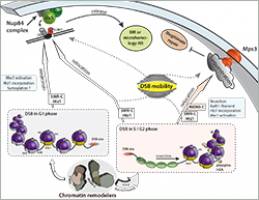
Large molecular motors consisting of up to a dozen different proteins regulate access to the genome, which is essential for the transcription of genes and for the repair of DNA damage.
Health - Life Sciences - 19.06.2014
Interfering with breast cancer metastasis
Nancy Hynes and her group at the Friedrich Miescher Institute for Biomedical Research have discovered an important mediator of breast cancer metastasis. The protein called Memo is not only required for cell migration and invasion, it is also an excellent prognostic marker for poor patient outcome and points the way to new therapeutic approaches.
Life Sciences - Chemistry - 02.06.2014
Scientists shed light on how microRNAs repress protein synthesis
Witold Filipowicz and his team have discovered how microRNAs repress translation of mRNAs. In a structure-function study published in Molecular Cell, they report different modes of recruitment of the CCR4-NOT complex to mRNAs targeted by microRNAs. They also demonstrate that CCR4-NOT recruits and activates the ATPase DDX6, an important translational inhibitor.
Life Sciences - 22.05.2014
Releasing the brakes for learning
Learning can only occur if certain neuronal "brakes" are released. As the group led by Andreas Lüthi at the Friedrich Miescher Institute for Biomedical Research has now discovered, learning processes in the brain are dynamically regulated by various types of interneurons. The new connections essential for learning can only be established if inhibitory inputs from interneurons are reduced at the right moment.
Life Sciences - Event - 05.03.2014
Silvia Arber to receive the Otto Naegeli Prize 2014
Life Sciences - Health - 21.02.2014
Untying DNA knots
Structural biologists at the Friedrich Miescher Institute for Biomedical Research have resolved the 3D structure of a protein machine that plays an important part in the maintenance of genomic stability. They have revealed how one unit of the machine, RMI, modulates the workings of an enzyme, topoisomerase III? (TopIII?), thus allowing double Holliday junctions - key intermediates in DNA repair - to be disentangled.
Life Sciences - 30.01.2014
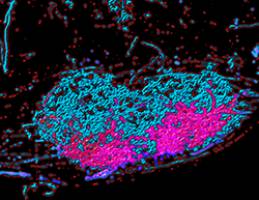
Motor commands issued by the brain to activate arm muscles take two different routes. As the research group led by Professor Silvia Arber at the Basel University Biozentrum and the Friedrich Miescher Institute for Biomedical Research has now discovered, many neurons in the spinal cord send their instructions not only towards the musculature, but at the same time also back to the brain via an exquisitely organized network.
Life Sciences - Health - 12.12.2013
Switching learning on
Neurobiologist from the Friedrich Miescher Institute for Biomedical Research show how a network of neurons in hippocampus and cortex switches states to turn on and off learning in the adult. They further show how a stimulating environment promotes this switch, and thus learning. Their findings are published today in the renowned journal Nature and have far reaching implications also for diseases where learning and memory is impaired, such as Alzheimer's or dementia.
Life Sciences - 21.10.2013
The ISO settings of olfaction
Neurobiologists at the Friedrich Miescher Institute identify a novel feature of the olfactory system that resembles functions engineered for digital cameras. Interneurons in the olfactory bulb stabilize odor-encoding neural activity patterns when the intensity of an odor stimulus varies over a large range.
Life Sciences - Health - 02.10.2013
Protecting neurons in neurodegenerative disease
Neurobiologist from the Friedrich Miescher Institute for Biomedical Research proved that excitability protects motoneurons from degeneration in amyotropic lateral sclerosis, a rare neurodegenerative disease. By modulating excitability they could influence the rate of motor dysfunction and muscle denervation, and slow the progression rate of the disease.
Life Sciences - Health - 16.09.2013
Novel inhibitor implicates the TORC2 kinase in genome stability
FMI scientists have identified a novel inhibitor, which synergizes with low-doses of other DNA damaging agents, to induce a dramatic chromosome fragmentation even in normal cells. Unexpectedly, the compound acts an as inhibitor of a large kinase complex called TORC2, which regulates actin polymerization.
Life Sciences - Health - 22.08.2013
First to measure the concerted activity of a neuronal circuit
Neurobiologists from the Friedrich Miescher Institute for Biomedical Research have been the first to measure the concerted activity of a neuronal circuit in the retina as it extracts information about a moving object. With their novel and powerful approach they can now not only visualize networks of neurons but can also measure functional aspects.
Life Sciences - Health - 08.08.2013
Preventing the spread of repression
Scientists at the Friedrich Miescher Institute for Biomedical Research have identified a novel and unexpected regulatory activity of RNA at the edge of inactive chromosomal regions. In their publication they showed that non-protein coding RNAs demarcate active and inactive chromosomal regions by evicting the proteins necessary for the spreading of repressive chromatin marks.
Health - Pharmacology - 19.07.2013
Molecular validation of novel breast cancer therapeutic target
Under the leadership of Nancy Hynes, scientists from the Friedrich Miescher Institute for Biomedical Research have identified a potential novel target for breast cancer treatment. The scientists could show that breast cancer patients with high levels of the receptor tyrosine kinase Ret have a worse prognosis; and that blocking Ret not only decreases tumor growth but also impacts the potential of the cancer to spread throughout the body.
Life Sciences - Health - 16.06.2013
Setting the stage for passing on epigenetic information to the next generation
In a comprehensive study, scientists at the Friedrich Miescher Institute for Biomedical Research identified the molecular logic underlying the retention of histones and their marks during the development of the sperm. These findings set the stage to address a fundamental question in epigenetics: whether and how chromatin marks in sperm are passed on to the next generation and contribute the epigenetic inheritance of traits shaped by experience or the environment.
Life Sciences - Chemistry - 06.06.2013
Molecular VELCRO for chromosome stability
A team of scientists at the Friedrich Miescher Institute for Biomedical Research and the University of Geneva has functionally dissected the molecular processes that ensure the stability of chromosomes.
Health - Life Sciences - 07.05.2013
How pregnancy reduces breast cancer risk
Scientists from the FMI have identified a molecular mechanism that may explain how early pregnancy reduces the risk for breast cancer. Their Early pregnancy is the best protective agent against breast cancer. Very young mothers are particularly protected: Their lifelong breast cancer risk is cut in more than half when compared to other women.
Life Sciences - Pharmacology - 24.04.2013
Scientists identify important regulator for synapse stability and plasticity
Using the fruit fly as a model organism, neurobiologists from the Friedrich Miescher Institute for Biomedical Research have identified the L1-type CAM neuroglian as an important regulator for synapse growth, function and stability. They show that the interaction of neuroglian with ankyrin provides a regulatory module to locally control synaptic connectivity and function.
Life Sciences - 12.04.2013
Deciphering the cellular reading system of DNA methylation
Scientists from the FMI identify how a family of proteins reads the methylation marks on the DNA so critical for cell development. These MBD proteins bind directly to methylation marks and inactivate the respective stretches of DNA. The findings are important because they provide the means to better understand how this epigenetic mark influences cell fates.
Life Sciences - Health - 28.03.2013
Switching night vision on or off
Neurobiologists at the FMI have been able to dissect a mechanism in the retina that facilitates our ability to see both in the dark and in the light. They identified a cellular switch that activates distinct neuronal circuits at a defined light level. The switch cells of the retina act quickly and reliably to turn on and off computations suited specifically for vision in low and high light levels thus facilitating the transition from night to day vision.
Life Sciences - 14.03.2013
Timing germ cell development
Scientists from the Friedrich Miescher Institute for Biomedical Research identify a novel mechanism in early germ cell development. They show how the chromatin modulator PRC1 coordinates the timing of sexual differentiation of germ cells during embryonic development. The study, which enhances our understanding of the mechanisms regulating stem-ness and cell fate determination, is published .
Life Sciences - Music - 11.01.2013
Epigenetic processes orchestrate neuronal migration
Neurobiologists at the Friedrich Miescher Institute for Biomedical Research (FMI) are the first to show that directional migration of neurons during brain development is controlled through epigenetic processes. In an elaborate study bridging epigenetics and neurobiology, the scientists found that the migratory pattern is orchestrated through epigenetic regulation of genes within neurons and spatial signals in the environment.
Health - Pharmacology - 11.12.2012
Combination therapy for incurable metastatic breast cancer to circumvent therapy resistance
Scientists discovered how resistance mechanisms arise during the treatment of incurable metastatic breast cancer and suggest strategies to circumvent these by a combination therapy. Triple-negative breast cancers are the bad guys among the different types of breast cancer. They affect younger women, metastasize more easily, are tougher to treat and once treated become therapy resistant faster.
Health - Life Sciences - 05.03.2012
New point of attack for breast cancer with poor prognosis
New point of attack for breast cancer with poor prognosis Scientists from the Friedrich Miescher Institute for Biomedical Research describe how the protein phosphatase SHP2 promotes breast cancer with poor prognosis. As they report Medicine, SHP2 is necessary for the maintenance of the few tumor initiating cells (TICs) in a breast tumor.


Politics - Today
Argentina 50 years on from start of dictatorship - is it forgetting the disappeared?
Argentina 50 years on from start of dictatorship - is it forgetting the disappeared?
Life Sciences - Today
Courting the Competition: Some Male Fruit Flies Serenade Each Other Rather Than Fight
Courting the Competition: Some Male Fruit Flies Serenade Each Other Rather Than Fight
Social Sciences - Today
Louis Theroux's manosphere documentary shows some of the subtle ways we can undermine online misogyny
Louis Theroux's manosphere documentary shows some of the subtle ways we can undermine online misogyny
Pharmacology - Mar 19
GSK, University of Oxford and Imperial College London launch centre to create computer models of lungs, liver, kidneys and cartilage
GSK, University of Oxford and Imperial College London launch centre to create computer models of lungs, liver, kidneys and cartilage
Innovation - Mar 19
India's new wave of Hindu Religious Entrepreneurship is reshaping our interpretation of success
India's new wave of Hindu Religious Entrepreneurship is reshaping our interpretation of success
Pharmacology - Mar 19
Oxford University spinout Dark Blue Therapeutics acquired to advance leukaemia treatment
Oxford University spinout Dark Blue Therapeutics acquired to advance leukaemia treatment
Veterinary - Mar 19
New RVC study challenges common beliefs on desirable behaviours in designer 'Doodle' crossbreeds
New RVC study challenges common beliefs on desirable behaviours in designer 'Doodle' crossbreeds
Agronomy & Food Science - Mar 19
Bird Flu Risk to Danish Cattle - New Tool Can Warn Farmers Before Infection Spreads
Bird Flu Risk to Danish Cattle - New Tool Can Warn Farmers Before Infection Spreads
Chemistry - Mar 19
Leipzig University and Center for the Transformation of Chemistry conclude collaboration agreement
Leipzig University and Center for the Transformation of Chemistry conclude collaboration agreement