

news 2026
Categories
Years
2008 | 2009 | 2010 | 2011 | 2012 | 2013 | 2014 | 2015 | 2016 | 2017 | 2018 | 2019 | 2020 | 2021 | 2022 | 2023 | 2024 | 2025 | 2026 |
2008 | 2009 | 2010 | 2011 | 2012 | 2013 | 2014 | 2015 | 2016 | 2017 | 2018 | 2019 | 2020 | 2021 | 2022 | 2023 | 2024 | 2025 | 2026 |
Results 21 - 40 of 487.
Life Sciences - 10.03.2026
Movies reconstructed from mouse brain activity
Scientists have successfully reconstructed videos purely from the brain activity of mice, showing what the mice were seeing, in a new study led by UCL researchers. The findings, published in eLife , could help shed light on the intricate workings of how the brain processes visual information and open new avenues for exploring how different species perceive the world.
Economics - Politics - 10.03.2026
Water returns to local councils: a study by the University of Barcelona reveals the extent of remunicipalisation in Catalonia
A study by the University of Barcelona analyses almost 100 municipalities and concludes that remunicipalisation is the only effective brake on the dominance of large private companies in urban water management.
Psychology - Career - 10.03.2026

Psychology People with high scores on the so-called Dark Factor of Personality have significantly less interest in social and creative jobs.
Life Sciences - Health - 10.03.2026
Development and sex shape the brain
Two companion studies, published in Cell Genomics , reveal how brain development lays the foundation for both shared and sex-specific circuits, redefining how neural diversity arises. A preview article l'inked to the report highlights the broader significance of these findings and places them in context for the field.
Health - 10.03.2026
Severe chronic skin inflammation suppresses the development of skin cancer
Chronic inflammation is generally considered a risk factor for the development of cancer. In psoriasis, a chronic inflammatory skin disease, the link with cutaneous squamous cell carcinoma, a common form of skin cancer, has not yet been clarified. In medical practice, it has long been observed that tumours in psoriasis often do not develop directly in inflamed areas of skin.
Health - Psychology - 10.03.2026

A UNIGE study shows that connected devices can gather valuable data to help prevent neurological and mental disorders. Can smartphones or smartwatches help detect early signs of neurological or mental illness? Researchers at the University of Geneva monitored a group of participants wearing connected devices, and used artificial intelligence to analyse data such as heart rate, physical activity, sleep and air pollution.
Health - Life Sciences - 10.03.2026

Chemists from ETH Zurich have found a way to produce poorly soluble proteins by caging a uniquely reactive boron compound.
Health - Life Sciences - 09.03.2026
New ’molecular switch’ controlling antiviral immunity identified
A previously unknown chain of molecular signals that determines how strongly the body's immune system responds to viral infection has been discovered by scientists at UCL and the University of Cologne. Pattern recognition receptors act as sensors in the body's immune system that detect the molecular signatures of invading viruses and bacteria.
Life Sciences - Health - 09.03.2026
Worrying extent of imprecise gene and gene mutation naming
A systematic review of 52 scientific papers submitted to a world-leading clinical genetics journal from multiple scientists over a two-year period reveals that not a single one named critical gene mutations (correctly termed as variants) with precision. The findings partly explain why around 70% of rare diseases go undiagnosed, even in the UK, which arguably has the worlds most advanced genomic medicine service.
Life Sciences - 09.03.2026
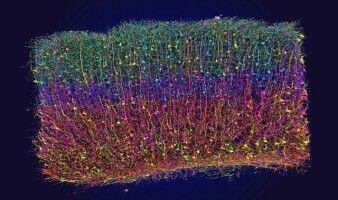
Research team identifies new selectivity in mouse visual cortex using "digital twins" The visual cortex is the part of the brain that enables visual perception. In this area millions of nerve cells, called neurons, process stimuli from the outside world. They only react when objects with certain characteristics come into our field of vision.
Life Sciences - 09.03.2026

Humans often adapt their behavior to that of other people with lightning speed. A new study by the University of Zurich reveals what brain networks govern social mentalization and adaptation, making it possible to predict how flexibly one person reacts to others. The findings of the study could provide new approaches to gaining a better understanding of social disabilities such as autism spectrum disorder or borderline personality disorder.
History & Archeology - Art & Design - 09.03.2026

O A page from Archimedes' palimpsest, considered lost for several decades, has been identified by a CNRS researcher at the Musée des Beaux-Arts in Blois. o The sheet contains a passage from the treatise "De la sphère et du cylindre" on one of its still-readable sides, the other side being obscured by an illumination added in the 20th century.
Pharmacology - Health - 09.03.2026

Many people find it difficult to take their medication correctly as prescribed. This has significant health implications and economic consequences. Digital health apps are designed to help people take their medication correctly. However, a study by the University of Basel shows that digital assistants do not replace the need for personalized professional support.
Life Sciences - 09.03.2026
Paternal mitochondria turn out to be less rare than thought
Mitochondria in plants can be inherited from the father more often than expected. The findings come from Wageningen University & Research (WUR), the Max Planck Institute of Molecular Plant Physiology (MPIMP) and The Chinese University of Hong Kong (CUHK). The study was recently published in Nature Plants.
Health - 09.03.2026

Why do many people say they are so exhausted in the spring? Researchers at the Center for Chronobiology at the University of Basel, the University Psychiatric Clinics Basel (UPK) and the Inselspital in Bern investigated this question. The study reveals that spring fatigue appears to be more of a cultural phenomenon than a measurable biological one.
Environment - Life Sciences - 09.03.2026
Tree cover shapes freshwater ecosystems over millennia
In-person class cancellation and work-from-home / Annulation des cours en présentiel et télétravail In-person class cancellation and work-from-home / Annulation des cours en présentiel et télétravail. McGILL ALERT! Due to freezing rain all'in-person classes and activities on Wednesday, March 11, will be cancelled.
History & Archeology - 09.03.2026

A research team led by a CNRS 1 researcher has for the first time accurately determined the age of the cave paintings at Font-de-Gaume (Les Eyzies) in Dordogne (southwestern France), according to work to be published on 9 March 2026 in PNAS. It had previously been impossible to precisely date the Palaeolithic cave art in the region, including that in Lascaux, using radiocarbon dating, as the paintings were believed to contain only iron and manganese oxides.
Physics - Materials Science - 09.03.2026

In a current strategy paper, an international team with the participation of TU Graz calls for the search for room-temperature superconductors to be pursued in a coordinated manner and with combined forces - and presents a programmatic approach for its success. The search for materials that can conduct electricity at room temperature without losing energy is one of the greatest and most consequential challenges of modern physics: loss-free power transmission, more efficient motors and generators, more powerful quantum computers, cheaper MRI devices.
Pharmacology - Life Sciences - 09.03.2026

The recreational drugs cannabis, cocaine and amphetamines significantly increase the risk of stroke - including among younger users - Cambridge researchers have concluded after analysing data from more than 100 million people. Our analysis suggests that it is these drugs themselves that increase the risk of stroke, not just other lifestyle factors among users Eric Harshfield Stroke is a major global health challenge - the third leading cause of death and disability combined.
Physics - Materials Science - 06.03.2026

Scientists at the University of Manchester have discovered that placing magnetic films on atomically thin molybdenum disulfide (MoS2) fundamentally changes how they lose energy, a finding that could bring 2D-material spintronics a step closer to real devices. The team found that growing a widely used magnetic alloy, permalloy, on ultra-thin MoS2 alters the film's internal crystal structure, changing how and where energy is lost as magnetic spins move.


