

Health - Today
Cortical thickness, schizophrenia, and causality in psychiatry: when the trace is mistaken for the cause
Cortical thickness, schizophrenia, and causality in psychiatry: when the trace is mistaken for the cause

Environment - Today
UCalgary expedition, with NASA, Canadian and European space agencies, sets out to better understand state of Arctic ice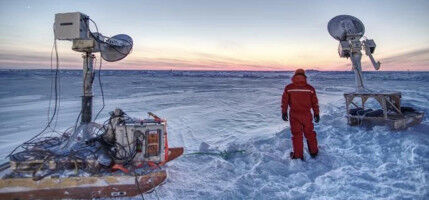
UCalgary expedition, with NASA, Canadian and European space agencies, sets out to better understand state of Arctic ice
Social Sciences - Mar 24
Young people's wellbeing is improving in Greater Manchester, major survey finds
Young people's wellbeing is improving in Greater Manchester, major survey finds
Environment - Mar 24
Australia's environment is improving but climate change is 'accelerating' damage to ecosystems and wildlife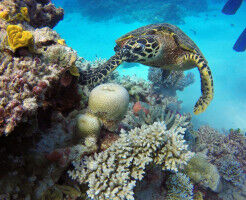
Australia's environment is improving but climate change is 'accelerating' damage to ecosystems and wildlife
Psychology - Mar 23
The grief myth: it doesn't come in stages or follow a checklist - like love, it endures
The grief myth: it doesn't come in stages or follow a checklist - like love, it endures


History & Archeology - Mar 23
The UV has played a part in the discovery of a 3,500-year-old loom that sheds light on key aspects of the Bronze Age textile revolution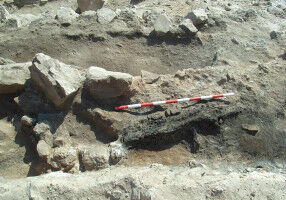
The UV has played a part in the discovery of a 3,500-year-old loom that sheds light on key aspects of the Bronze Age textile revolution
Innovation - Mar 23
The University of Valencia launches ClioViz, an open digital platform for accessing cultural heritage data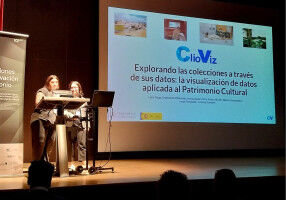
The University of Valencia launches ClioViz, an open digital platform for accessing cultural heritage data

Social Sciences - Mar 23
Study links higher concentration of pokie machines to increase in family and domestic violence
Study links higher concentration of pokie machines to increase in family and domestic violence
news
Centre national de la recherche scientifique (CNRS)
Results 201 - 220 of 477.
Health - Life Sciences - 19.11.2020

The Zika virus has spread around the world over the last decade, causing millions of infections, some of which have been associated with congenital abnormalities and neurological disorders. Scientists from the CNRS, the Institut Pasteur, and the IRD 1 turned their attention to the main vector of the virus, the mosquito Aedes aegypti .
Environment - 09.11.2020
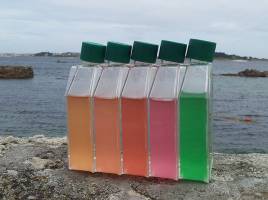
Cyanobacteria, which are often called blue algae, can actually adopt colours ranging from green to orange via pink, depending on the dominant photosynthetic pigment in the cells of particular species. Not all cyanobacteria, however, capture light in the same way: Prochlorococcus , for example, the most abundant cyanobacterium in the ocean, preferentially absorbs violet and blue wavelengths, while its cousin Synechococcus captures blue, green or both, depending on its pigment type.
Astronomy & Space - Physics - 06.11.2020
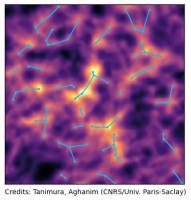
Astrophysicists consider that around 40% of the ordinary matter that makes up stars, planets and galaxies remains undetected, concealed in the form of a hot gas in the complexe cosmic web. Today, scientists at the Institut d'Astrophysique Spatiale (CNRS/Université Paris-Saclay) may have detected, for the first time, this hidden matter through an innovative statistical analysis of 20-year-old data.
Physics - Chemistry - 29.10.2020

Magnets are to be found everywhere in our daily lives, whether in satellites, telephones or on fridge doors. However, they are made up of heavy inorganic materials whose component elements are, in some cases, of limited availability. Now, researchers from the CNRS, the University of Bordeaux and the ESRF (European Synchrotron Radiation Facility in Grenoble) 1 have developed a new lightweight molecule-based magnet, produced at low temperatures, and exhibiting unprecedented magnetic properties.
Astronomy & Space - 27.10.2020
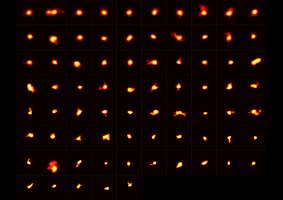
When the Universe was only a tenth of its current age its galaxies experienced a growth spurt. It was this period that the scientists in the ALPINE project 1 focused on when they used ESO's ALMA 2 telescope to carry out the first ever large survey of distant galaxies. To their surprise, these galaxies observed in the early stages of their life were far more mature than expected.
Materials Science - 23.10.2020
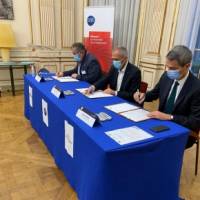
The CNRS, l'Université de Lorraine and Saint-Gobain Group signed, this Friday, October 23, 2020, the creation of the Canopée laboratory, dedicated to the study of materials and "systems" under extreme temperature conditions. The objective is to reduce the carbon footprint of high-temperature manufacturing processes.
Earth Sciences - 21.10.2020

A small amount of molten rock located under tectonic plates encourages them to move. This is what scientists from the Laboratoire de géologie de Lyon: Terre, planètes et environnement (CNRS/ENS de Lyon/Université Claude Bernard Lyon 1) have recently discovered. Their new model takes into account not only the velocity of seismic waves but also the way in which they are attenuated by the medium they pass through.
Environment - 14.10.2020
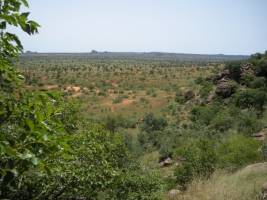
The number of trees inhabiting the Western Sahara, the Sahel and the Sudanian zone has exceeded the expectations of scientists, with more than 1.8 billion having been located thanks to an international collaboration including researchers from the CNRS 1 . High-resolution remote sensing made it possible to gather a multitude of satellite images of these areas, which were then analysed by applying an artificial intelligence pattern recognition method.
Environment - Earth Sciences - 08.10.2020

Common assumptions notwithstanding, rare species can play unique and essential ecological roles. After studying two databases that together cover all known terrestrial mammals and birds worldwide, scientists from the CNRS, the Foundation for Biodiversity Research (FRB), Université Grenoble Alpes, and the University of Montpellier 1 have demonstrated that, though these species are found on all continents, they are more threatened by human pressures than ecologically common species and will also be more impacted by future climate change.
Astronomy & Space - Physics - 02.09.2020
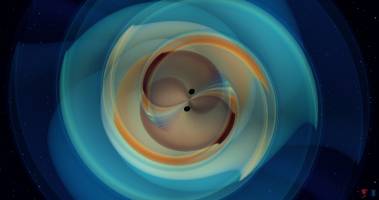
The gravitational wave 1 detectors LIGO and Virgo have just chalked up their biggest catch yet, a black hole 142 times the mass of the Sun, resulting from the merger of two black holes of 85 and 66 solar masses. The remnant black hole is the most massive ever observed with gravitational waves, and it could give us some clues about the formation of the supermassive black holes that sit at the centres of some galaxies.
Chemistry - Physics - 27.08.2020
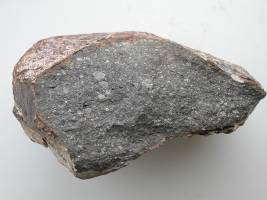
The Earth is the only planet known to have liquid water on its surface, a fundamental characteristic when it comes to explaining the emergence of life.
Health - Chemistry - 13.08.2020
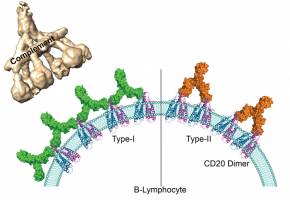
Since the late 1990s, immunotherapy has been the frontline treatment against lymphomas where synthetic antibodies are used to stop the proliferation of cancerous white blood cells. However, in the more than 20 years since their use began, the molecular mechanisms that underlie this therapy are still little understood.
Astronomy & Space - Environment - 05.08.2020
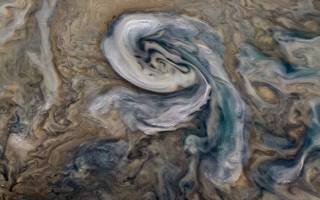
New Juno results suggest that the violent thunderstorms taking place in Jupiter's atmosphere may form ammonia-rich hail, or 'mushballs', that play a key role in the planet's atmospheric dynamics. This theory, developed using data from Juno's microwave radiometer by the Juno team, is described in two publications led by a researcher at the Laboratoire Lagrange (CNRS/Observatoire de la Côte d'Azur/Université Côte d'Azur) with support from the CNES.
Life Sciences - 03.08.2020
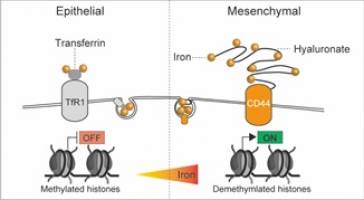
Researchers at the Institut Curie have recently shown that cancer cells use a membrane protein that has been known for several decades to internalise iron. Published (August 3rd, 2020), this work shows that the absorbed iron allows cancer cells to acquire metastatic properties. Biologists knew CD44 well, but didn't know the major biological function that it fulfils.
Earth Sciences - 23.07.2020

A team of 76 seismologists, including several French scientists from the CNRS, the Paris Institute of Earth Physics (IPGP), Université de Paris, Université de Strasbourg and the French National Research Institute for Sustainable Development (IRD) 1 discovered that the lockdown measures used in the fight against the spread of COVID-19 have led to a 50% reduction in seismic noise due to human activity across the globe between January-June 2020.
Health - Environment - 22.07.2020
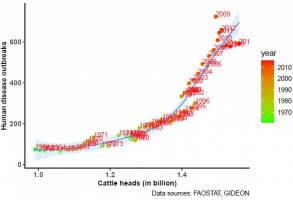
The growth of global livestock farming is a threat to our biodiversity and also increases the health risks to both humans and domesticated animals. The patterns that link them are at the heart of a study published in Biological Conservation by a scientist from the Institute of Evolution Sciences of Montpellier (ISEM - CNRS/Université de Montpellier/IRD/EPHE) and the French Agricultural Research Centre for International Development's (CIRAD) ASTRE laboratory.
Health - Mathematics - 21.07.2020

Seasonal fluctuations drive the dynamics of many infectious diseases. For instance, the flu spreads more readily in winter. Two scientists from the University of Nantes 1 and the CNRS 2 in Montpellier have developed a mathematical model to predict the risk of the emergence of an epidemic, depending on the time of the year at which the pathogen is introduced.
Physics - Chemistry - 17.07.2020
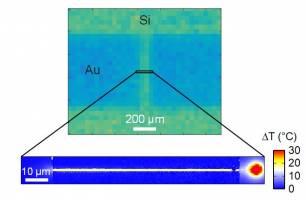
Scientists from the Coordination Chemistry Laboratory and Laboratory for Analysis and Architecture of Systems, both of the CNRS, recently developed molecular films that can measure the operating temperature of electronic components on a nanometric scale. These patented temperature-sensitive molecules have the distinctive quality of being extremely stable, even after millions of uses.
Life Sciences - 15.07.2020

Flies are able to right themselves very quickly when taking off from an upside-down position. Scientists from the CNRS and from The Institute of Movement Science (ISM) at Aix-Marseille Université studying this phenomenon discovered the surprising way these insects begin by turning their bodies before their heads on take-off.
Environment - Mathematics - 06.07.2020

What makes ships mysteriously slow down or even stop as they travel, even though their engines are working properly? This was first observed in 1893 and was described experimentally in 1904 without all the secrets of this "dead water" being understood. An interdisciplinary team from the CNRS and the University of Poitiers has explained this phenomenon for the first time: the speed changes in ships trapped in dead water are due to waves that act like an undulating conveyor belt on which the boats move back and forth.


Health - Today
Cortical thickness, schizophrenia, and causality in psychiatry: when the trace is mistaken for the cause
Cortical thickness, schizophrenia, and causality in psychiatry: when the trace is mistaken for the cause
Environment - Today
UCalgary expedition, with NASA, Canadian and European space agencies, sets out to better understand state of Arctic ice
UCalgary expedition, with NASA, Canadian and European space agencies, sets out to better understand state of Arctic ice
Social Sciences - Mar 24
Young people's wellbeing is improving in Greater Manchester, major survey finds
Young people's wellbeing is improving in Greater Manchester, major survey finds
Environment - Mar 24
Australia's environment is improving but climate change is 'accelerating' damage to ecosystems and wildlife
Australia's environment is improving but climate change is 'accelerating' damage to ecosystems and wildlife
Psychology - Mar 23
The grief myth: it doesn't come in stages or follow a checklist - like love, it endures
The grief myth: it doesn't come in stages or follow a checklist - like love, it endures
History & Archeology - Mar 23
The UV has played a part in the discovery of a 3,500-year-old loom that sheds light on key aspects of the Bronze Age textile revolution
The UV has played a part in the discovery of a 3,500-year-old loom that sheds light on key aspects of the Bronze Age textile revolution
Innovation - Mar 23
The University of Valencia launches ClioViz, an open digital platform for accessing cultural heritage data
The University of Valencia launches ClioViz, an open digital platform for accessing cultural heritage data
Social Sciences - Mar 23
Study links higher concentration of pokie machines to increase in family and domestic violence
Study links higher concentration of pokie machines to increase in family and domestic violence