

Computer Science - Today
SDU is part of global initiative to bring mathematical certainty to modern computing and artificial intelligence
SDU is part of global initiative to bring mathematical certainty to modern computing and artificial intelligence



Health - Today
Bilingual forms improve cancer treatment understanding among people with limited English
Bilingual forms improve cancer treatment understanding among people with limited English
Health - Today
Intratumoural microbiota and the immune system: a new study from the EOC-USI Institute for Translational Research
Intratumoural microbiota and the immune system: a new study from the EOC-USI Institute for Translational Research



Event - Mar 17
CEA Leti to Showcase Integrated Expertise In Microelectronics Reliability at IRPS 2026
CEA Leti to Showcase Integrated Expertise In Microelectronics Reliability at IRPS 2026




news
Electroengineering
Results 481 - 500 of 763.
Electroengineering - Health - 24.09.2015
Engineers Develop New Method for Making Wearable Electronics
Assitant professor Nanshu Lu and her team have developed a faster, inexpensive method for making epidermal electronics. Cockrell School of Engineering AUSTIN, Texas - A team of researchers in the Cockrell School of Engineering at The University of Texas at Austin has invented a method for producing inexpensive and high-performing wearable patches that can continuously monitor the body's vital signs for human health and performance tracking, potentially outperforming traditional monitoring tools such as cardiac event monitors.
Computer Science - Electroengineering - 23.09.2015
Babies Time Their Smiles to Make Their Moms Smile in Return
Why do babies smile when they interact with their parents? Could their smiles have a purpose? In the Sept. 23 issue of PLOS ONE , a team of computer scientists, roboticists and developmental psychologists confirm what most parents already suspect: when babies smile, they do so with a purpose-to make the person they interact with smile in return.
Physics - Electroengineering - 21.09.2015
Light-Based Memory Chip Is the First Ever to Store Data Permanently
A scanning electron microscope image of the device. The GST phase-change material, highlighted in yellow, sits on top of the silicon nitride waveguide, highlighted in red. The world's first entirely light-based memory chip to store data permanently has been developed by material scientists at Oxford University and University of Münster in collaboration with scientists at Karlsruhe and Exeter.
Mathematics - Electroengineering - 21.09.2015

The Allen Institute for Artificial Intelligence (AI2) and University of Washington researchers have created an artificial intelligence (AI) system that can solve SAT geometry questions as well as the average American 11th-grade student, a breakthrough in AI research. This system, called GeoS , uses a combination of computer vision to interpret diagrams, natural language processing to read and understand text and a geometric solver to achieve 49 percent accuracy on official SAT test questions.
Physics - Electroengineering - 21.09.2015
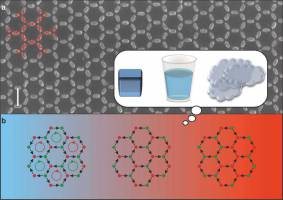
Researchers at the Paul Scherrer Institute (PSI) created a synthetic material out of 1 billion tiny magnets. Astonishingly, it now appears that the magnetic properties of this so-called metamaterial change with the temperature, so that it can take on different states; just like water has a gaseous, liquid and a solid state.
Physics - Electroengineering - 08.09.2015
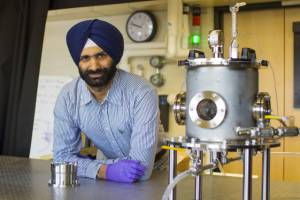
The boiling of water is at the heart of many industrial processes, from the operation of electric power plants to chemical processing and desalination. But the details of what happens on a hot surface as water boils have been poorly understood, so unexpected hotspots can sometimes melt expensive equipment and disable plants.
Physics - Electroengineering - 02.09.2015
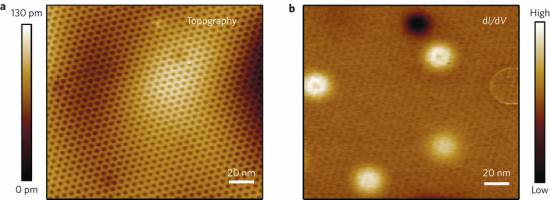
Berkeley Lab researchers characterize individual defects inside a bulk insulator using scanning tunneling microscopy Nanoscale defects are enormously important in shaping the electrical, optical, and mechanical properties of a material. For example, a defect may donate charge or scatter electrons moving from one point to another.
Environment - Electroengineering - 31.08.2015
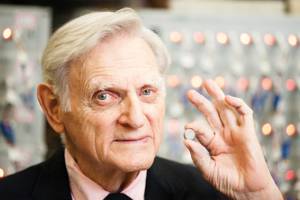
AUSTIN, Texas - Led by the inventor of the lithium-ion battery, a team of researchers in the Cockrell School of Engineering at The University of Texas at Austin has identified a new safe and sustainable cathode material for low-cost sodium-ion batteries. During the past five years, sodium-ion batteries have emerged as a promising new type of rechargeable battery and an alternative to lithium-ion batteries because sodium, better known as the main element of salt, is abundant and inexpensive.
Physics - Electroengineering - 26.08.2015
Antimatter catches a wave: Accelerating positrons with plasma is a step toward smaller particle colliders
UCLA Engineering professors play key role in advance that could yield better understanding of nature's building blocks Matthew Chin Weiming An/UCLA Rendering showing high-energy positron acceleration in plasma - a new method that could help build next-generation particle colliders. A study led by researchers from UCLA and the U.S. Department of Energy's SLAC National Accelerator Laboratory has demonstrated a more efficient way to accelerate positrons, the antimatter opposites of electrons.
Computer Science - Electroengineering - 25.08.2015
Robot scientist on show
Children will be given the chance to meet the original robot scientist in a series of demonstrations at London's Science Museum this week. Professor Ross D. King, from the University of Manchester's School of Computer Science, will join academic colleagues to demonstrate just what ADAM, a machine who thinks and does experiments like a human scientist, is capable of.
Physics - Electroengineering - 20.08.2015
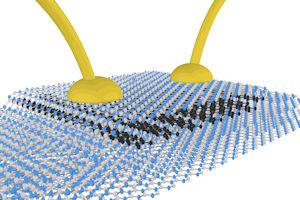
Dozens of new two-dimensional materials similar to graphene are now available, thanks to research from University of Manchester scientists. These 2D crystals are capable of delivering designer materials with revolutionary new properties. The problem has been that the vast majority of these atomically thin 2D crystals are unstable in air, so react and decompose before their properties can be determined and their potential applications investigated.
Physics - Electroengineering - 18.08.2015
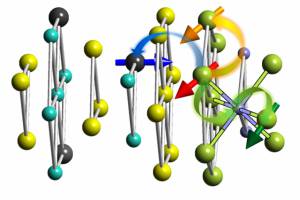
An exotic kind of magnetic behavior, driven by the mere proximity of two materials, has been analyzed by a team of researchers at MIT and elsewhere using a technique called spin-polarized neutron reflectometry. They say the new finding could be used to probe a variety of exotic physical phenomena, and could ultimately be used to produce key components of future quantum computers.
Electroengineering - Computer Science - 12.08.2015
On the origin of (robot) species
Researchers have observed the process of evolution by natural selection at work in robots, by constructing a 'mother' robot that can design, build and test its own 'children', and then use the results to improve the performance of the next generation, without relying on computer simulation or human intervention.
Electroengineering - Physics - 11.08.2015
Discovery in growing graphene nanoribbons could enable faster, more efficient electronics
Progressively zoomed-in images of graphene nanoribbons grown on germanium. The ribbons automatically align perpendicularly and naturally grow in what is known as the armchair edge configuration. Images: Arnold Research Group and Guisinger Research Group Graphene, an atom-thick material with extraordinary properties, is a promising candidate for the next generation of dramatically faster, more energy-efficient electronics.
Electroengineering - Mechanical Engineering - 03.08.2015
New study explores how personalities affect communication, teamwork
UNIVERSITY PARK, Pa. The personality-based communication styles of team members can often determine the success or failure of a team, according to a recent study by Penn State researchers. "This new research shows that understanding the communication styles of team members can help us account for differences in personality and the impact those differences have on team performance," said Gretchen Macht, a postdoctoral scholar in architectural engineering.
Life Sciences - Electroengineering - 30.07.2015
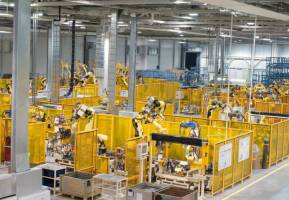
Scientists are developing a 'bionic eye' that could be used by manufacturers to improve monitoring of industrial assembly lines. At the back of the human eye is a specialised layer of cells called the retina, which captures light information. This information is then converted into electrical signals and sent via the optic nerve to the brain, where a visual image is produced.
Life Sciences - Electroengineering - 27.07.2015
Close-up film shows for the first time how ants use ’combs’ and ’brushes’ to keep their antennae clean
Using unique mechanical experiments and close-up video, Cambridge researchers have shown how ants use microscopic 'combs' and 'brushes' to keep their antennae clean, which could have applications for developing cleaners for nanotechnology. Insects have developed ingenious ways of cleaning very small, sensitive structures, which could have fascinating applications for nanotechnology - where contamination of small things is a big problem Alexander Hackmann For an insect, grooming is a serious business.
Physics - Electroengineering - 16.07.2015
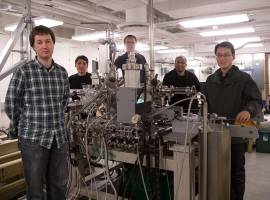
After 85-year search, massless particle with promise for next-generation electronics discovered Posted July 16, 2015; 02:00 p.m. by Morgan Kelly, Office of An international team led by Princeton University scientists has discovered an elusive massless particle theorized 85 years ago. The particle could give rise to faster and more efficient electronics because of its unusual ability to behave as matter and antimatter inside a crystal, according to new research.
Physics - Electroengineering - 15.07.2015
Scientists use large particle accelerator to visualize properties of nanoscale electronic materials
A technique devised by UCLA researchers could help scientists better understand a tiny — but potentially important — component of next-generation electronic devices. Scientists trying to improve the semiconductors that power our electronic devices have focused on a technology called spintronics as one especially promising area of research.
Life Sciences - Electroengineering - 15.07.2015
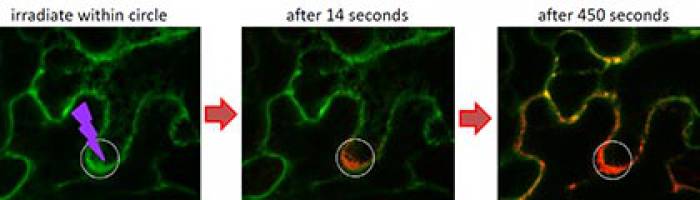
Microwave ovens, penicillin and Velcro are examples of scientific discoveries made by accident. Now, Cornell researchers announce another accidental discovery: When a green fluorescent protein (GFP) is exposed to specific wavelengths of laser light, it turns red. Students engaged in a photo-bleaching technique discovered the color change when they accidentally used a different laser wavelength to look at the GFP.


Computer Science - Today
SDU is part of global initiative to bring mathematical certainty to modern computing and artificial intelligence
SDU is part of global initiative to bring mathematical certainty to modern computing and artificial intelligence
Health - Today
Bilingual forms improve cancer treatment understanding among people with limited English
Bilingual forms improve cancer treatment understanding among people with limited English
Health - Today
Intratumoural microbiota and the immune system: a new study from the EOC-USI Institute for Translational Research
Intratumoural microbiota and the immune system: a new study from the EOC-USI Institute for Translational Research
Event - Mar 17
CEA Leti to Showcase Integrated Expertise In Microelectronics Reliability at IRPS 2026
CEA Leti to Showcase Integrated Expertise In Microelectronics Reliability at IRPS 2026