




Health - Today
AI was supposed to ease doctors' workload - instead they spend hours correcting errors
AI was supposed to ease doctors' workload - instead they spend hours correcting errors



Pharmacology - Today
International trial finds rapid diagnostic testing alone does not reduce antibiotic prescribing for respiratory infections
International trial finds rapid diagnostic testing alone does not reduce antibiotic prescribing for respiratory infections

Social Sciences - Today
Social background shapes how hard children work, according to a study by UC3M
Social background shapes how hard children work, according to a study by UC3M
Innovation - Today
With Robotics Innovation Center, CMU and Hazelwood Partners Sustain Community Collaborations
With Robotics Innovation Center, CMU and Hazelwood Partners Sustain Community Collaborations





news
History & Archeology
Results 321 - 340 of 979.
Life Sciences - History & Archeology - 17.07.2022
When did the genetic variations that make us human emerge?
The study of the genomes of our closest relatives, the Neanderthals and Denisovans, has opened up new research paths that can broaden our understanding of the evolutionary history of Homo sapiens. A study led by the UB has made an estimation of the time when some of the genetic variants that characterise our species emerged.
History & Archeology - 07.07.2022

If timetables and punctuality are an integral part of our society, it has not always been so. This is what Catherine Herr-Laporte, a doctoral student at the Chair in the History of Technology, has shown by studying the development of postal transport in France throughout the 18th century as part of her doctoral thesis on time and mobility.
History & Archeology - Agronomy & Food Science - 28.06.2022

As early as the Neolithic period, pests posed a threat to agricultural yields, as shown by the remains of mice and insects found in prehistoric wells by a Basel-led archaeological research team. However, there are also indications that people knew how to defend against these pests - for example, by switching to less vulnerable kinds of grain.
Environment - History & Archeology - 27.06.2022
Ancient world adapted to climate change
A new study shows how the ancient world adapted to climate change A new study of the ancient world of Anatolia - now Turkey - shows how they adapted to climate change but offers a warning for today's climate emergency. The efforts of ancient populations to minimise the impacts of climate change were undermined during longer climate shifts when it is combined with other events such as pandemics, earthquakes and wars - findings the lead author says offer scary parallels to the modern day.
History & Archeology - 24.06.2022

An international research that integrates experts from the universities of Durham, Seville, Southampton, Huelva and Gothenburg has just located a prehistoric stela, of the type known as 'warrior' in the burial complex of Cañaveral de León (Huelva). This is the second stela found in this site.
Linguistics & Literature - History & Archeology - 24.06.2022

Scientists have produced a series of maps showing historical migration events, including the migration of mountain farmers native to Upper Valais who began to settle in German-speaking Switzerland in the 13th century, by applying methods from population genetics - but using linguistic data rather than genes.
Life Sciences - History & Archeology - 23.06.2022
Population bottlenecks were common throughout human history
From contemporary and ancient DNA, UC Berkeley researchers estimated when population bottlenecks occurred for several hundred groups around the world and throughout recent human history. The colors indicate the number of generations the bottleneck or founder event preceded the individuals whose DNA was sequenced.
History & Archeology - 22.06.2022

Homo heidelbergensis may have occupied southern Britain between 560,000 and 620,000 years ago Archaeological discoveries made on the outskirts of Canterbury, Kent (England) confirm the presence of early humans in southern Britain between 560,000 and 620,000 years ago. The breakthrough, involving controlled excavations and radiometric dating, comes a century after stone tool artefacts were first uncovered at the site.
Architecture & Buildings - History & Archeology - 22.06.2022

Researcher and architect Catarina Wall Gago has published a guide to renovation best practices, drawing on a study of historic housing in Lisbon, Oporto and Geneva.
History & Archeology - 18.06.2022

Were the bones of fallen Battle of Waterloo soldiers sold as fertiliser? Thousands of soldiers died on the Belgium battlefield yet very few human remains have been found. Now a new study by the University of Glasgow's Professor Tony Pollard suggests it is the most probable outcome of such a bloodied affair, but the archaeologist says it isn't quite a situation of 'case closed'.
History & Archeology - 17.06.2022

During recently completed excavations in northeastern Cairo, an Egyptian-German excavation team of archaeologists has found important evidence from the history of the temple city of Heliopolis. It includes the foundation of a limestone wall, which was discovered running from north to south about 55 metres west of the still-standing obelisk of Heliopolis.
History & Archeology - 16.06.2022

Extreme dry conditions contributed to the decline of the ancient South Arabian kingdom of Himyar. Researchers from the University of Basel have reported these findings. Combined with political unrest and war, the droughts left behind a region in disarray, thereby creating the conditions on the Arabian peninsula that made possible the spread of the newly emerging religion of Islam.
History & Archeology - Life Sciences - 15.06.2022
Origins of the Black Death identified
Multidisciplinary team studied ancient plague genomes The Black Death, the biggest pandemic of our history, was caused by the bacterium Yersinia pestis and lasted in Europe between the years 1346 and 1353. Despite the pandemic's immense demographic and societal impacts, its origins have long been elusive.
History & Archeology - Life Sciences - 14.06.2022

Researchers from the University of Toronto, the Weizmann Institute of Science and Hebrew University have identified new evidence of the use of fire by ancient humans at least 800,000 years ago at a site in western Israel. The discovery, described in a study published this week in Proceedings of the National Academy of Sciences , suggests only the sixth location worldwide of evidence of fire more than half a million years old.
Life Sciences - History & Archeology - 13.06.2022

Using advanced AI techniques, the researchers discover one of the earliest pieces of evidence for the use of fire They say that where there's smoke, there's fire, and Weizmann Institute of Science researchers are working hard to investigate that claim, or at least elucidate what constitutes "smoke." In an article published today in PNAS , the scientists reveal an advanced, innovative method that they have developed and used to detect nonvisual traces of fire dating back at least 800,000 years - one of the earliest known pieces of evidence for the use of fire.
Life Sciences - History & Archeology - 09.06.2022
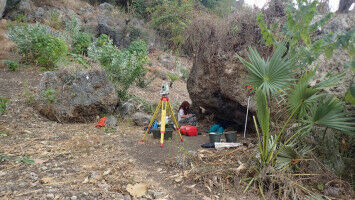
DNA analysis of ancient human remains has shed new light on an "explosion" of intermixing cultures and genetics in an island region north of Australia known as Wallacea - an imprint that is still detectable in East Indonesians today. The study , conducted by researchers from The Australian National University (ANU) and the Max Planck Institutes in Germany, is the first to use this kind of ancient DNA analysis to clarify, from an ancient genetic perspective, the significant maritime migration of Austronesian-speaking peoples out of Taiwan, southern China and the Philippines into Wallacea.
Life Sciences - History & Archeology - 09.06.2022

The Wallacean islands of present-day Eastern Indonesia have a long history of occupation by modern humans. Notably, the maritime expansion of Austronesian speakers into Wallacea left archaeological traces of a Neolithic lifestyle and a genetic imprint still detectable in Eastern Indonesians today.
History & Archeology - Social Sciences - 09.06.2022

Archaeologists have found that a tool, dubbed the "stone Swiss Army knife" of prehistory, was made to look the same in enormous numbers across great distances and multiple biomes in southern Africa. This indicates early humans were sharing information and communicating with one another.
History & Archeology - 07.06.2022

How the chicken came to man and found its way to Europe: Major new international research reveals new evidence about when, where, and how chickens were domesticated New research transforms our understanding of the circumstances and timing of the domestication of chickens, their spread across Asia into the west, and reveals the changing way in which they were perceived in societies over the past 3500 years.
Paleontology - History & Archeology - 07.06.2022

Geckos lived in Europe as early as 47 million years ago, say palaeontologists who have examined a nearly complete fossil gecko skull from central Germany. This previously unknown species was found in a former coalmining area - Geiseltal - and was described by a research team led by Dr. Andrea Villa of the Catalan Institute of Palaeontology Miquel Crusafont in Barcelona and biogeologist Dr. Márton Rabi of the University of Tübingen and Martin Luther University Halle-Wittenberg.


Health - Today
AI was supposed to ease doctors' workload - instead they spend hours correcting errors
AI was supposed to ease doctors' workload - instead they spend hours correcting errors
Pharmacology - Today
International trial finds rapid diagnostic testing alone does not reduce antibiotic prescribing for respiratory infections
International trial finds rapid diagnostic testing alone does not reduce antibiotic prescribing for respiratory infections
Social Sciences - Today
Social background shapes how hard children work, according to a study by UC3M
Social background shapes how hard children work, according to a study by UC3M
Innovation - Today
With Robotics Innovation Center, CMU and Hazelwood Partners Sustain Community Collaborations
With Robotics Innovation Center, CMU and Hazelwood Partners Sustain Community Collaborations