




Health - Today
AI was supposed to ease doctors' workload - instead they spend hours correcting errors
AI was supposed to ease doctors' workload - instead they spend hours correcting errors




Pharmacology - Today
International trial finds rapid diagnostic testing alone does not reduce antibiotic prescribing for respiratory infections
International trial finds rapid diagnostic testing alone does not reduce antibiotic prescribing for respiratory infections

Social Sciences - Today
Social background shapes how hard children work, according to a study by UC3M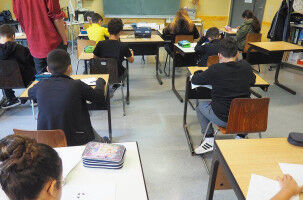
Social background shapes how hard children work, according to a study by UC3M
Innovation - Today
With Robotics Innovation Center, CMU and Hazelwood Partners Sustain Community Collaborations
With Robotics Innovation Center, CMU and Hazelwood Partners Sustain Community Collaborations





news
History & Archeology
Results 381 - 400 of 979.
Agronomy & Food Science - History & Archeology - 18.05.2021

Fields of opium poppies once bloomed where the Zurich Opera House underground garage now stands. Through a new analysis of archaeological seeds, researchers at the University of Basel have been able to bolster the hypothesis that prehistoric farmers throughout the Alps participated in domesticating the opium poppy.
History & Archeology - 11.05.2021

Social Sciences - History & Archeology - 06.05.2021
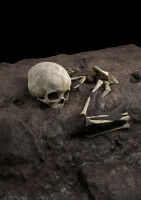
Àfrica Pitarch, Beatriu de Pinós researcher in the Prehistoric Studies and Research Seminar of the UB (SERP-UB) 000 years ago. Researchers found remains of a child aged between 2.5 and 3, in a shallow grave in the site of Panga ya Saidi (Kenya). This burial joins other evidence of the first social complex behaviour seen in Homo Sapiens.
History & Archeology - Career - 06.05.2021

Dating to 78,000 years ago, the bones of a child were found by a team of archaeologists in Panga ya Saidi, a cave site on the Kenyan coast. It is considered the oldest human burial in Africa. A new study published in Nature by an international team of researchers details the earliest modern human burial in Africa.
History & Archeology - 05.05.2021
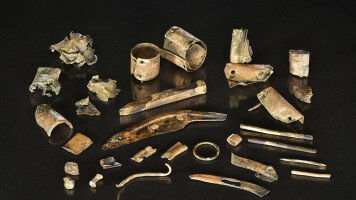
Researchers including Göttingen University show Bronze Age witnessed revolution in small change across Europe How did people living in the Bronze Age manage their finances before money became widespread? Researchers from the Universities of Göttingen and Rome have discovered that bronze scrap found in hoards in Europe circulated as a currency.
History & Archeology - Earth Sciences - 05.05.2021

The biographies of eight crew found among the remains of the Tudor warship Mary Rose have been revealed using the latest archaeological methods. Cardiff University academics, in partnership with the Mary Rose Trust and the British Geological Survey, used cutting edge scientific techniques to reveal the ancestry, childhood origins and diets of some of the crew who perished on the ship in 1545 AD.
Health - History & Archeology - 30.04.2021

CT scanning used to uncover remnants of malignancy hidden inside medieval bones provides new insight into cancer prevalence in a pre-industrial world. We searched within the bone for signs of malignancy Piers Mitchell The first study to use x-rays and CT scans to detect evidence of cancer among the skeletal remains of a pre-industrial population suggests that between 9-14% of adults in medieval Britain had the disease at the time of their death.
Politics - History & Archeology - 23.04.2021
Immigrants participated in the political life of medieval England
VUB research shows many people came from the Low Countries and were politically active Friday, April 23, 2021 — The question as to what extent newcomers from abroad should have a political say in their new place of residence is one that occupies many minds.
Environment - History & Archeology - 20.04.2021

Scientists from The Australian National University (ANU) are looking for volunteers to help create Australia's longest daily weather record from a globally recognised climate change "hot spot". The citizen science project will help scientists reconstruct Perth's daily weather from 1830 to the present day.
History & Archeology - Environment - 15.04.2021
To improve climate models, an international team with the participation of UPF turns to archaeological data
The project, called LandCover6k, offers a new classification system that the researchers hope will improve predications about the planet's future and fill in gaps about its past. .Published in PLOS ONE , the study includes the participation of researchers from the universities of Pennsylvania, Pompeu Fabra and Glasgow, including Marco Madella, ICREA research professor of the Department of Humanities at UPF, who is one of the project leaders.
History & Archeology - 14.04.2021
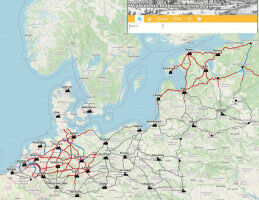
Research team led by University of Göttingen reconstructs late medieval trade routes digitally The Hanseatic League was a confederation of merchant guilds and market towns in Northwestern and Central Europe, which came to dominate trade in the region for three hundred years. A digital platform has now been built which reveals the long-distance trade routes in Northern Europe between 1350 and 1650.
History & Archeology - Chemistry - 14.04.2021

A team of scientists, led by the University of Bristol, with colleagues from Goethe University, Frankfurt, has found the first evidence for ancient honey hunting, locked inside pottery fragments from prehistoric West Africa, dating back some 3,500 years ago. Honeybees are an iconic species, being the world's most important pollinator of food crops.
Life Sciences - History & Archeology - 25.03.2021
The origin and uniqueness of basque genetics revealed
A new study reveals that the genetic uniqueness of the Basque population is not due to its external origin in respect of other Iberian populations, but reduced contacts as of the Iron Age. The genomic analysis points to the language barrier as a possible bastion which led to the isolation of the people.
History & Archeology - 24.03.2021

With a total length of up to 5.5m, the tiger shark is one of the largest predatory sharks known today. This shark is a cosmopolitan species occurring in all oceans worldwide. It is characterized by a striped pattern on its back, which is well marked in juveniles but usually fades in adults.
History & Archeology - Life Sciences - 10.03.2021
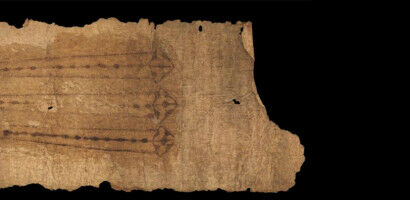
Scientists have used proteomic techniques to find evidence of vaginal fluid, along with honey and milk, on a rare manuscript from the late 15th century. There are suggestions that due to the dimensions of the object - long and narrow - they were worn like a chastity belt, to help support the pregnant women both physically and spiritually Sarah Fiddyment Researchers have found direct evidence that a 500-year-old manuscript was worn during childbirth by using "biomolecular analysis" to detect ancient proteins from cervico-vaginal fluid within the weave of the parchment.
History & Archeology - Life Sciences - 10.03.2021
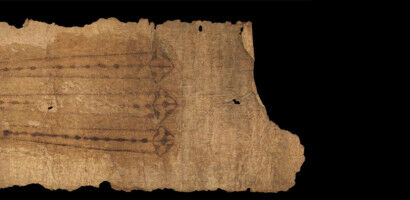
Scientists have used proteomic techniques to find evidence of vaginal fluid, along with honey and milk, in a rare manuscript from the late 15th century. There are suggestions that due to the dimensions of the object - long and narrow - they were worn like a chastity belt, to help support the pregnant women both physically and spiritually Sarah Fiddyment Researchers have found direct evidence that a 500-year-old manuscript was worn during childbirth by using "biomolecular analysis" to detect ancient proteins from cervico-vaginal fluid within the weave of the parchment.
History & Archeology - Social Sciences - 10.03.2021
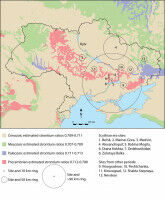
As far back as the Greek historian Herodotus, a group of people called the Scythians were considered highly mobile warrior nomads. Scythian-era people lived across Eurasia from about 700 BCE to 200 BCE, and have long been considered highly mobile warriors who ranged widely across the steppe grasslands.
Earth Sciences - History & Archeology - 17.02.2021
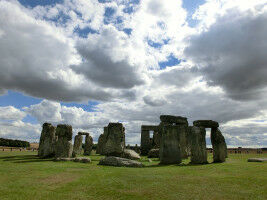
Professor Mike Parker Pearson (UCL Institute of Archaeology) discusses his research which has found a dismantled stone circle in west Wales which was moved to Salisbury Plain and rebuilt as Stonehenge. According to Geoffrey of Monmouth, whose History of the Kings of Britain was written in 1136, the mysterious monoliths at Stonehenge were first spirited there by the wizard Merlin, whose army stole them from a mythical Irish stone circle called the Giants' Dance.
History & Archeology - 11.02.2021
Stonehenge may be dismantled Welsh stone circle
UCL archaeologists have found a dismantled stone circle in west Wales that they believed was moved to Salisbury Plain and rebuilt as Stonehenge. The stunning discovery, published in Antiquity , has been secretly documented by filmmakers and is the subject of an exclusive BBC programme , Stonehenge: The Lost Circle Revealed .
Health - History & Archeology - 08.02.2021
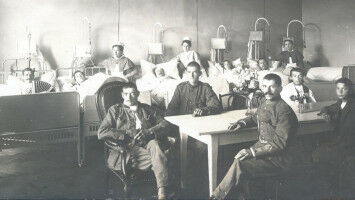
In the event of a pandemic, delayed reactions and a decentralized approach by the authorities at the start of a follow-up wave can lead to longer-lasting, more severe and more fatal consequences, researchers from the universities of Zurich and Toronto have found. The interdisciplinary team compared the Spanish flu of 1918 and 1919 in the Canton of Bern with the coronavirus pandemic of 2020.


Health - Today
AI was supposed to ease doctors' workload - instead they spend hours correcting errors
AI was supposed to ease doctors' workload - instead they spend hours correcting errors
Pharmacology - Today
International trial finds rapid diagnostic testing alone does not reduce antibiotic prescribing for respiratory infections
International trial finds rapid diagnostic testing alone does not reduce antibiotic prescribing for respiratory infections
Social Sciences - Today
Social background shapes how hard children work, according to a study by UC3M
Social background shapes how hard children work, according to a study by UC3M
Innovation - Today
With Robotics Innovation Center, CMU and Hazelwood Partners Sustain Community Collaborations
With Robotics Innovation Center, CMU and Hazelwood Partners Sustain Community Collaborations