



Health - Today
AI was supposed to ease doctors' workload - instead they spend hours correcting errors
AI was supposed to ease doctors' workload - instead they spend hours correcting errors




Pharmacology - Today
International trial finds rapid diagnostic testing alone does not reduce antibiotic prescribing for respiratory infections
International trial finds rapid diagnostic testing alone does not reduce antibiotic prescribing for respiratory infections

Social Sciences - Today
Social background shapes how hard children work, according to a study by UC3M
Social background shapes how hard children work, according to a study by UC3M
Innovation - Today
With Robotics Innovation Center, CMU and Hazelwood Partners Sustain Community Collaborations
With Robotics Innovation Center, CMU and Hazelwood Partners Sustain Community Collaborations




news
History & Archeology
Results 781 - 800 of 979.
Health - History & Archeology - 09.04.2013
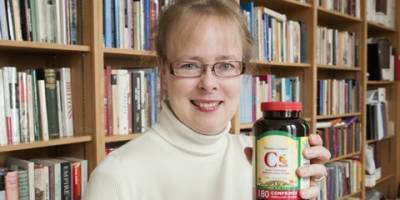
Interdisciplinary teamwork in the library and the lab leads to discovery about vitamin C deficiency. In 1850, a group of seven British missionaries set sail for the southern tip of Argentina with hopes of bringing Christianity to the indigenous people of what was then Patagonia. Unfortunately, the voyage would end in disaster a year later as all seven would eventually succumb to some combination of scurvy and starvation.
Psychology - History & Archeology - 20.03.2013

The use of words with emotional content in books has steadily decreased throughout the last century, according to new research from the Universities of Bristol, Sheffield, and Durham. The study, published today in PLOS ONE also found a divergence between American and British English, with the former being more 'emotional' than the latter.
Life Sciences - History & Archeology - 11.03.2013
Rewriting the story of Stonehenge
Archeologists have found that the original Stonehenge was a graveyard for a community of elite families built 500 years earlier than the site we know today. The new discovery has finally solved many of the mysteries surrounding Stonehenge, overturning the accepted view on construction and use of our greatest prehistoric monument.
Life Sciences - History & Archeology - 11.03.2013
Northeast bee population declines confirmed
Northeastern bees have suffered population declines over the last century and a half, largely due to human encroachment, which has fragmented their environments. But none has faced a more devastating, rapid and recent collapse than the genus Bombus - the humble bumblebee - say entomologists in the Proceedings of the National Academy of Sciences online, March 5.
Life Sciences - History & Archeology - 11.02.2013
Search for the first ‘man’s best friend’
Scientists at Durham University hope to find out when and where dogs first became man's best friend by examining DNA and bones from ancient remains - of wolves as well as dogs. The earliest conclusive evidence for domestic dogs is about 14,000 years ago, but some theories suggest dogs could have been domesticated as long as 35,000 years ago.
History & Archeology - 05.02.2013
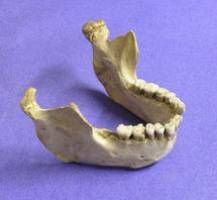
Since the 1990s, scholars have believed that around 35,000 years ago the last of the Neanderthals sought refuge in southern Iberia, in an area known as Spain today. However, new dating evidence on fossilised bones from sites in the region suggests that the fossils could be 15,000 years older than previously thought.
History & Archeology - 17.01.2013
Shark Tank Re-Fit Lends Teeth To Research Into Prehistoric Seas
Scientists are filtering through bags of gravel from the bed of the ocean display at Blackpool Sea Life Centre, and expect a final haul of more than 12,000 shark teeth. Oxygen atoms in the discarded teeth can reveal the temperature the sharks lived in, and a University of Birmingham research team hopes by studying them it can perfect the technique for use on fossil shark teeth.
History & Archeology - 09.01.2013

Research from the University of Sheffield has discovered that the ancient civilisation of Crete, known as Minoan, had strong martial traditions, contradicting the commonly held view of Minoans as a peace-loving people. The research, carried out by Barry Molloy of the University of Sheffield's Department of Archaeology, investigated the Bronze Age people of Crete, known by many as the Minoans, who created the very first complex urban civilisation in Europe.
History & Archeology - Earth Sciences - 18.12.2012

CHAMPAIGN, lll. In the early 1900s, an archaeologist, William Mills, dug up a treasure-trove of carved stone pipes that had been buried almost 2,000 years earlier. Mills was the first to dig the Native American site, called Tremper Mound, in southern Ohio. And when he inspected the pipes, he made a reasonable - but untested - assumption.
Life Sciences - History & Archeology - 17.12.2012

A Yale scientist and colleagues in Britain have found a highly unusual ancient marine fossil that retains soft body parts as well as its shell, including limbs, eyes, gills and alimentary system. The fossil represents a new species of ostracod, a tiny crustacean related to crabs, lobsters and shrimps.
History & Archeology - Chemistry - 12.12.2012

The first unequivocal evidence that humans in prehistoric Northern Europe made cheese more than 7,000 years ago is described in research by an international team of scientists, led by the University of Bristol, published today in Nature. By analysing fatty acids extracted from unglazed pottery pierced with small holes excavated from archaeological sites in Poland, the researchers showed that dairy products were processed in these ceramic vessels.
Life Sciences - History & Archeology - 13.11.2012

Researchers involved in a new study led by Oxford University have found that between three million and 3.5 million years ago, the diet of our very early ancestors in central Africa is likely to have consisted mainly of tropical grasses and sedges. The findings are published in the early online edition of Proceedings of the National Academy of Sciences .
History & Archeology - 12.11.2012

Medieval objects including a 4,000 year old Bronze Age arrowhead have been uncovered in East Oxford after five weeks of digging and research by archaeologists, local volunteers and university staff. Archeox (the Archaeology of East Oxford Community Project) has been excavating a medieval nunnery at Minchery Paddock, between Blackbird Leys and Littlemore.
Environment - History & Archeology - 08.11.2012

UNIVERSITY PARK, Pa. The role of climate change in the development and demise of classic Maya civilization, ranging from AD 300 to 1000, has been controversial for decades because of a lack of well-dated climate and archaeological evidence. But an international team of archaeologists and earth science researchers has compiled a precisely dated, high-resolution climate record of 2,000 years that shows how Maya political systems developed and disintegrated in response to climate change.
History & Archeology - 24.10.2012

University Home Analysing ancient footprints in major BBC series Professor Robin Crompton, from the University's Institute of Ageing and Chronic Disease , will appear in the final episode of the major BBC series, Prehistoric Autopsy , to discuss how ancient footprints found in Laetoli, Tanzania, could explain the history of human walking.
History & Archeology - Life Sciences - 17.10.2012

Every four years, the differences between the U.S. political parties are thrown into sharp relief, thanks to presidential elections. A study of three decades of voter choice has shown that while the influence of religion on voter choice intensified in the years between the elections of Ronald Reagan in 1980 and Barack Obama in 2008, the phenomenon is limited to upper-income white Protestants and Catholics.
History & Archeology - Physics - 12.10.2012

Illuminated manuscripts are revealing their secret histories thanks to the application of techniques more commonly found in scientific laboratories. Art historical and linguistic research can take you a long way towards answering questions but scientific analysis can clinch arguments and dispel myths." —Dr Stella Panayotova Fairy-tale pinnacles stretch to the horizon in an azure sky, scarlet flags flutter, an angel plays a golden horn, and the Madonna, shrouded in folds of tumbling ivory, serenely cradles her newborn baby.
History & Archeology - 09.10.2012
Clever crows rely on a unique bird’s eye view, researchers discover
Scientists at the University of Birmingham studying New Caledonian crows have discovered why these birds, which are famed for their intelligence, are able to use tools with such accuracy. The answer lies in their vision, according to research published today (9 October 2012) .
Environment - History & Archeology - 08.10.2012

New data extracted from Greenland's glaciers show that methane in the atmosphere follows the waxing and waning of civilizations. Humans have been producing substantial amounts of greenhouse gases since long before the industrial revolution 2012. By studying the tiny amounts of gases trapped in air bubbles in Greenland's glaciers, researchers have been able to add details to an emerging picture of historical human induced environmental change that reaches as far back as the Roman Empire and the Han Dynasty.
Administration - History & Archeology - 04.10.2012

The material remains of the First World War on the British Home Front will be investigated by researchers at the University of Bristol and the University of York, thanks to £39,500 funding from English Heritage. The material remains of the First World War on the British Home Front will be investigated by researchers at the University of Bristol and the University of York, thanks to £39,500 funding from English Heritage.


Health - Today
AI was supposed to ease doctors' workload - instead they spend hours correcting errors
AI was supposed to ease doctors' workload - instead they spend hours correcting errors
Pharmacology - Today
International trial finds rapid diagnostic testing alone does not reduce antibiotic prescribing for respiratory infections
International trial finds rapid diagnostic testing alone does not reduce antibiotic prescribing for respiratory infections
Social Sciences - Today
Social background shapes how hard children work, according to a study by UC3M
Social background shapes how hard children work, according to a study by UC3M
Innovation - Today
With Robotics Innovation Center, CMU and Hazelwood Partners Sustain Community Collaborations
With Robotics Innovation Center, CMU and Hazelwood Partners Sustain Community Collaborations