



Health - Today
AI was supposed to ease doctors' workload - instead they spend hours correcting errors
AI was supposed to ease doctors' workload - instead they spend hours correcting errors



Pharmacology - Today
International trial finds rapid diagnostic testing alone does not reduce antibiotic prescribing for respiratory infections
International trial finds rapid diagnostic testing alone does not reduce antibiotic prescribing for respiratory infections

Social Sciences - Today
Social background shapes how hard children work, according to a study by UC3M
Social background shapes how hard children work, according to a study by UC3M
Innovation - Today
With Robotics Innovation Center, CMU and Hazelwood Partners Sustain Community Collaborations
With Robotics Innovation Center, CMU and Hazelwood Partners Sustain Community Collaborations



news
History & Archeology
Results 841 - 860 of 979.
History & Archeology - Chemistry - 13.03.2012
Data Support Theory on Location of Lost Leonardo da Vinci Painting
CISA3 researcher and National Geographic Fellow Maurizio Seracini (foreground) and his team view footage captured by the endoscope behind the Vasari wall. All photos by Dave Yoder.
Health - History & Archeology - 08.03.2012
Drug 'reduces implicit racial bias,' study suggests
Taking a heart disease medication can affect a person's subconscious attitudes towards race, a team of ethicists, psychiatrists and psychologists at Oxford University has found. In a study published in Psychopharmacology , researchers gave 18 people the drug propranolol and 18 people a placebo and found that the propranolol group scored significantly lower on the Implicit Attitude Test into subconscious racial bias - a standard test for testing subconscious racial attitudes.
Life Sciences - History & Archeology - 06.03.2012
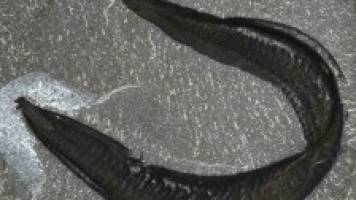
Most primitive known vertebrate and therefore the ancestor of all descendant vertebrates, including humans, discovered. The discovery of myomeres is the smoking gun that we have long been seeking.
Life Sciences - History & Archeology - 05.03.2012
Human’s oldest ancestor found in Burgess Shale
Researchers from the University of Toronto , the Royal Ontario Museum (ROM) and the University of Cambridge have confirmed that a 505 million-year-old creature, found only in the Burgess Shale fossil beds in Canada's Yoho National Park, is the most primitive known vertebrate and therefore the ancestor of all descendant vertebrates, including humans.
Physics - History & Archeology - 28.02.2012

AUSTIN, Texas — A collection of science materials from the family of Sir John F. W. Herschel (1792-1871) is now open for research after a $10,000 grant enabled staffers to rehouse the collection and to create an online inventory. The Herschel family papers, acquired in 1960 with subsequent smaller accessions of additional materials, largely represent the life and work of Herschel, the English mathematician, astronomer, chemist and experimental photographer/inventor.
History & Archeology - Economics - 27.02.2012

The upper class has a higher propensity for unethical behavior, being more likely to believe - as did Gordon Gekko in the movie "Wall Street" - that "greed is good," according to a new study from the University of California, Berkeley. In seven separate studies conducted on the UC Berkeley campus, in the San Francisco Bay Area and nationwide, UC Berkeley researchers consistently found that upper-class participants were more likely to lie and cheat when gambling or negotiating; cut people off when driving, and endorse unethical behavior in the workplace.
History & Archeology - 21.02.2012
Nottingham academic reveals insight into early prehistoric human occupations
Image courtesy of EFAP (Epipalaeolithic Foragers in Azraq Project) PA 56/12 Some of the earliest evidence of prehistoric architecture has been discovered in the Jordanian desert, providing archaeologists with a new perspective on how humans lived 20,000 years ago. The ancient hut structures in eastern Jordan were discovered by a team of archaeologists including academics from The University of Nottingham.
Health - History & Archeology - 15.02.2012

Faced with the inevitability of death, we all wish for good caregiving during the final stage of our lives. A new study from Karolinska Institutet and Umeå University shows that non-pharmacological caregiving at the end of life in specialized palliative care is not as basic as one might believe but is based on complex professional decisions that weave physical, psychosocial and existential dimensions into a functional whole.
Health - History & Archeology - 14.02.2012
End of life care is complex but aims to provide care and comfort
A new study from Karolinska Institute and Umeå University finds that non-pharmacological care in the last days of a patient's life, known as palliative care, is not as simplistic as one may think. Palliative care is multifaceted and complex, with physical, psychological, social, spiritual, and existential care interwoven in caregiving activities.
History & Archeology - 01.02.2012
Archaeologists discover unique ’wing’ shaped building
A unique 'wing' shaped building discovered close to the ancient capital of the Iceni in Norfolk is mystifying archaeologists. A building without obvious parallel in Roman Britain or the rest of the Roman Empire — that is how archaeologists at The University of Nottingham have described the discovery south of the Roman site of Venta Icenorum, which is known today as Caistor St. Edmund, in Norfolk.
Life Sciences - History & Archeology - 01.02.2012
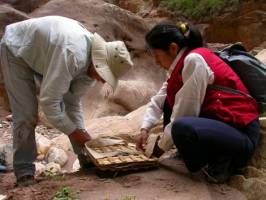
More than 50% of the world's plant species have been discovered by 2% of plant collectors, scientists have found. With an estimated 15-30% of the world's flowering plants yet to be discovered, finding and recording new plant species is vital to our understanding of global biodiversity. The age of great botanical explorers, such as Sir Joseph Banks and Alexander von Humboldt, might appear to have passed.
Life Sciences - History & Archeology - 26.01.2012
Survey suggests family history of psychiatric disorders shapes intellectual interests
by Morgan Kelly A hallmark of the individual is the cultivation of personal interests, but for some people, their intellectual pursuits might actually be genetically predetermined. Survey results published by Princeton University researchers in the journal PLoS ONE suggest that a family history of psychiatric conditions such as autism and depression could influence the subjects a person finds engaging.
Life Sciences - History & Archeology - 26.01.2012
The ethics of brain boosting
The idea of a simple, cheap and widely available device that could boost brain function sounds too good to be true. Yet promising results in the lab with emerging 'brain stimulation' techniques, though still very preliminary, have prompted Oxford neuroscientists to team up with leading ethicists at the University to consider the issues the new technology could raise.
History & Archeology - Law - 18.01.2012
Archaeologist reveals evidence of mass graves at Nazi death camp
Almost 70 years after the end of the Second World War a groundbreaking forensic archaeological study by the University of Birmingham has unearthed evidence of hidden burial sites at a former death camp where more than 800,000 Jews perished during the Holocaust. It was widely believed that evidence of the extermination camp at Treblinka, in north-east Poland, was destroyed by the Nazis upon its abandonment in August 1943, however, these new findings suggest otherwise, revealing the location of deep pits - potential graves - and structural remains that witness accounts locate as gas chambers.
History & Archeology - Life Sciences - 14.12.2011
Sea anemones excel at fighting
Scientists studying the behavioural traits of the common sea anemone have discovered that 'fortune favours the brave' when it comes to fighting and setting territorial disputes. Proving the old adage about the 'size of the fight in the dog', marine biologists at Plymouth University have found that the personality of a sea anemone will play just as crucial a role as physical size and weapon strength when fighting.
History & Archeology - Psychology - 11.12.2011

CHAMPAIGN, lll. Partisans beware! Some of your most cherished political attitudes may be malleable! Researchers report that simply answering three "why" questions on an innocuous topic leads people to be more moderate in their views on an otherwise polarizing political issue. The research, described in the journal Social Psychological and Personality Science, explored attitudes toward what some people refer to as the ground zero mosque, an Islamic community center and mosque built two blocks from the site of the former World Trade Center in New York City.
Administration - History & Archeology - 09.12.2011
Bridging the divide
New study shows how integrated institutions can lead diverse populations to cooperate in rebuilding countries. One of the most pressing issues in world affairs today is state building: how countries can construct stable, inclusive governments in which a variety of religious and ethnic groups coexist.
Health - History & Archeology - 29.11.2011
Do we need a ’science of evidence’?
Evidence is key to many topical debates such as global warming, evolution, the search for weapons of mass destruction, DNA profiling, and advances in science and medicine. A new book asks whether, considering the importance of evidence for so many disciplines, a general 'science of evidence' is possible - or even desirable.
History & Archeology - 14.11.2011

Promoting actions that lead to the most good for the most people seems like a good strategy. But those who are likely to endorse this utilitarian approach to ethics, in fact, are more likely to possess psychopathic or Machiavellian (cunning and duplicitous) personality traits and view life as less meaningful, reports a Cornell study.
History & Archeology - Health - 02.11.2011

Oxford University researchers have provided important new radiocarbon dates for two milk teeth and a jawbone, which shed new light on when the first modern humans arrived in Europe. In the first of the two separate research projects Katerina Douka was part of an international research team re-examining two infant teeth excavated from a prehistoric cave in Italy.


Health - Today
AI was supposed to ease doctors' workload - instead they spend hours correcting errors
AI was supposed to ease doctors' workload - instead they spend hours correcting errors
Pharmacology - Today
International trial finds rapid diagnostic testing alone does not reduce antibiotic prescribing for respiratory infections
International trial finds rapid diagnostic testing alone does not reduce antibiotic prescribing for respiratory infections
Social Sciences - Today
Social background shapes how hard children work, according to a study by UC3M
Social background shapes how hard children work, according to a study by UC3M
Innovation - Today
With Robotics Innovation Center, CMU and Hazelwood Partners Sustain Community Collaborations
With Robotics Innovation Center, CMU and Hazelwood Partners Sustain Community Collaborations