



Health - Today
AI was supposed to ease doctors' workload - instead they spend hours correcting errors
AI was supposed to ease doctors' workload - instead they spend hours correcting errors


Pharmacology - Today
International trial finds rapid diagnostic testing alone does not reduce antibiotic prescribing for respiratory infections
International trial finds rapid diagnostic testing alone does not reduce antibiotic prescribing for respiratory infections

Social Sciences - Today
Social background shapes how hard children work, according to a study by UC3M
Social background shapes how hard children work, according to a study by UC3M
Innovation - Today
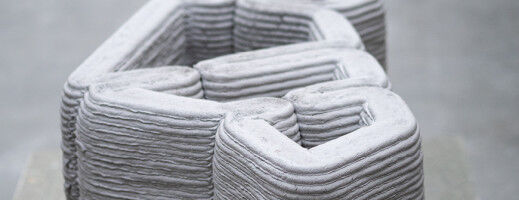
With Robotics Innovation Center, CMU and Hazelwood Partners Sustain Community Collaborations
With Robotics Innovation Center, CMU and Hazelwood Partners Sustain Community Collaborations



news
History & Archeology
Results 861 - 880 of 979.
History & Archeology - Life Sciences - 02.11.2011
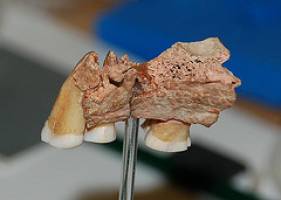
UNIVERSITY PARK, Pa. A piece of jawbone excavated from a prehistoric cave in England is the earliest evidence for modern humans in Europe, according to an international team of scientists. The bone first was believed to be about 35,000 years old, but the new research study shows it to be significantly older - between 41,000 and 44,000 years old, according to the findings that will be published .
History & Archeology - 13.10.2011
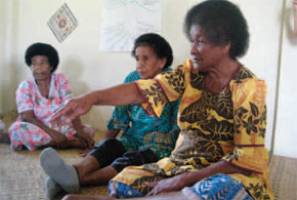
A new report by researchers at The Australian National University has revealed that non-government organisations (NGOs) are being hampered in their efforts to close the gender gap in the countries in which they are working. Launched today in Canberra, Closing the Gender Gap: Gender and Australian NGOs found that pressures from partner organisations in developing countries, what NGOs saw as competing policy issues set by donors, and internal capacity issues meant gender integration was generally weak.
History & Archeology - 05.10.2011
Hundreds of undiscovered artefacts found at Gallipoli
More than 100 artefacts from the First World War have been uncovered in an archaeological fieldwork survey on the Gallipoli battlefield, leading to some interesting theories about life on the frontline. More than 100 artefacts from the First World War have been uncovered in an archaeological fieldwork survey on the Gallipoli battlefield, leading to some interesting theories about life on the frontline according to University of Melbourne survey archaeologist Professor Antonio Sagona.
Earth Sciences - History & Archeology - 15.09.2011

Mineral inclusions discovered in diamonds prove that surface rocks can be subducted into the deep part of the Earth's mantle. The isotopic composition of the diamonds confirms that recycling of crustal materials, including carbon, extends into the lower mantle. The theory of plate tectonics is at the centre of our understanding of how the Earth works.
Environment - History & Archeology - 13.09.2011
Seeing beneath the soil to uncover the past
Archaeology is no longer just about digging holes. New research by a team led from the University of Leeds promises to improve the investigation of our heritage from the air. The work should revolutionise the use of 'state-of-the-art' remote sensing technology, improving the 'hit rate' of aerial archaeology without physically disturbing sites of cultural heritage.
History & Archeology - 31.08.2011
Discovery of Celtic chieftain’s fort set to rewrite Scottish history
A major discovery by archaeologists working in Perthshire will cast new light on understanding of the earliest history of Scotland. Broch Discovery [mp3] A team from the Strathearn Environs and Royal Forteviot (SERF) project have uncovered near the village of Dunning an exquisitely preserved Iron Age broch filled with evidence of early between the Picts and the Roman Empire.
Health - History & Archeology - 30.08.2011
Lack of comparative research into acne treatments could limit their effectiveness
Acne is a chronic disease which can be painful and disfiguring. Many treatments are publicised as cures for acne, often at considerable expense to the sufferer and the healthcare system. A new clinical review by experts at The University of Nottingham says there is very little research evidence to show which treatments work best and whether expensive treatments are any better than traditional ones.
History & Archeology - 24.08.2011
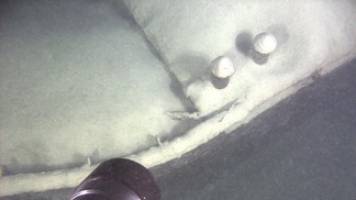
Scientists have discovered a new wreck on the bottom of the Lake Geneva. Underwater archaeology is benefiting from scanners developed for scientific research. "It's always a memorable moment when you find an unknown shipwreck. It's not on the maps, and after having gone around it, I didn't see any inscription on its hull," explains Evgeny Chernyaev, who was piloting the submersible.
Environment - History & Archeology - 23.08.2011
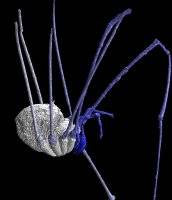
Two ancient types of harvestmen, or 'daddy long legs,' which skittered around forests more than 300 million years ago, are revealed in new three-dimensional virtual fossil models published today . An international team, led by researchers from Imperial College London, have created 3D models of two fossilised species of harvestmen, from the Dyspnoi and Eupnoi suborders.
Health - History & Archeology - 15.08.2011
Childhood maltreatment & depression
People who have experienced maltreatment as children are twice as likely to develop both multiple and long-lasting depressive episodes as those without a history of childhood maltreatment, according to a new study. The research, led by a team at King's College London Institute of Psychiatry, also found that maltreated individuals are more likely to respond poorly to pharmacological and psychological treatment for depression.
Health - History & Archeology - 03.08.2011

Eating disorders such as anorexia and bulimia are associated with fertility problems and negative attitudes to pregnancy, according to a study from King's scientists. The research also revealed high rates of unplanned pregnancies in women with a history of anorexia, suggesting they may be underestimating their chances of conceiving.
History & Archeology - 29.07.2011
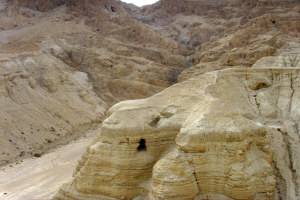
An obscure Babylonian document from the world famous Dead Sea Scroll collection was almost certainly a precursor to the Jewish calendar according to University of Manchester research.
History & Archeology - 18.07.2011
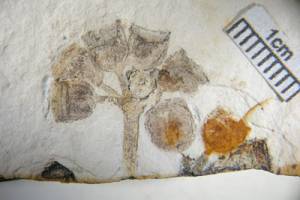
Fossils of leaves, flowers, fruits and buds found in Patagonia, Argentina, have been identified as Eucalyptus and date to 51.9 million years ago, making them the oldest scientifically validated Eucalyptus macrofossils and the only ones conclusively identified as naturally occurring outside of Australasia.
History & Archeology - 14.07.2011
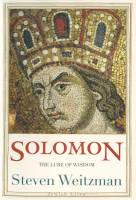
Scholar Steven Weitzman's new book on Solomon is a meditation on the "lust to know." But how much can we really know about the legendary king who was the first Faust and inspired the voyage of Columbus' What can we learn from the wisest man who ever lived' Maybe not as much as we think, according to Stanford Jewish studies scholar Steven Weitzman.
Environment - History & Archeology - 07.07.2011
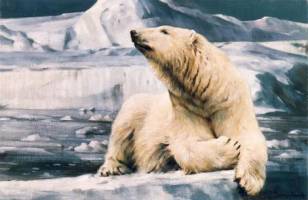
Scientists have discovered that modern polar bears are descended from now extinct brown bears that roamed the region we know today as Britain and Ireland. It is thought that polar bears moved into this area just before, or during the last Ice Age, where they mated with female brown bears. The maternal lineage of the extinct Irish brown bear can still be traced to all modern polar bears today, according to the research published in the latest issue of the journal Current Biology .
Physics - History & Archeology - 29.06.2011
Astronomers discover Universe’s most distant quasar
PA 201/11 A scientist at The University of Nottingham is part of a team of astronomers which has discovered the most distant quasar to date — a development that could help further our understanding of a universe still in its infancy following the Big Bang. This brilliant and rare beacon, powered by a black hole with a mass two billion times that of the Sun, is by far the brightest object yet found from a time when the Universe was less than 800 million years old — just a fraction of its current age.
Health - History & Archeology - 29.06.2011

Current and former heavy smokers screened with low-dose spiral computed tomography (CT) scanning had a 20 percent greater reduction in lung cancer deaths than those screened with conventional chest X-rays, according to the results of a large, decade-long clinical trial involving more than 53,000 people.
Earth Sciences - History & Archeology - 23.06.2011
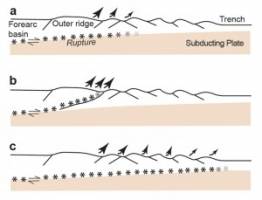
AUSTIN, Texas — An international team of geoscientists has discovered an unusual geological formation that helps explain how an undersea earthquake off the coast of Sumatra in December 2004 spawned the deadliest tsunami in recorded history. Instead of the usual weak, loose sediments typically found above the type of geologic fault that caused the earthquake, the team found a thick plateau of hard, compacted sediments.
Health - History & Archeology - 22.06.2011

In the war between drugs and drug-resistant diseases, is the current strategy for medicating patients giving many drug-resistant diseases a big competitive advantage? That is the question being asked in a research paper that will be published in the Proceedings of the National Academy of Sciences. The paper argues for new research efforts to discover effective ways for managing the evolution and slowing the spread of drug-resistant disease organisms.
Health - History & Archeology - 22.06.2011
Ethical dilemmas when elective surgery is cancelled
[NEWS, 22 June 2011] Planned operations are sometimes cancelled when the health care system is overwhelmed by emergency cases. Hospitals lose money and efficiency decreases, and patients who have prepared have their surgery cancelled. In an article in the scientific journal Clinical Ethics, researchers at Uppsala University, Karolinska Institutet and the Karolinska University Hospital claim that this has ethical, psychological and medical consequences.


Health - Today
AI was supposed to ease doctors' workload - instead they spend hours correcting errors
AI was supposed to ease doctors' workload - instead they spend hours correcting errors
Pharmacology - Today
International trial finds rapid diagnostic testing alone does not reduce antibiotic prescribing for respiratory infections
International trial finds rapid diagnostic testing alone does not reduce antibiotic prescribing for respiratory infections
Social Sciences - Today
Social background shapes how hard children work, according to a study by UC3M
Social background shapes how hard children work, according to a study by UC3M
Innovation - Today
With Robotics Innovation Center, CMU and Hazelwood Partners Sustain Community Collaborations
With Robotics Innovation Center, CMU and Hazelwood Partners Sustain Community Collaborations