



Health - Today
AI was supposed to ease doctors' workload - instead they spend hours correcting errors
AI was supposed to ease doctors' workload - instead they spend hours correcting errors


Pharmacology - Today
International trial finds rapid diagnostic testing alone does not reduce antibiotic prescribing for respiratory infections
International trial finds rapid diagnostic testing alone does not reduce antibiotic prescribing for respiratory infections

Social Sciences - Today
Social background shapes how hard children work, according to a study by UC3M
Social background shapes how hard children work, according to a study by UC3M
Innovation - Today
With Robotics Innovation Center, CMU and Hazelwood Partners Sustain Community Collaborations
With Robotics Innovation Center, CMU and Hazelwood Partners Sustain Community Collaborations


news
University of Stuttgart
Results 1 - 20 of 39.
Chemistry - Materials Science - 25.02.2026

A team from the University of Stuttgart and international researchers have succeeded in making perovskite solar cells more efficient and more resistant to environmental influences. This is another important step towards the application of a technology that holds great promise for photovoltaics. Optimal material mixture sought Perovskite solar cells are a promising technology for photovoltaics.
Physics - Chemistry - 16.10.2025
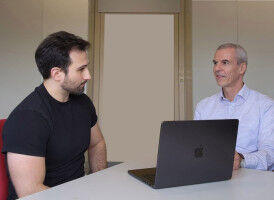
Two physicists from the University of Stuttgart have proven that Carnot's principle, a central law of thermodynamics, does not apply to objects of the size of atoms whose physical properties are linked (so-called correlated objects). This finding could, for example, advance the development of tiny, energy-efficient quantum motors.
Life Sciences - Health - 16.09.2025
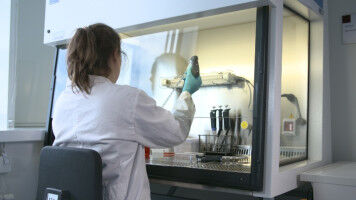
CRISPR/Cas9 was awarded the Nobel Prize in Chemistry in 2020. The process known as "gene scissors" makes it possible, among other things, to better understand how human cells function and remain healthy. Researchers at the University of Stuttgart have further developed CRISPR for this purpose. They present their CRISPRgenee method in the journal "Cell Reports Methods".
Physics - Environment - 08.09.2025
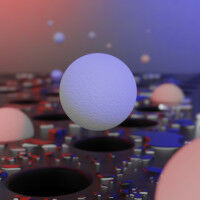
A joint team from the University of Stuttgart and the University of Melbourne in Australia has developed a new method for the simple analysis of tiny nanoplastic particles in environmental samples. All that is needed is an ordinary optical microscope and a newly developed test strip - the so-called optical sieve.
Physics - Materials Science - 22.04.2025

A research group at the University of Stuttgart has succeeded for the first time in manipulating light by interacting with a metal surface in such a way that it exhibits completely new properties. The researchers have now published their findings in the journal "Nature Physics". DOI: 10.1038/s41567-025-02873-1 "With our results, we are adding another chapter to the still young field of skyrmion research," explains Harald Giessen , head of the 4th Physics Institute at the University of Stuttgart, in whose working group the success was achieved.
Life Sciences - Physics - 21.06.2022
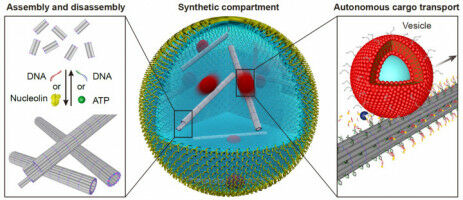
Introducing functional DNA-based cytoskeletons into cell-sized compartments - Publication Scientists from the 2. Physics Institute at the University of Stuttgart and the Max Planck Institute for Medical Research were now able to take the next step towards synthetic cells: They introduced functional DNA-based cytoskeletons into cell-sized compartments and showed functionality.
Computer Science - Mechanical Engineering - 26.04.2021
New PP: Daring More Intelligence
Date: April 26, 2021, No. DFG approves new priority program coordinated by the University of Stuttgart Design Assistants in Mechanics and Dynamics are the topic of a new priority program (PP) of the German Research Foundation (DFG) that aims to bring more artificial intelligence (AI) into the design process of technical systems.
Physics - 16.04.2021
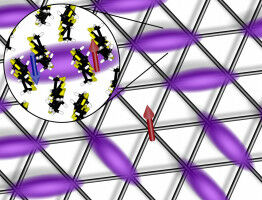
A quantum spin liquid is a state of matter in which interacting quantum spins do not align even at lowest temperatures, but remain disordered. Research on this state has been going on for almost 50 years, but whether it really exists has never been proven beyond doubt. An international team led by physicist Prof. Martin Dressel at the University of Stuttgart has now put an end to the dream of a quantum spin liquid for the time being.
Health - Life Sciences - 29.03.2021
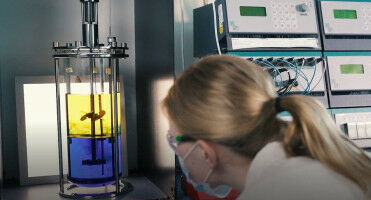
Immunoglobulins are antibodies that are generated by the immune system in answer to the sudden emergence of macromolecules. For example, these might be on the cell surface of bacteria that have infiltrated the body, or they are found in abnormal somatic cells. These play an important role in the identification and suppression of infections, such as Hepatitis A/B or Rabies, and in controlling cancer cells.
Physics - 05.03.2021
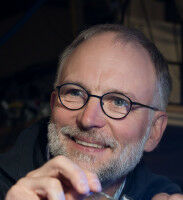
The European Research Council will support the research of Prof. Tilman Pfau with an ERC Advanced Grant for his new approach to understanding fermionic matter with long-range interactions using innovative quantum gas microscopy techniques. The ERC Advanced Grants are highly-prestigious grants awarded to well-established, leading scientists with a track record of groundbreaking research achievements over the past decade.
Physics - 24.02.2021
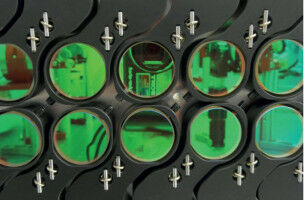
Helium is the second most abundant element in the universe after hydrogen. Helium nuclei consist of four components, namely two protons and two neutrons. Knowing the properties of the helium nucleus is crucial for fundamental physics, for example, in order to understand the processes in atomic nuclei that are heavier than helium.
Materials Science - 19.02.2021

Historische Kunstund Kulturobjekte haben oft stark verschmutzte Oberflächen, da sie über viele Jahre hinweg unterschiedlichsten Umwelteinflüssen ausgesetzt sind. Ein deutsch-französisches Team um Prof. Cosima Stubenrauch von der Universität Stuttgart erforscht nun, wie man die Kostbarkeiten mit flüssigen Schäumen schonend und umweltfreundlich reinigen kann.
Physics - Chemistry - 18.02.2021
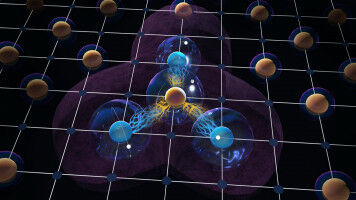
Rydberg atoms are among the most promising candidates in the race of realizing a working quantum computer. In the new collaborative project ,,QRydDemo", researchers led by the University of Stuttgart aim to realize a Rydberg quantum computer demonstrator together with an industrial partner by 2025. In order to reach this goal, they group Rydberg atoms in a two-dimensional optical trap structure and perform quantum logical operations by controlled entanglement and shifting of the atom traps.
Chemistry - 28.01.2021

Research groups led by the polymer chemist Prof. Sabine Ludwigs and the mechanic Prof. Holger Steeb at the University of Stuttgart have developed active double-layer structures from intelligent polymers based on the structures of a flowering plant, which lean of their own accord in response to humidity and then regain their original shape.
Transport - 21.01.2021

Autonomous driving will come about. But how do you make it safe for each traffic situation, what transportation infrastructure will be required, and what will be the impact of future traffic models? Under the leadership of Audi AG, the SAVeNoW consortium is running a simulation on these questions using a digital twin of the urban traffic of Ingolstadt as an example.
Physics - 19.01.2021
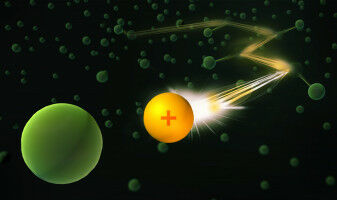
Transport processes are ubiquitous in nature but still raise many questions. The research team around Florian Meinert from the 5th Institute of Physics at the University of Stuttgart has now developed a new method that allows them to observe a single charged particle on its path through a dense cloud of ultracold atoms.
Transport - Environment - 27.12.2020

Students of Aerospace Engineering at the University of Stuttgart have developed and built the unmanned testing platform Aircraft for Research and Applied Science (ARAS). In the process, they designed the components for it to be able to withstand high loads. After the mechanical and electronic integration was finished, the "UAStudents Gruppe" (a compound made up of Unmanned Aerial System, another word for drone, and students) carried out extensive ground testing before the aircraft successfully took off for the first time in October.
Psychology - 15.12.2020
Literature and tolerance in the Victorian era
The research being carried out by Dr. Nina Engelhardt fills a gap in our understanding of tolerance as well as in (cognitive) literature, and her project has led to her being included in the Baden-Württemberg Foundation's Elite Program for postdocs. In public discourse, the word "tolerance" is often defined as respect, acceptance and recognition of other cultures.
Health - Pharmacology - 05.12.2020

With the help of so-called pooling procedures, samples from different people can be combined into a pool and tested for Covid-19 collectively in a single test kit. An interdisciplinary team of mathematicians, computer scientists and medical doctors from the Junge Akademie, the Technische Universität Braunschweig, the Universität Stuttgart and the company Arctoris has developed a decision support tool that calculates which method is most effective in identifying all Covid-19 patients in a positive sample pool.
Chemistry - Physics - 25.11.2020

Catalysts with a metal-nitrogen bond can transfer nitrogen to organic molecules. In this process short-lived molecular species are formed, whose properties critically determine the course of the reaction and product formation. The key compound in a catalytic nitrogen-atom transfer reaction has now been analysed in detail by chemists at the Universitis of Göttingen Frankfurt and Stuttgart.


Health - Today
AI was supposed to ease doctors' workload - instead they spend hours correcting errors
AI was supposed to ease doctors' workload - instead they spend hours correcting errors
Pharmacology - Today
International trial finds rapid diagnostic testing alone does not reduce antibiotic prescribing for respiratory infections
International trial finds rapid diagnostic testing alone does not reduce antibiotic prescribing for respiratory infections
Social Sciences - Today
Social background shapes how hard children work, according to a study by UC3M
Social background shapes how hard children work, according to a study by UC3M
Innovation - Today
With Robotics Innovation Center, CMU and Hazelwood Partners Sustain Community Collaborations
With Robotics Innovation Center, CMU and Hazelwood Partners Sustain Community Collaborations