

Art & Design - Today
New special exhibition at the Josephinum is dedicated to Austria's exceptional artist Gustav Klimt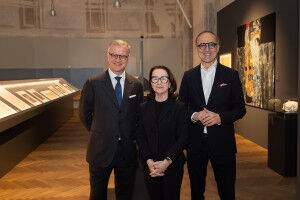
New special exhibition at the Josephinum is dedicated to Austria's exceptional artist Gustav Klimt
Health - Today
University of Manchester supports landmark Russell Group commitment to build healthier communities
University of Manchester supports landmark Russell Group commitment to build healthier communities
Health - Today
Cortical thickness, schizophrenia, and causality in psychiatry: when the trace is mistaken for the cause
Cortical thickness, schizophrenia, and causality in psychiatry: when the trace is mistaken for the cause
Career - Today
Low-income students and girls are steered away from 'risky' creative careers at school
Low-income students and girls are steered away from 'risky' creative careers at school


Environment - Today
UCalgary expedition, with NASA, Canadian and European space agencies, sets out to better understand state of Arctic ice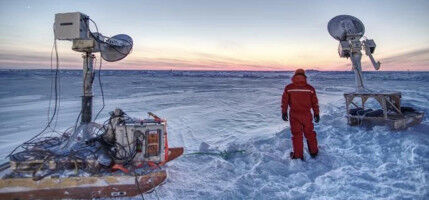
UCalgary expedition, with NASA, Canadian and European space agencies, sets out to better understand state of Arctic ice
Social Sciences - Mar 24
Young people's wellbeing is improving in Greater Manchester, major survey finds
Young people's wellbeing is improving in Greater Manchester, major survey finds
Environment - Mar 24
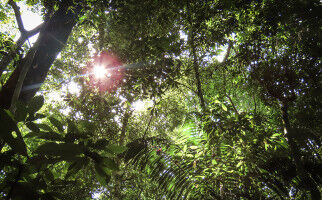
Australia's environment is improving but climate change is 'accelerating' damage to ecosystems and wildlife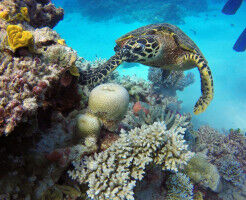
Australia's environment is improving but climate change is 'accelerating' damage to ecosystems and wildlife


science wire
Astronomy & Space
Results 6051 - 6100 of 6335.
History & Archeology - Astronomy & Space - 03.04.2013
Protecting history with satellites
Looking down from orbit is an attractive way of monitoring historical sites in remote or politically unstable regions - and can even help archaeologists to make new discoveries. The ancient city of Samarra was a powerful Islamic capital during the ninth century, located in what is today Iraq. It is the only surviving Islamic capital that retains its original plan, architecture and arts, although only about 20% of the site has been excavated.
Physics - Astronomy & Space - 03.04.2013
AMS experiment measures antimatter excess in space
Geneva 3 April 2013. The international team running the Alpha Magnetic Spectrometer (AMS ) today announced the first results in its search for dark matter. The results, presented by AMS spokesperson Professor Samuel Ting in a seminar at CERN 2 , are to be published in the journal Physical Review Letters.
Astronomy & Space - 02.04.2013
Black hole wakes up and has a light snack
Astronomers have watched as a black hole woke up from a decades-long slumber to feed on a low-mass object - either a brown dwarf or a giant planet - that strayed too close.
Astronomy & Space - Economics - 28.03.2013
Watching over you
Like astronauts, heavy-equipment operators in remote mines can benefit from long-distance monitoring using space technology.
Astronomy & Space - 28.03.2013
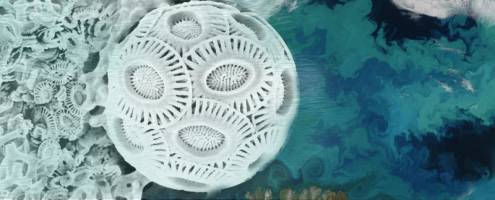
Somewhere between tossing Jonah overboard and hanging that albatross around the Ancient Mariner's neck, sailors acquired a reputation for superstition.
Education - Astronomy & Space - 27.03.2013
Hunting high-mass stars with Herschel
In this new view of a vast star-forming cloud called W3, ESA's Herschel space observatory tells the story of how massive stars are born.
Astronomy & Space - Education - 27.03.2013
How to build a really, really big star
Stars ten times as massive as the Sun, or more, should not exist: as they grow, they tend to push away the gas they feed on, starving their own growth. Scientists have been struggling to figure out how some stars overcome this hurdle. Now, a group of researchers led by two astronomers at the University of Toronto suggests that baby stars may grow to great mass if they happen to be born within a corral of older stars -with these surrounding stars favorably arranged to confine and feed gas to the younger ones in their midst.
Astronomy & Space - 26.03.2013
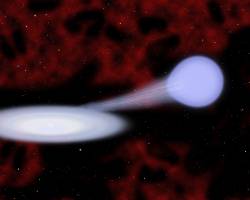
Cambridge, MA - Until now, supernovas came in two main "flavors." A core-collapse supernova is the explosion of a star about 10 to 100 times as massive as our sun, while a Type Ia supernova is the complete disruption of a tiny white dwarf.
Physics - Astronomy & Space - 26.03.2013
"It's as if we have been in one room all of our lives doing physics and the discovery of Higgs is a door into the next room.
Astronomy & Space - Mechanical Engineering - 25.03.2013
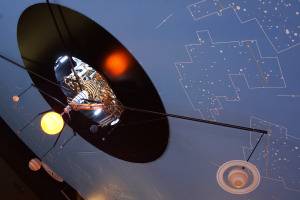
The University of Manchester's Jodrell Bank Discovery Centre has announced the arrival of its newest exhibit - a beautiful and unique mechanical orrery.
Health - Astronomy & Space - 22.03.2013
The long winter ahead
Secluded from civilisation and living in a white desert, the crew at the Concordia research base in Antarctica have settled in to their home and are ready for the cold, long winter ahead.
Astronomy & Space - Physics - 22.03.2013
Plancking at U of T: space mission sheds light on universe's age and evolution
The best map ever made of the most ancient light in the universe — the remnant radiation left over from the Big Bang some 13 billion years ago — deepens our understanding of the universe. The highly detailed image of the universe — produced by the European Space Agency's Planck Space Telescope and the Planck collaboration of international scientists including a team from the University of Toronto — reveals that the universe is slightly older, expanding more slowly and has more matter than previously thought.
Astronomy & Space - 21.03.2013
Cosmic blueprint
21 March 2013 Acquired by ESA's Planck space telescope, the most detailed map ever created of the cosmic microwave background - the relic radiation from the Big Bang - was released today revealing the existence of features that challenge the foundations of our current understanding of the Universe. The image is based on the initial 15.5 months of data from Planck and is the mission's first all-sky picture of the oldest light in our Universe, imprinted on the sky when it was just 380 000 years old.
Astronomy & Space - 21.03.2013
Planck reveals an almost perfect Universe
Acquired by ESA's Planck space telescope, the most detailed map ever created of the cosmic microwave background - the relic radiation from the Big Bang - was released today revealing the existence of features that challenge the foundations of our current understanding of the Universe. The image is based on the initial 15.5 months of data from Planck and is the mission's first all-sky picture of the oldest light in our Universe, imprinted on the sky when it was just 380 000 years old.
Astronomy & Space - Physics - 21.03.2013

At a March 21 NASA telephone news conference, scientists from the U.S. team participating in the European Space Agency's Planck mission to map the cosmic microwave background (CMB) discussed Planck's first cosmological results, including some surprising news.
Astronomy & Space - 19.03.2013
Black hole-star pair orbiting at dizzying speed
ESA's XMM-Newton space telescope has helped to identify a star and a black hole that orbit each other at the dizzying rate of once every 2.4 hours, smashing the previous record by nearly an hour.
Environment - Astronomy & Space - 19.03.2013
Prof. Caleb Scharf Talks Close Encounters With Meteors
When an estimated 7,000-ton meteor exploded in Earth's atmosphere on Feb. 15, showering Siberia with debris, it put a spotlight on the fact that Earth is constantly bombarded with the detritus of the solar system.
Life Sciences - Astronomy & Space - 18.03.2013
Four UChicago scholars receive early career fellowships from Alfred P. Sloan Foundation
Four University of Chicago scholars—Dorian Abbot, assistant professor of geophysical sciences, Emir Kamenica, associate professor of economics at the University of Chicago Booth School of Business, Jacob Waldbauer, the Neubauer Family Assistant Professor of Geophysical Sciences; and Wei Wei, assistant professor of neurobiology—have been named 2013 Alfred P. Sloan Research Fellows.
Astronomy & Space - Physics - 15.03.2013
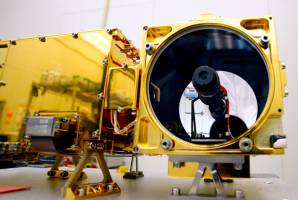
Members of the Mars Science Laboratory Curiosity rover ChemCam team will present more than two dozen posters and talks during the 44th Lunar and Planetary Science Conference.
Astronomy & Space - Event - 15.03.2013
Two Decades of Discoveries
Although Keith Matthews was about to make history, he went about his tasks like any others. It was the night of March 16, 1993, nearly 14,000 feet above sea level on Mauna Kea in Hawaii, and he had just installed the first instrument on the brand-new 10-meter telescope at W. M.
Astronomy & Space - Mathematics - 14.03.2013
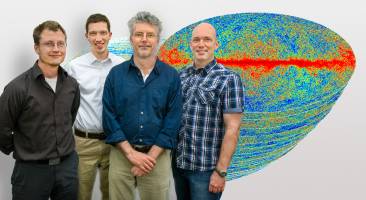
To make the most precise measurement yet of the cosmic microwave background (CMB) - the remnant radiation from the big bang - the European Space Agency's (ESA's) Planck satellite mission has been collecting trillions of observations of the sky since the summer of 2009.
Astronomy & Space - Physics - 14.03.2013
Distant planetary system is super-sized solar system
Glimpses of a giant alien planet may help to answer questions about its origins and those of our own solar system. A team of astronomers, including Quinn Konopacky of U of T's Dunlap Institute for Astronomy & Astrophysics, have made the most detailed examination yet of the atmosphere of a Jupiter-like planet beyond our Solar System.
Astronomy & Space - Economics - 12.03.2013
Galileo fixes Europe’s position in history
Europe's new age of satellite navigation has passed a historic milestone - the very first determination of a ground location using the four Galileo satellites currently in orbit together with their ground facilities.
Astronomy & Space - 12.03.2013
Proba-V minisatellite reaches Europe’s Spaceport
ESA's Proba-V minisatellite for mapping global vegetation has arrived at Europe's Spaceport in French Guiana, where it is being prepared for a mid-April launch atop a Vega launcher.
Astronomy & Space - Earth Sciences - 12.03.2013
Earth-sized planets in habitable zones are more common than previously thought
The graphic shows optimistic and conservative habitable zone boundaries around cool, low mass stars. The numbers indicate the names of known Kepler planet candidates. Yellow color represents candidates with less than 1.4 times Earth-radius. Green color represents planet candidates between 1.4 and 2 Earth radius.
Astronomy & Space - 12.03.2013
Jon Culshaw gives Oxford's rogue planet a voice
Impressionist Jon Culshaw is helping Oxford University scientists to take viewers on a tour of the ancient solar system and discover strange new worlds.
Astronomy & Space - Physics - 12.03.2013
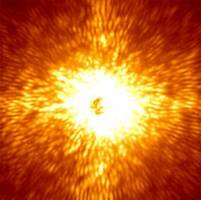
Thanks to a new high-tech gadget, astronomers have observed four planets orbiting a star relatively close to the sun in unprecedented detail, revealing the roughly ten-Jupiter-mass planets to be among the most exotic ones known. The team, which includes several researchers from the California Institute of Technology (Caltech), describes its findings in a paper accepted for publication by the Astrophysical Journal .
Astronomy & Space - Social Sciences - 11.03.2013
Closest star system in a century
UNIVERSITY PARK, Pa. A pair of newly discovered stars is the third-closest star system to the sun, according to a paper that will be published in Astrophysical Journal Letters. The duo is the closest star system discovered since 1916. The discovery was made by Kevin Luhman , an associate professor of astronomy and astrophysics at Penn State and a researcher in Penn State's Center for Exoplanets and Habitable Worlds.
Astronomy & Space - Economics - 11.03.2013
X-ray snapshots: from big black holes to tiny viruses
Cameras designed for capturing black holes are now exploring a new frontier: they are helping us to get up close to viruses on Earth, opening the door to solving medical problems.
Astronomy & Space - Physics - 11.03.2013
Stanford professor wants to find asteroids that threaten Earth
Stanford Report, March 11, 2013 Several large asteroids have zipped dangerously close to Earth in the past month. Scott Hubbard is part of a team that plans to track down future threats. On Saturday, an asteroid the size of one and a half football fields flew within 240,000 miles of Earth. If the space rock had hit land, it would have leveled an area the size of San Francisco Bay.
Astronomy & Space - Physics - 11.03.2013
Space station to host new cosmic ray telescope
The National Aeronautics and Space Administration has awarded $4.4 million to a collaboration of scientists at five United States universities and NASA's Marshall Space Flight Center to help build a telescope for deployment on the International Space Station in 2017.
Astronomy & Space - Earth Sciences - 08.03.2013
GOCE: the first seismometer in orbit
Satellites map changes in Earth's surface caused by earthquakes but never before have sound waves from a quake been sensed directly in space - until now. ESA's hyper-sensitive GOCE gravity satellite has added yet another first to its list of successes. Earthquakes not only create seismic waves that travel through Earth's interior, but large quakes also cause the surface of the planet to vibrate like a drum.
Astronomy & Space - 07.03.2013
Pan-STARRS Finds a "Lost" Supernova
Cambridge, MA - The star Eta Carinae is ready to blow. 170 years ago, this 100-solar-mass object belched out several suns' worth of gas in an eruption that made it the second-brightest star after Sirius. That was just a precursor to the main event, since it will eventually go supernova. Supernova explosions of massive stars are common in spiral galaxies like the Milky Way, where new stars are forming all the time.
Astronomy & Space - Event - 05.03.2013
Are we ready to meet ET?
Once only science fiction, astronomers are now finding hundreds of planetary systems beyond our own. Given recent discoveries through space exploration, it is entirely feasible that we may soon discover the existence of extra-terrestrial life forms on other planets.
Astronomy & Space - 05.03.2013
Herschel to finish observing soon
ESA's Herschel space observatory is expected to exhaust its supply of liquid helium coolant in the coming weeks after spending more than three exciting years studying the cool Universe.
Astronomy & Space - Physics - 05.03.2013

If you could lick the surface of Jupiter's icy moon Europa, you would actually be sampling a bit of the ocean beneath.
Astronomy & Space - Economics - 04.03.2013
Durham University plays leading role in equipping the world’s largest telescope
Durham is leading two pivotal projects to provide instruments for the European Extremely Large Telescope (E-ELT), one of the biggest science collaborations in history.
Astronomy & Space - Physics - 01.03.2013
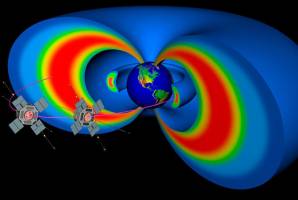
The belts are a pair of donut shaped zones of charged particles that surround Earth and occupy the inner region of our planet's Magnetosphere. As the mission proceeds, we expect further surprises that will challenge our conventional wisdom on the transport, loss and energization processes in these highly energetic electron radiation regions.
Astronomy & Space - Physics - 27.02.2013
Speedy black hole holds galaxy’s history
A rapidly rotating supermassive black hole has been found in the heart of a spiral galaxy by ESA's XMM-Newton and NASA's NuSTAR space observatories, opening a new window into how galaxies grow. Supermassive black holes are thought to lurk in the centre of almost all large galaxies, and scientists believe that the evolution of a galaxy is inextricably linked with the evolution of its black hole.
Astronomy & Space - 27.02.2013
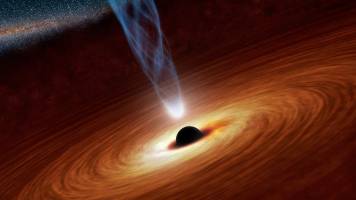
Cambridge, MA - Imagine a sphere more than 2 million miles across - eight times the distance from Earth to the Moon - spinning so fast that its surface is traveling at nearly the speed of light.
Event - Astronomy & Space - 26.02.2013

Astronomy & Space - Physics - 26.02.2013

The large meteoroid that struck Russia last week is just one of the factors in space that cause satellites to fail.
Astronomy & Space - Computer Science - 25.02.2013
Tracking trains with satellite precision
Taking a cue from how ESA controls satellites, Spanish railways now have their own high-tech upgrade to keep travellers abreast of when the next train is going to pull into the station.
Astronomy & Space - 25.02.2013
Toaster-sized space telescope launches from India
The smallest astronomical satellite ever built launched Feb. 25, 2013 as part of a mission to prove that even a very small telescope can push the boundaries of astronomy.
Astronomy & Space - Physics - 22.02.2013

A sophisticated instrument designed and built by scientists and engineers from Imperial College London will fly to Jupiter in 2022, when Europe launches its first mission to the giant planet.
Environment - Astronomy & Space - 22.02.2013
SMOS: the global success story continues
ESA's water mission is shedding new light on the meandering Gulf Stream, just one of the SMOS satellite's numerous achievements.
Astronomy & Space - Physics - 21.02.2013
ESA chooses instruments for its Jupiter icy moons explorer
The JUpiter ICy moons Explorer mission, JUICE, will carry a total of 11 scientific experiments to study the gas giant planet and its large ocean-bearing moons, ESA announced today.
Astronomy & Space - Physics - 21.02.2013
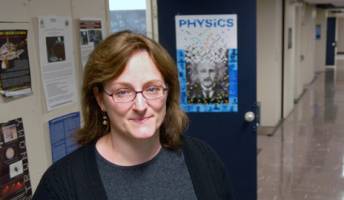
Astrophysicist C. Megan Urry, chair of Yale's physics department, has been elected the next president of the world's premier astronomical society.
Education - Astronomy & Space - 21.02.2013

Astronomy & Space - 19.02.2013
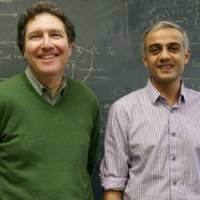
NASA has nominated three U.S. science teams to participate in the European Space Agency's planned Euclid mission, a space telescope designed to probe the mysteries of dark energy and dark matter and scheduled to launch in 2020.


Art & Design - Today
New special exhibition at the Josephinum is dedicated to Austria's exceptional artist Gustav Klimt
New special exhibition at the Josephinum is dedicated to Austria's exceptional artist Gustav Klimt
Health - Today
University of Manchester supports landmark Russell Group commitment to build healthier communities
University of Manchester supports landmark Russell Group commitment to build healthier communities
Health - Today
Cortical thickness, schizophrenia, and causality in psychiatry: when the trace is mistaken for the cause
Cortical thickness, schizophrenia, and causality in psychiatry: when the trace is mistaken for the cause
Career - Today
Low-income students and girls are steered away from 'risky' creative careers at school
Low-income students and girls are steered away from 'risky' creative careers at school
Environment - Today
UCalgary expedition, with NASA, Canadian and European space agencies, sets out to better understand state of Arctic ice
UCalgary expedition, with NASA, Canadian and European space agencies, sets out to better understand state of Arctic ice
Social Sciences - Mar 24
Young people's wellbeing is improving in Greater Manchester, major survey finds
Young people's wellbeing is improving in Greater Manchester, major survey finds
Environment - Mar 24
Australia's environment is improving but climate change is 'accelerating' damage to ecosystems and wildlife
Australia's environment is improving but climate change is 'accelerating' damage to ecosystems and wildlife